
Original briefings. Zero spin.
Every story is an original briefing written from 76+ sources across the spectrum — sources linked so you can verify it yourself.
 energy
Notable (5/10)
August 16, 2026 at 03:34 AM
energy
Notable (5/10)
August 16, 2026 at 03:34 AM
Nigeria Handed Out Tax Waivers For Nearly 4,000 Electric Vehicles in H1 2026. Its Power Grid Still Can't Keep the Lights On.
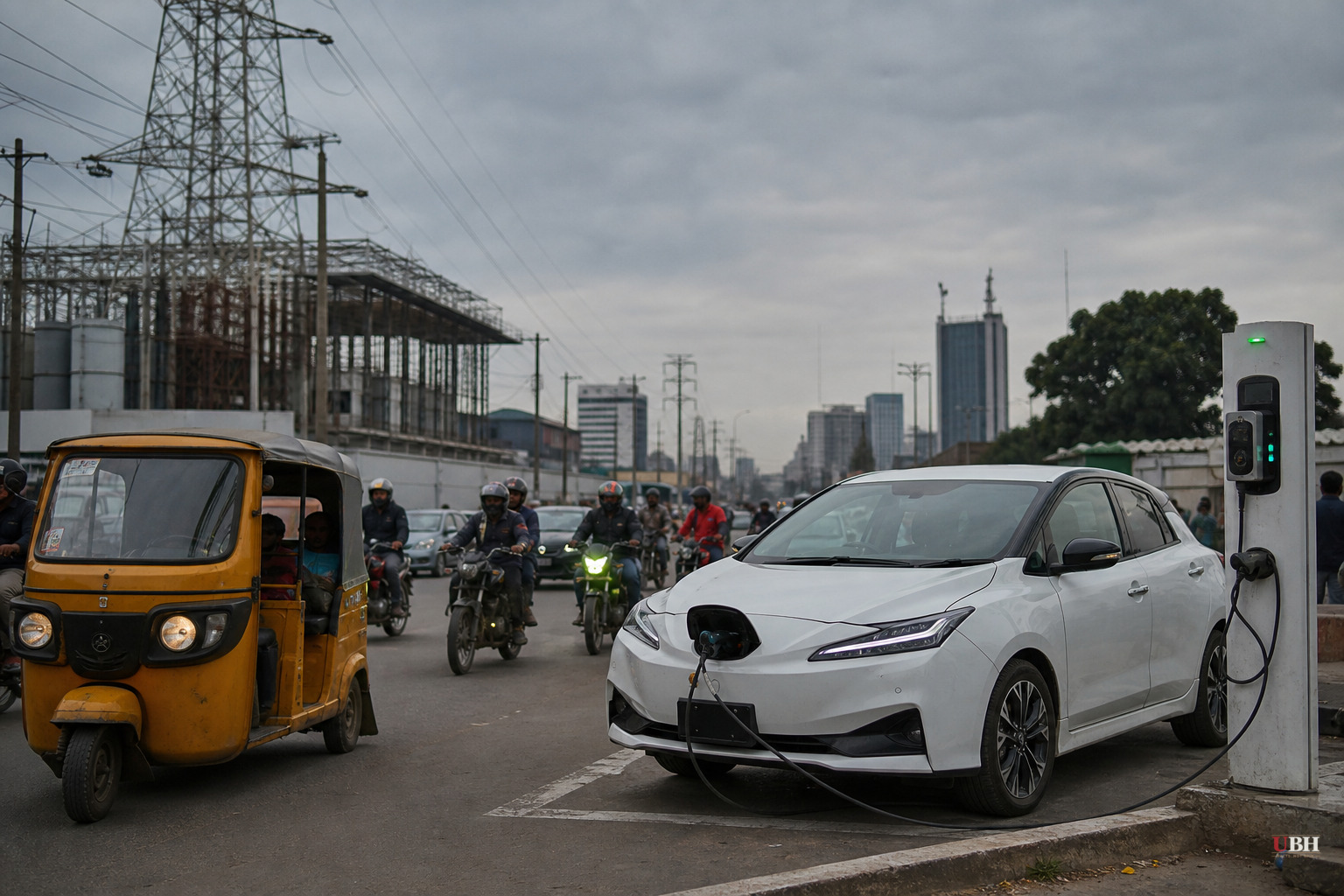
Nigeria's government wants electric vehicles to make up 60% of the country's fleet by 2050. That's the target in its 2022 Energy Transition Plan. Right now EVs are less than 1% of the fleet, dealers estimate, according to Reuters.
The push got a real boost this year. Nigeria approved tax waivers for nearly 4,000 electric vehicles in the first half of 2026, according to government data reviewed by Reuters. It's the first batch of approvals under a new incentive program built on tax breaks and local assembly deals. EVs were already exempted from value-added tax in 2024. Import duties on them dropped to zero this year, down from 5%.
None of this happened because Nigeria suddenly got serious about climate policy. It happened because President Bola Tinubu killed the country's decades-old fuel subsidy the day he was sworn in, May 29, 2023. Petrol prices exploded. In Gombe, a city in northeastern Nigeria, petrol now runs about 1,365 naira per liter, roughly $1, according to Al Jazeera. Before the subsidy cut it was about 200 naira, 15 cents. That's close to a sevenfold increase.
Farmers and delivery riders are doing the math themselves
Al Jazeera's Muhammad Auwal Ibrahim reported from Gombe's Pantami District, where electric motorcycles are starting to show up alongside the usual crush of petrol bikes carrying students and traders. Ayuba Abubakar, a farmer, switched after a friend showed him one earlier this year. He told Al Jazeera he can move around Gombe all day without recharging and only plugs in for longer trips to remote areas. Three months in, he says he's dodged most of the mechanical headaches that come with petrol bikes, aside from a fried charger he blames on skipping a voltage stabilizer.
The bikes cost around 1 million naira, about $735, which is real money in Nigeria and out of reach for a lot of households. But for people who can afford the upfront cost, the fuel and maintenance savings add up fast when petrol is priced the way it is now.
The grid is the actual problem
The country's power grid generates about 4,000 megawatts total, for a population over 200 million, according to Reuters reporting picked up by ETAuto, Arise TV, and TimesLIVE. That's one of the lowest per-capita electricity supplies of any major economy on earth.
When the grid drops, which is often, Nigerian households and businesses run on diesel and petrol generators. That habit has bled straight into the EV industry. Charging stations, dealerships, and battery-swap operators all lean on generators when the grid fails, per Reuters.
Bolanle Boboye, an executive at Saglev, Nigeria's first EV manufacturer and a partner of China's Dongfeng, defended the tradeoff bluntly: "If we wait for electricity to become perfect before adopting EVs, the rest of the world will leave us behind." She added that even generator-charged EVs can still cut overall emissions.
An EV charged on a diesel generator is still likely more efficient than a gas engine burning fuel directly, depending on the generator and the vehicle. That efficiency advantage undercuts the clean-transport pitch politicians are using to sell the program, and nobody quoted in these reports has produced numbers showing the net emissions benefit once generator charging is factored in.
Public charging infrastructure backs up the skepticism. Nigeria had about 48 public EV charging stations as of late 2025, mostly clustered in Lagos and Abuja, according to a policy brief cited by Reuters. South Africa, for comparison, had more than 500. Nigeria's own Energy Transition Plan reportedly projects only about 60 charging stations by 2030. If that number holds, it's nowhere near enough to support a fleet the government wants to be 60% electric by 2050.
Two-wheelers, not sedans, look like the real path forward
Due to the infrastructure gap, momentum is building fastest in electric motorcycles and tricycles, not passenger cars, according to reporting from Technext24. Riders like Ayuba can charge overnight at home on a household outlet and don't need a dense public charging network to make the switch work. Car buyers face a tougher calculus: a driver who depends on a vehicle for daily work can't easily gamble on whether the grid will be up when they need to plug in.
Some automakers are adapting around the power problem rather than waiting for it to be solved. Extended-range EVs, which pair a battery with a small gas-powered range extender, have seen sales double this year, Boboye told Reuters, because they let drivers dodge charging uncertainty entirely. Chinese brands including BYD and Geely are expanding in Nigeria with hybrid and electric models built for exactly this kind of unreliable-power environment.
Whether Nigeria's 2030 target of roughly 60 charging stations gets revised upward as EV approvals climb, or whether the country ends up building an electric fleet that runs on the same diesel generators it was supposed to replace, remains to be seen.
Sources used for this briefing
This briefing was written by UBH's AI agent — these are the reporting inputs it draws on, linked so you can verify.

