
Unbiased headlines. Facts, not spin.
Unbiased Headlines is an independently owned news organization. We bring you the facts, not opinions, written fresh from 110+ named sources. Sources linked so you can verify it yourself.
 energy
Notable (6/10)
energy
Notable (6/10)
Myanmar's Junta Moves to Restart China-Backed Dam That Would Flood an Area the Size of Singapore
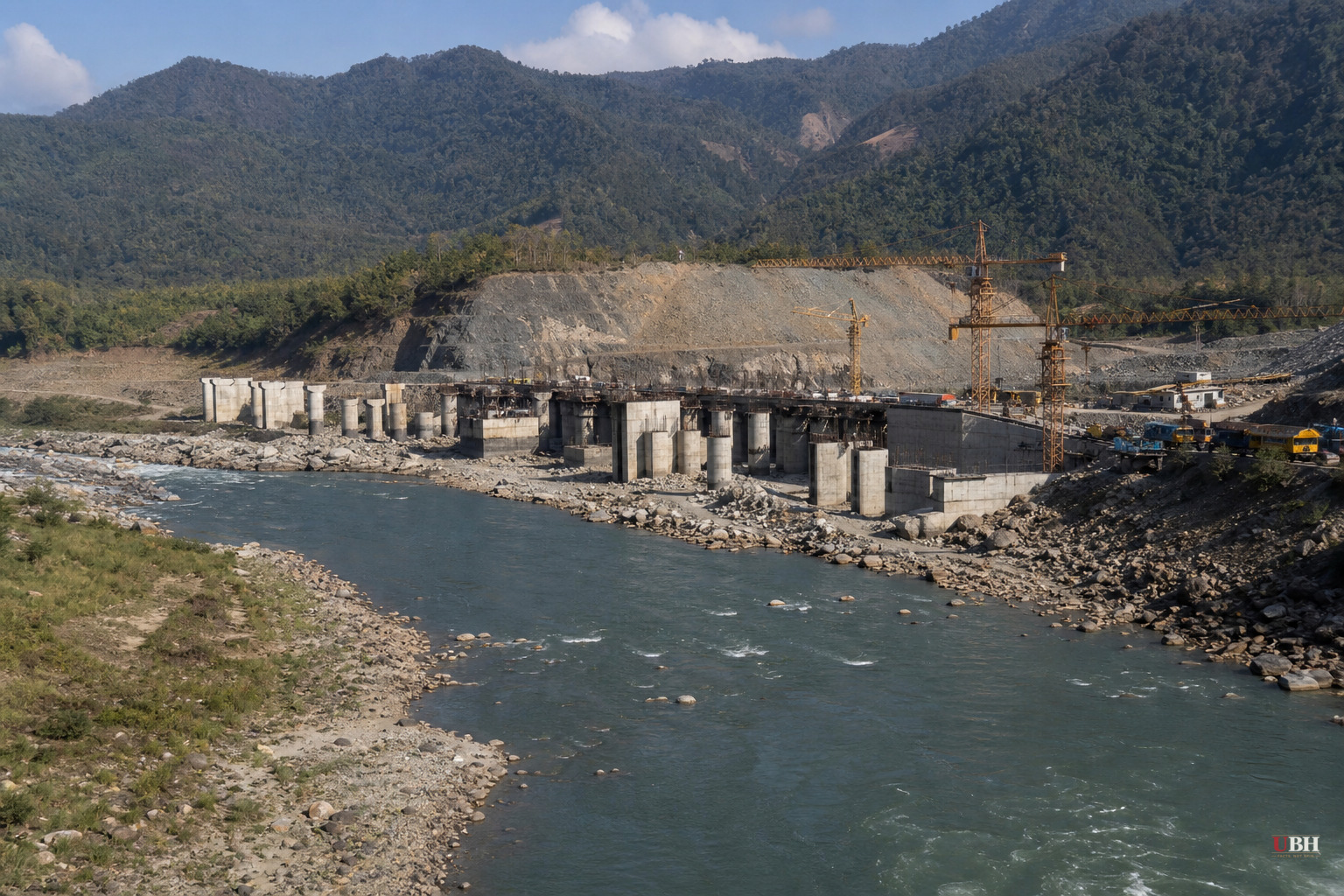
Myanmar's military government is pushing to restart one of Southeast Asia's most controversial infrastructure projects: the Myitsone Dam, a China-backed hydropower plant that was frozen 15 years ago after it triggered nationwide protests.
According to Reuters, reported by the Times of India, officials including Kachin State chief minister Khet Htein Nan have discussed reviving the project privately, and Myanmar's junta leader and president Min Aung Hlaing has publicly said construction will resume. Htet Paing Htoo, a member of the Kachin State parliament, told Reuters restart plans are moving forward and an official announcement is coming. "It will begin shortly," he said.
Mongabay reported that the junta's spokesperson, Khaing Khaing Soe, confirmed at a June 30 press conference in Naypyidaw that the project would resume to generate electricity for the country. That statement followed Min Aung Hlaing's trip to China in early June, according to both outlets.
What Restarting Actually Means
The Myitsone Dam was first agreed to in 2009 at an estimated cost of $3.6 billion. It's owned by the Upstream Ayeyarwady Confluence Basin Hydropower Company, a joint venture between China's Power Investment Corporation, Myanmar's Ministry of Electric Power, and Asia World Company, according to Mongabay.
The dam would sit at the confluence of the Mali and N'mai rivers in Kachin State, the headwaters of the Irrawaddy (Ayeyarwady) River, Myanmar's most important waterway. Mongabay reported the structure was designed to run 1,310 meters long and 139.6 meters high, and would create a reservoir roughly the size of Singapore while generating up to 6 gigawatts of power, per the Times of India.
Then-president Thein Sein suspended construction in 2011 after large public protests over environmental damage and forced displacement of local communities. That suspension has held for a decade and a half, making the junta's current push a genuine reversal of a politically sensitive decision.
The Cost Has Likely Tripled
The original 2009 price tag of $3.6 billion is almost certainly obsolete. The Times of India cited International Renewable Energy Agency data putting average hydropower construction costs in Asian countries outside China and India at roughly $1,914 per kilowatt. Applied to a 6-gigawatt project, that works out to as much as $11.5 billion, more than three times the original estimate.
Neither source reported that Myanmar's junta has disclosed updated cost figures or financing terms. Mongabay noted the actual contract terms of the project have never been made public.
Local Objections, and the Junta's Response
Kachin Human Rights Watch spokesperson Jacob, who goes by one name, told Mongabay that junta-organized community meetings on the project "do not reflect the genuine will of the people" and instead amount to coercion. He said the Ayeyarwady River and the Myitsone area are heritage sites for Myanmar as a whole, not just local communities, and that the military is "destroying our natural heritage" while violating property rights.
The junta's own account comes from the head of the junta's Myitsone Project Implementation Committee, who said on social media that authorities held 38 meetings with local communities between January and the end of July 2026. Whether those meetings represent genuine consultation or a box-checking exercise designed to manufacture consent is difficult to verify independently in a country run by a military government that, according to Mongabay, issued a warning in December threatening legal action against individuals and organizations opposing its projects. The threat suggests the junta anticipates continued resistance and is prepared to criminalize it rather than negotiate.
Kachin State chief minister Khet Htein Nan told a public meeting on June 23 that the dam would be built to withstand earthquakes and that there was no need to worry about flooding, according to Mongabay. That's a notable claim given the region's seismic history. Kenneth Ray Olson, professor emeritus at the University of Illinois who has studied the Irrawaddy River Delta, told Mongabay that Myitsone-related dams could reduce downstream flood flows and block nutrient-rich sediment from reaching the delta, which would hurt farming and river health hundreds of miles from the dam site.
What's Unresolved
No independent environmental or seismic assessment has been made public alongside the junta's restart announcement, based on available reporting. The financing arrangement between China's Power Investment Corporation and Myanmar's government also remains undisclosed.
Myanmar has been under military rule since the 2021 coup, and the country remains embroiled in civil conflict with ethnic armed groups, including in Kachin State itself. Whether the junta can actually secure the estimated $11 billion-plus needed to build a project of this scale, in a country facing international sanctions and ongoing internal war, is an open question neither source resolved. Chief minister Khet Htein Nan said construction could be completed within 8.5 years if it begins this year, but no formal groundbreaking date has been confirmed by either the junta or Chinese state media as of this reporting.
Sources used for this briefing
2 links from 2 independent newsrooms (syndicated copies of the same report count once)
These are the sources it draws on, linked so you can verify.


