
Original briefings. Zero spin.
Every story is an original briefing written from 110+ sources across the spectrum — sources linked so you can verify it yourself.
 energy
Notable (5/10)
Event date: September 1, 2026
energy
Notable (5/10)
Event date: September 1, 2026
New Study Says Power Lines Could Save Customers $15.3 Billion, But Who's Really Paying for the Buildout?
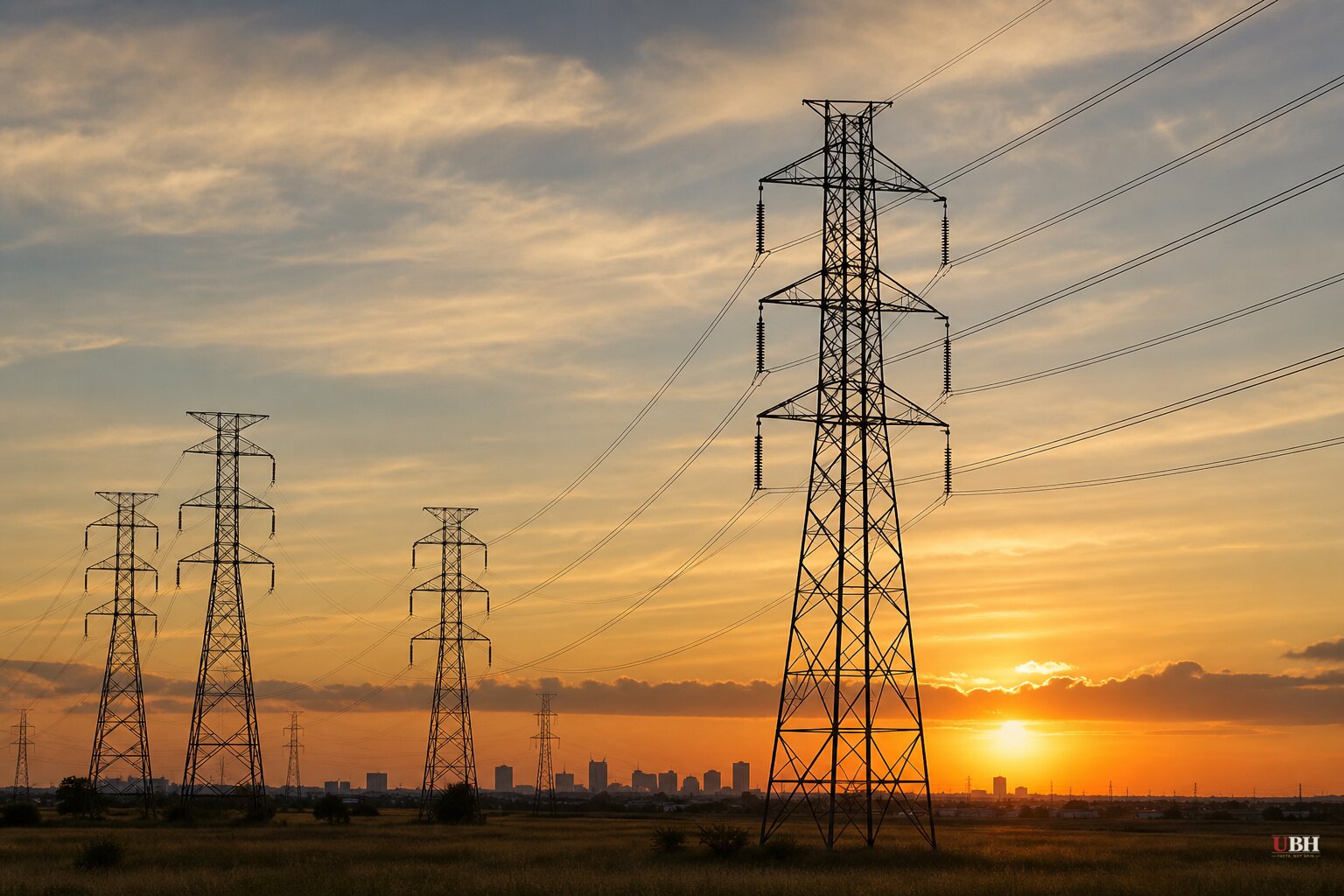
Since MISO filed new grid reliability rules for data centers on September 2 and the Department of Energy authorized emergency grid measures the same day to keep PJM and MISO from blackouts during the heat wave, a new industry-funded study lands with a claim that sounds well-timed: build more transmission lines, and customers save billions.
The study, titled "Powering Growth and Affordability: The Role of Transmission in Economic and National Security," was released September 1 by CERA Consulting, the consulting arm of S&P Global Energy. It was commissioned by National Grid, the Electricity Customer Alliance, and Converge Strategies, according to both PR Newswire and Morningstar.
National Grid is a transmission owner. It makes money building and operating power lines. That doesn't make the study's math wrong, but it's the kind of detail that belongs in the first paragraph, not buried in a footnote.
The Numbers
CERA modeled transmission scenarios across the Northeast, PJM, the Southeast, and the MISO South/SPP region, according to Utility Dive. The unconstrained base demand case produces $12.4 billion in net present value across the Eastern Interconnection, with a benefit-to-cost ratio of 1.77, Utility Dive reported. Renewable Energy World cited the higher $15.3 billion figure for interregional transmission specifically, with a benefit-cost ratio up to 1.89.
PJM comes out the biggest winner in every version of the study. Utility Dive put PJM's base-case benefit at $6.7 billion over 40 years. Renewable Energy World cited $9.8 billion in net present value for PJM under a different scenario, with a 2.1 benefit-cost ratio, the highest of any region studied.
Why PJM? Because it's ground zero for the AI data center boom and, per Renewable Energy World, home to 75 major military installations. The study's authors argue that's a national security case for transmission, not just an economic one.
The study projects 374 terawatt-hours of new demand and 45 gigawatts of new peak load by 2035, with half of that growth concentrated in just two places: PJM and Texas's ERCOT grid, according to Renewable Energy World.
The Texas Pushback
That ERCOT number is where the Epoch Times, in a commentary published August 17 and updated August 20, raises a fair concern worth taking seriously. Writer Mollie Engelhart reported that ERCOT was tracking roughly 474 gigawatts of proposed large-load demand by August, with about 90% tied to data centers. That's more than five times the entire state's record peak demand.
Engelhart's reporting notes something genuinely unusual. Texans on the left and right, across party lines, are converging on the same complaints. They don't want their water consumed by data centers. They don't want higher electric bills to subsidize server farms. Rural landowners don't want 765-kilovolt transmission lines cutting through family ranches to move power nobody in their community will use.
That's a legitimate grievance, and it's not paranoia. A request to connect to the grid isn't a built data center, as Engelhart herself acknowledges, so not all 474 gigawatts will materialize. But even a fraction of that materializing means enormous new transmission infrastructure gets built, and someone has to pay for it and live next to it.
Two Studies, One Argument
Jeff Dennis, Executive Director of the Electricity Customer Alliance and formerly deputy director of transmission in DOE's Grid Deployment Office under the Biden administration, told Utility Dive that Congress needs to pass permitting reform to make interregional transmission projects happen faster. National Grid's Matt Satterwhite made the same push in the PR Newswire release, calling for Congress to strengthen federal authority over transmission siting and permitting.
Both men work for organizations that benefit financially if that legislation passes. That doesn't make their argument wrong. It does mean the case for permitting reform is coming almost entirely from parties who profit from more transmission getting built, not from independent regulators or ratepayer advocates without a stake in the outcome.
No permitting reform bill has passed Congress as of this writing. FERC has not issued a rule mandating the interregional projects CERA modeled. The study's $15.3 billion savings estimate depends on projects that do not yet exist, in a regulatory environment that has not yet changed to make them easier to build. Whether Congress acts on permitting reform this session, and whether ratepayers or data center operators end up footing the bill for whatever gets built, remains unresolved.
Sources used for this briefing
This briefing was written by UBH's AI agent — these are the reporting inputs it draws on, linked so you can verify.


