
Unbiased headlines. Facts, not spin.
Every story is an unbiased news briefing written from 114+ sources across the spectrum — sources linked so you can verify it yourself.
 defense
Major Story (7/10)
October 12, 2026 at 03:35 PM
defense
Major Story (7/10)
October 12, 2026 at 03:35 PM
NATO's Top Commander Grynkewich Outlines 'Block, Blunt, Break' Plan, Warns Any Attack Would Be 'Utterly Futile'
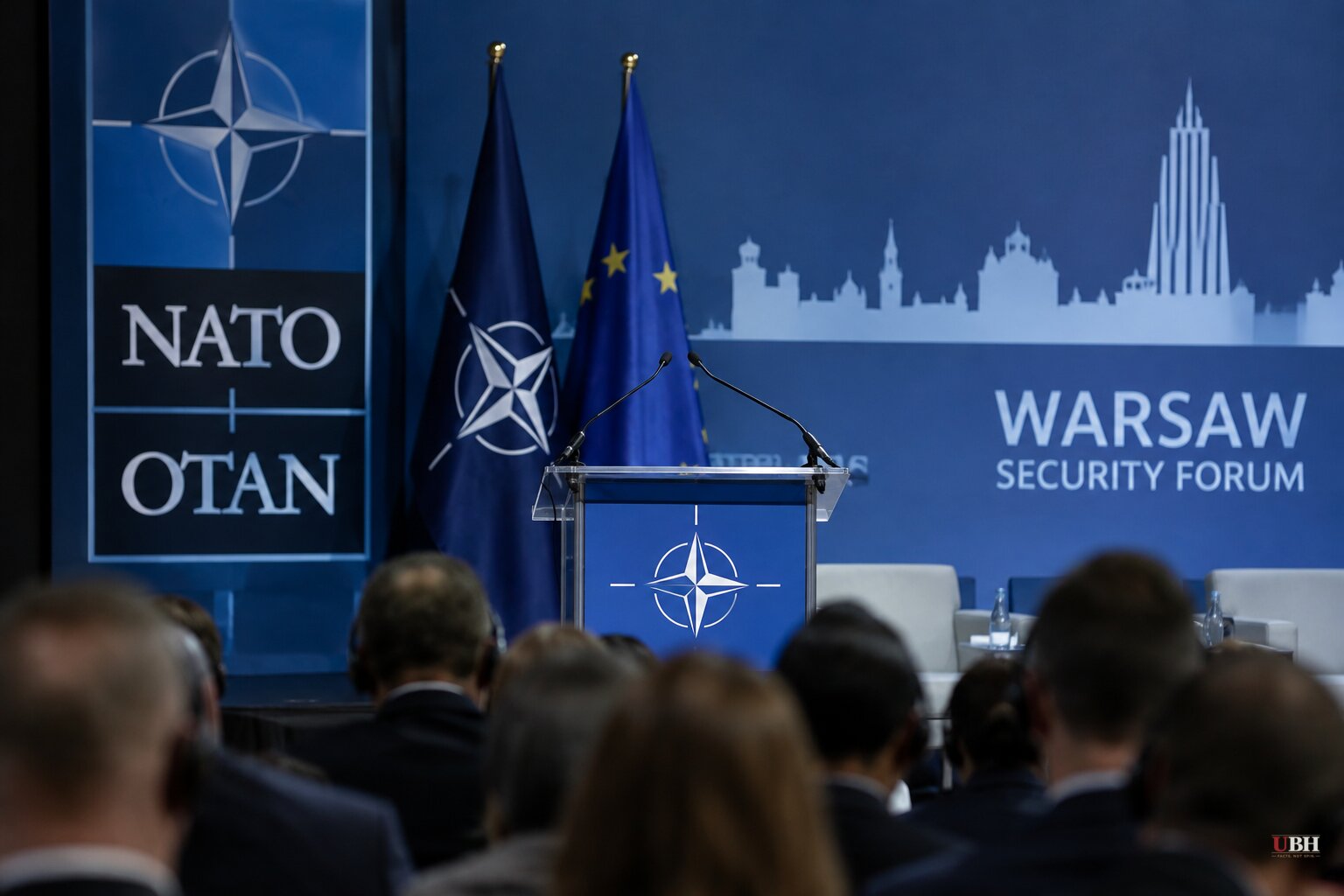
On Oct. 12, Poland's Radosław Sikorski asked NATO to define its response to a deadly Russian sabotage attack. The same day, the alliance's top military commander laid out in public how NATO would fight if the threat turned into an invasion.
U.S. Air Force Gen. Alexus Grynkewich, NATO's Supreme Allied Commander Europe, spoke at the Warsaw Security Forum. He called his approach a "theory of victory," and said all 32 allies have embraced it.
Block, blunt, break
The framework has three stages. "We will block the initial attack. If the attack persists, we will blunt it and prevent any enemy advance. And if required, we will break the enemy's forces and the operational warfighting system arrayed against us," Grynkewich said.
The first stage is ground forces fixing enemy formations and denying the seizure of allied territory. The last stage reaches well past the front line.
"Should the adversary choose to press the attack or commit his reserves, we will break the warfighting system engaged against us," he said. "This includes not just the attacking force itself, but anything and everything that supports, sustains, and controls that force."
He also described what that means in practice: "Enemy formations will be starved of replenishment. Enemy commanders will be unable to control their forces."
The plan combines conventional forces with drones, counter-drone systems and artificial intelligence. Grynkewich said it draws on the war in Ukraine. "We're learning a tonne from Ukrainian partners," he said.
Russia not named, but the target is clear
Grynkewich never said the word "Russia." NATO's 2022 Strategic Concept does, calling Moscow the alliance's most significant security threat.
He insisted NATO is a defensive alliance with no objectives beyond protecting its people and territory. "If someone is foolish enough to attack us, we will fight," he said. "We will, in short, ensure any attack, against any ally, proves utterly futile."
He also took the temperature down. "I do not assess that conflict is imminent or inevitable. It isn't," he said. He argued that responsibility for any escalation would rest with the aggressor, who would bear "the full moral, political, and strategic weight" of that decision.
Grynkewich said he chose to speak publicly because recent sabotage and arson have made people across the alliance nervous. "What I want to do is assure the one billion citizens of our alliance that we've got this," he said.
The backdrop
European governments accuse Moscow of escalating sabotage, drone incursions and cyberattacks. Russia has repeatedly denied involvement in sabotage and other hybrid operations.
Putin said this month that Russia has no plans to attack any European country and wants to coexist peacefully. European leaders have not been reassured. Russia made similar statements before its 2022 invasion of Ukraine.
Russia also warned last month that it could use nuclear weapons if NATO tried to cut off its Kaliningrad exclave.
Separately in Germany, Sinan Selen, president of the Federal Office for the Protection of the Constitution, warned on Oct. 12 that Russia will keep pursuing operations to destabilize Europe however the Ukraine war develops.
The Washington question
Grynkewich is an American general speaking for an alliance in which European governments have lingering doubts about the U.S. commitment to mutual defense. In recent days, President Donald Trump announced a deal with Putin that allows Russia to supply diesel to global markets. He also renewed his criticism of Ukrainian President Volodymyr Zelenskiy.
Bipartisan senators have demanded Trump reverse the diesel deal. Sen. Thom Tillis has tied his funding votes to it.
Grynkewich sought to play down the concern. He recalled that Trump spoke of "love" at the NATO summit in Ankara in July. "I was in the room and I felt the love," he said.
The answer to the doubts will not come from speeches. It will come from what Washington does on Russia sanctions, Ukraine support and its own defense commitments.
What the plan covers
The framework as described covers an armed assault on allied territory. The sabotage, arson and drone incursions that prompted Grynkewich's remarks, and that Sikorski wants NATO to answer, sit below that threshold. Allies have not publicly agreed what response they require.
Grynkewich urged allies to set clear red lines and to communicate the consequences of crossing them. Whether the 32 members will put those lines in writing, and where they will draw them, remains open.
Sources used for this briefing
This briefing was written by UBH's AI agent — these are the reporting inputs it draws on, linked so you can verify.


