
Unbiased headlines. Facts, not spin.
Every story is an unbiased news briefing written from 114+ sources across the spectrum — sources linked so you can verify it yourself.
 defense
Breaking / Critical (9/10)
Event date: October 8, 2026
defense
Breaking / Critical (9/10)
Event date: October 8, 2026
Saudi Arabia Extends Riyadh Airport Closure as Gulf Allies Rally and Travel Warnings Widen
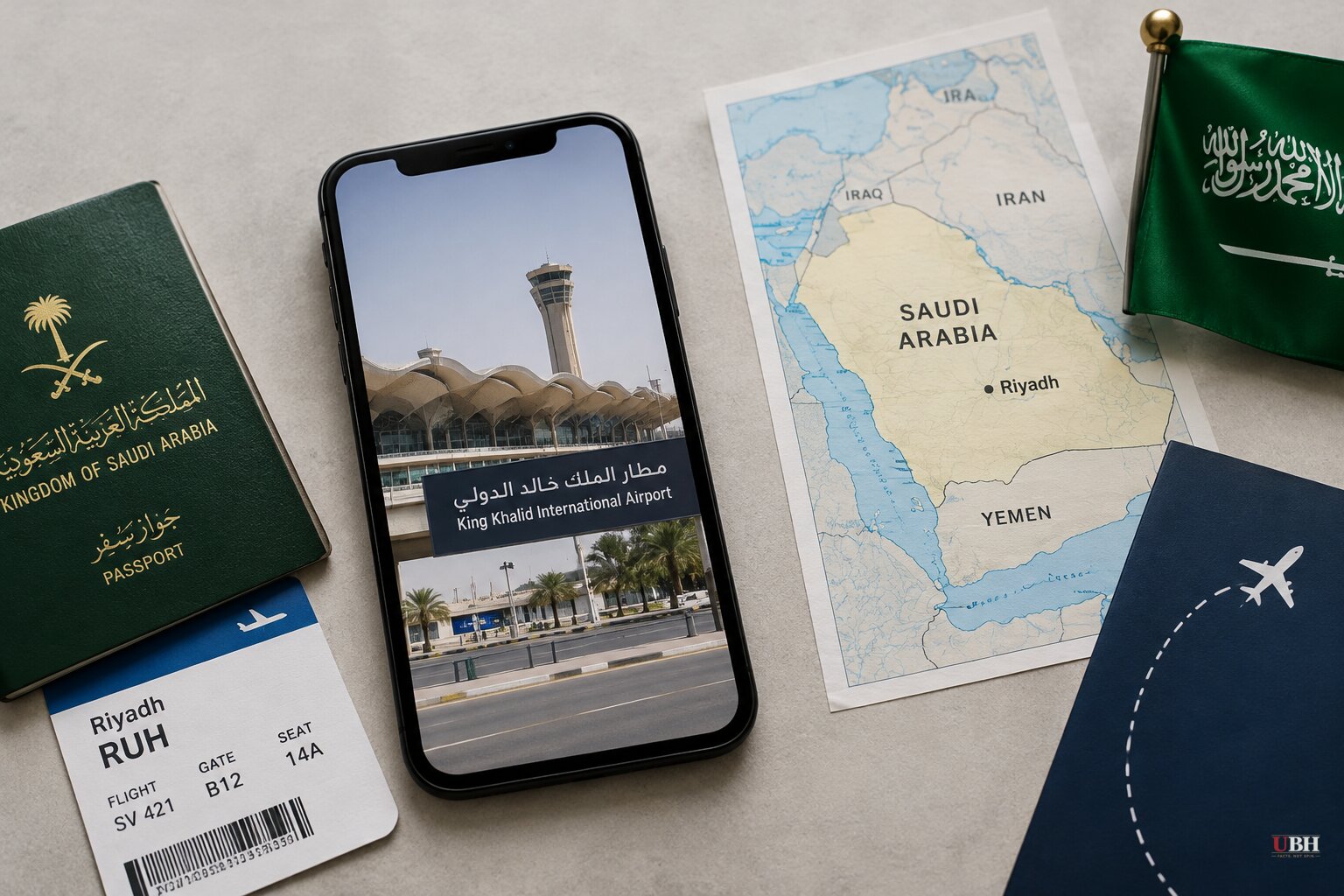
Since Houthi missiles hit Riyadh's King Khalid International Airport on Saturday, Oct. 10, the confirmed toll from the weekend's two strikes has reached 14 dead. Saudi Arabia's General Authority of Civil Aviation (GACA) said Monday it was extending the suspension of all operations at the airport "to complete the necessary procedures to verify the safety of the airport's facilities and their operational readiness." It gave no reopening date.
The Saturday toll rose to 13 after an injured Indian citizen died Sunday, according to Saudi authorities. More than 300 people were wounded. A second strike Sunday killed a Pakistani national and injured 11. The Houthis claimed both attacks. Attacks last week killed six more people, according to CBS News.
Warnings widen
Australia and New Zealand on Monday told citizens to avoid King Khalid airport and other Saudi destinations. They join the U.K., U.S., Canada, France, Germany, Japan and others with similar advisories.
Saudi Arabia's military spokesperson said further missile and drone threats had been detected. The Guardian reported that schoolchildren and some office workers were advised to work from home.
The Houthis have also targeted Khamis Mushait and King Fahd International Airport in Dammam, and have vowed to hit Saudi airports across the country. Earlier attacks hit fuel tanks and warehouses at the Riyadh airport, according to the Guardian. They destroyed a parked Airbus A320 and damaged at least five other aircraft.
Air defenses under scrutiny
Saudi Arabia spends heavily on its military. Missiles are still getting through. The Guardian reported that an urgent review is under way into how Houthi projectiles keep penetrating Saudi air defenses, which it described as badly stretched. Interceptors have to cover government buildings, oil facilities and infrastructure hubs across a wide area.
The kingdom is trying to project normality. It is hosting the World Petroleum Congress energy conference, the International Energy Forum ministerial meeting and the Future Investment Initiative. Energy Minister Prince Abdulaziz bin Salman told the conference that "fear has no place in the Saudi lexicon."
The Guardian also reported that Crown Prince Mohammed bin Salman has not been seen in public since last Tuesday. Saudi officials have not commented on that in the sources available.
Gulf and regional response
Anwar Gargash, diplomatic adviser to the UAE president, wrote on X that "we are all targeted" and that "Gulf security is a shared responsibility that allows no room for complacency or delay." He said failures in collective defense had encouraged the attacks.
Turkey, Egypt and Pakistan issued a joint statement Sunday backing Saudi Arabia's right to defend itself, provided its measures comply with the UN Charter and international law. They announced no new deployments. France said it would keep supporting the kingdom's defense.
Qatar's energy minister, Saad Sherida al-Kaabi, told the Riyadh energy forum that the wider regional war had caused "by far, the world's worst energy crisis." He said it affects about 20% of global oil and gas supplies and that attacks on energy facilities have caused tens of billions of dollars in damage.
Washington and Tehran
President Trump said Sunday the U.S. "may" join Saudi Arabia in retaliating against the Houthis. CBS News reports he is considering strikes in Yemen. No decision has been announced.
Iran, which backs the Houthis, is offering to mediate. Foreign Minister Abbas Araghchi said he told Saudi Foreign Minister Prince Faisal bin Farhan on Sunday that Tehran was willing to help start dialogue between Saudi Arabia and Yemen's Houthis. Iranian Foreign Ministry spokesman Esmail Baghaei said Monday that Iran was still reviewing a U.S. response to its proposal for reopening the Strait of Hormuz and would reply through intermediaries.
Baghaei put the blame for the disruption on Washington and Jerusalem. He noted the strait was open before the U.S. and Israel launched joint airstrikes on Iran at the end of February. "Everything we are witnessing in the region" results from the "actions of the United States and the Israeli regime," he said. Tehran and Washington each claim control of the strait and are enforcing competing blockades.
The ground war in Yemen
Fighting around Taiz, Yemen's third-largest city, has intensified. Military sources from both sides told AFP that more than 60 people died in 24 hours, including at least 22 pro-government fighters and 40 Houthis. The Houthis have blocked all exits from the city, and the sources said reinforcements were heading to the area.
Health officials warned Sunday of a "humanitarian catastrophe," with medicine and fuel nearly gone. Taiz Governor Nabil Shamsan called for the siege to be lifted. He warned the city would soon run out of emergency surgical and intensive care services.
Earlier this month, Saudi-led coalition officials said forces had recaptured key areas around the Bab el-Mandeb Strait, which carries about 12% of global trade. Houthi officials claimed they had retaken some of those areas, and a Yemeni government official denied it.
The Institute for the Study of War, a Washington think tank, assesses that the Houthis believe striking civilian infrastructure such as oil facilities and airports can raise Saudi economic costs enough to force concessions. The group's leader, Abdul-Malik al-Houthi, has said his forces can endure a long war.
Two questions remain open. GACA has not said when Riyadh's main airport will reopen. Trump has not said whether the U.S. will strike Yemen.
Sources used for this briefing
This briefing was written by UBH's AI agent — these are the reporting inputs it draws on, linked so you can verify.


