
Unbiased headlines. Facts, not spin.
Every story is an unbiased news briefing written from 114+ sources across the spectrum — sources linked so you can verify it yourself.
 defense
Notable (6/10)
Event date: October 8, 2026
defense
Notable (6/10)
Event date: October 8, 2026
IDF Says It Struck About 100,000 Targets in Three Years of War, Figures Unverified
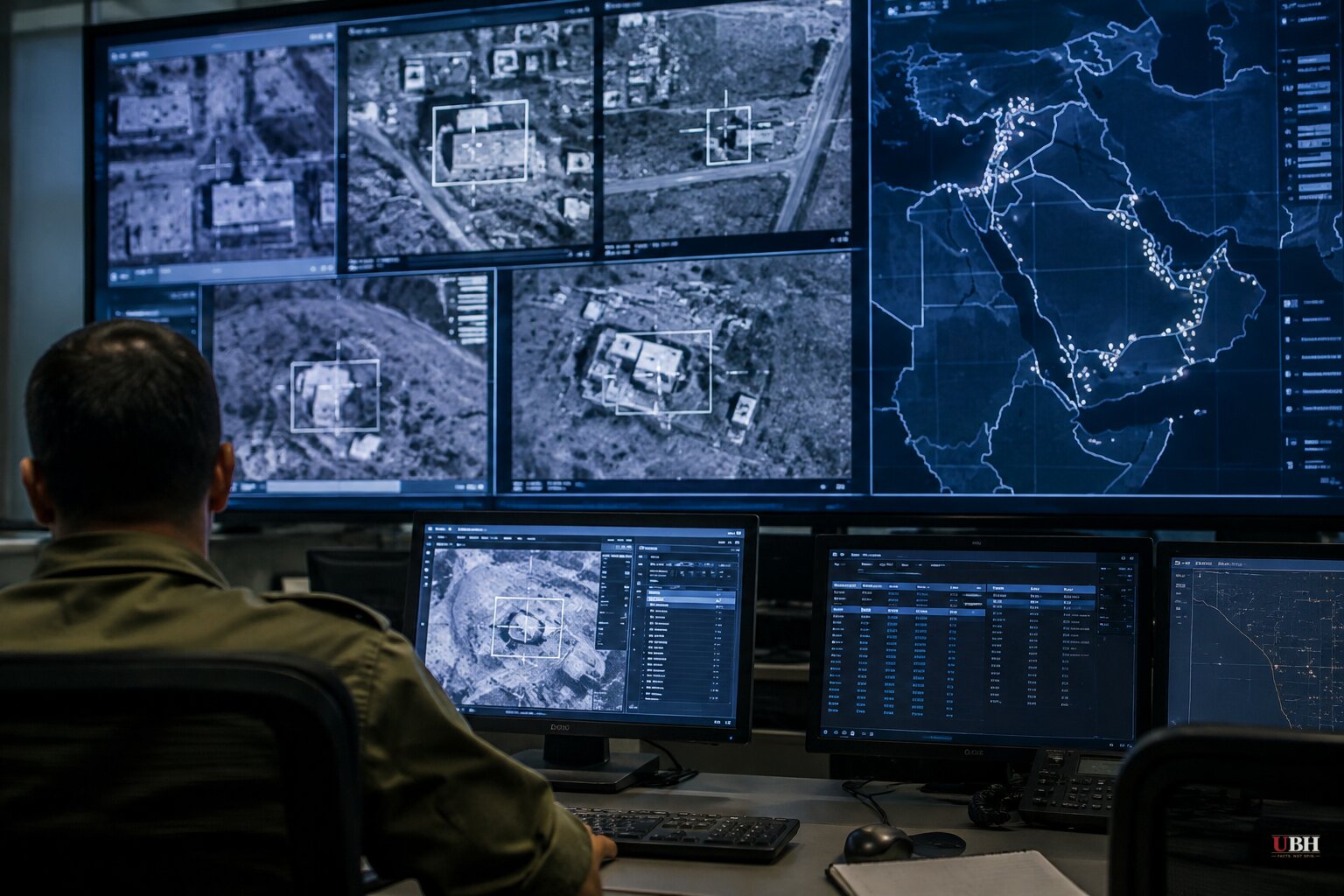
The Israel Defense Forces marked the third anniversary of the Oct. 7, 2023 Hamas attack on Wednesday, Oct. 7, with a data release. It says its forces struck roughly 100,000 targets across five fronts since the war began.
The IDF has not defined what counts as a "target."
The numbers
By the IDF's breakdown, about 65,000 targets were hit in Gaza, 28,000 in Lebanon and Syria combined, 4,500 in Iran and 80 in Yemen. Roughly 30,000 of the Gaza strikes came in the first three months of the war.
The Iran strikes cover the 12-day conflict in June 2025 and an exchange of fire on Feb. 28, 2026.
The military also counted incoming fire. It says about 31,540 projectiles were launched at Israel: 20,000 from Lebanon, 10,200 from Gaza, 1,200 from Iran, 90 from Yemen and 50 from Syria. The IDF does not publish interception rates. Local reports during the recent Iran conflict put the success rate at 92 percent.
In the West Bank, the IDF says it has confiscated 3,800 weapons and arrested 45,000 "wanted individuals."
Hamas leadership and Israeli losses
The IDF says it has killed four Hamas military branch heads, 17 brigade commanders, about 60 battalion commanders and roughly 300 company commanders. Hamas has five brigades and 24 battalions, so many units have lost their commanders more than once.
The release also included a graphic of senior figures it says Israel killed. Among them are Hezbollah's Hassan Nasrallah and Hashem Safieddine, Hamas leaders Yahya Sinwar and Mohammed Deif, and Iranian Revolutionary Guard commanders Hossein Salami and Ali Hajizadeh.
Israel's own losses: 970 soldiers and security personnel have died in operational circumstances, according to the IDF. That is on top of the more than 800 civilians killed on Oct. 7 itself, a figure that does not include security forces killed that day. CNN puts the Oct. 7 death toll at more than 1,200, mostly civilians.
What the IDF says it changed
The report is partly a list of institutional fixes after the Oct. 7 failure. Southern Command built about 40 new outposts. The Gaza border barrier was rebuilt with technology above and below ground. Central Command stood up the 96th "Gilead" Division on the eastern border and a Dead Sea Air Command.
The Intelligence Division created a dedicated data division. The Air Force changed how it distributes authority for sudden scenarios and raised the number of personnel and aircraft held at immediate readiness. Home Front Command extended warning times and tailored them by threat and location.
Nine new divisions or similar formations were established, including the Hashomer Brigade, the David Brigades and Division 38. The reserve force grew about 36 percent, and more than 70 percent of wounded soldiers returned to service, the IDF says.
The disputed side of the ledger
The release does not include Palestinian casualty figures. Gaza's health authority says the campaign has killed at least 74,200 people, injured more than 175,000 and displaced about 1.9 million, nearly 90 percent of the population, many of them multiple times. The ministry does not distinguish between civilians and combatants.
Criticism of how the war was fought has been sustained. In September, outgoing UN Secretary-General Antonio Guterres told the General Assembly that Israel had carried out "collective punishment" of Palestinians and "systematic destruction" in Gaza. In a March 19, 2024 submission to the U.S. government, Human Rights Watch and Oxfam said Israeli authorities had "imposed collective punishments on the civilian population" and used starvation as a weapon of war.
The IDF's own account frames its strikes as hits on terrorist infrastructure, including rocket-launch sites, weapons depots and underground tunnels. The 100,000 total has no definition attached, and the military has not said how many of those targets were buildings, tunnels, launchers or people. That makes it impossible to measure the figure against the casualty counts on the other side.
Hostages and the election
A CNN investigation published this month adds a harder detail. Of the 251 people abducted on Oct. 7, 206 were taken alive. CNN counts 40 of them as killed or dead in captivity, roughly one in five, based on conversations with dozens of hostage families and Israeli military and government officials. According to the account, nearly half were killed by their captors.
Some died in Israeli strikes. On May 24, 2024, two bombs aimed at Hamas Rafah Brigade commander Muhammad Shabaneh killed Youssef and Hamza Ziyadne, an Israeli Bedouin father and son. Two senior Israeli sources told CNN the military had assessed there were no hostages in that part of the tunnel complex.
Prime Minister Benjamin Netanyahu said at the UN General Assembly last month, "We brought back every last one of them." On Oct. 5 he said at the state memorial ceremony that Israel "invested unceasing effort until we brought back all our hostages, down to the last of them." CNN notes he rarely mentions that not all returned alive.
Israeli voters are weeks from an election. Whether the war's results, its costs and the hostage record decide it is the open question.
Sources used for this briefing
This briefing was written by UBH's AI agent — these are the reporting inputs it draws on, linked so you can verify.


