
Unbiased headlines. Facts, not spin.
Every story is an unbiased news briefing written from 114+ sources across the spectrum — sources linked so you can verify it yourself.
 defense
Major Story (8/10)
October 12, 2026 at 08:37 AM
defense
Major Story (8/10)
October 12, 2026 at 08:37 AM
European officials say US threatened to cut Ukraine's arms channel and intelligence over refinery strikes
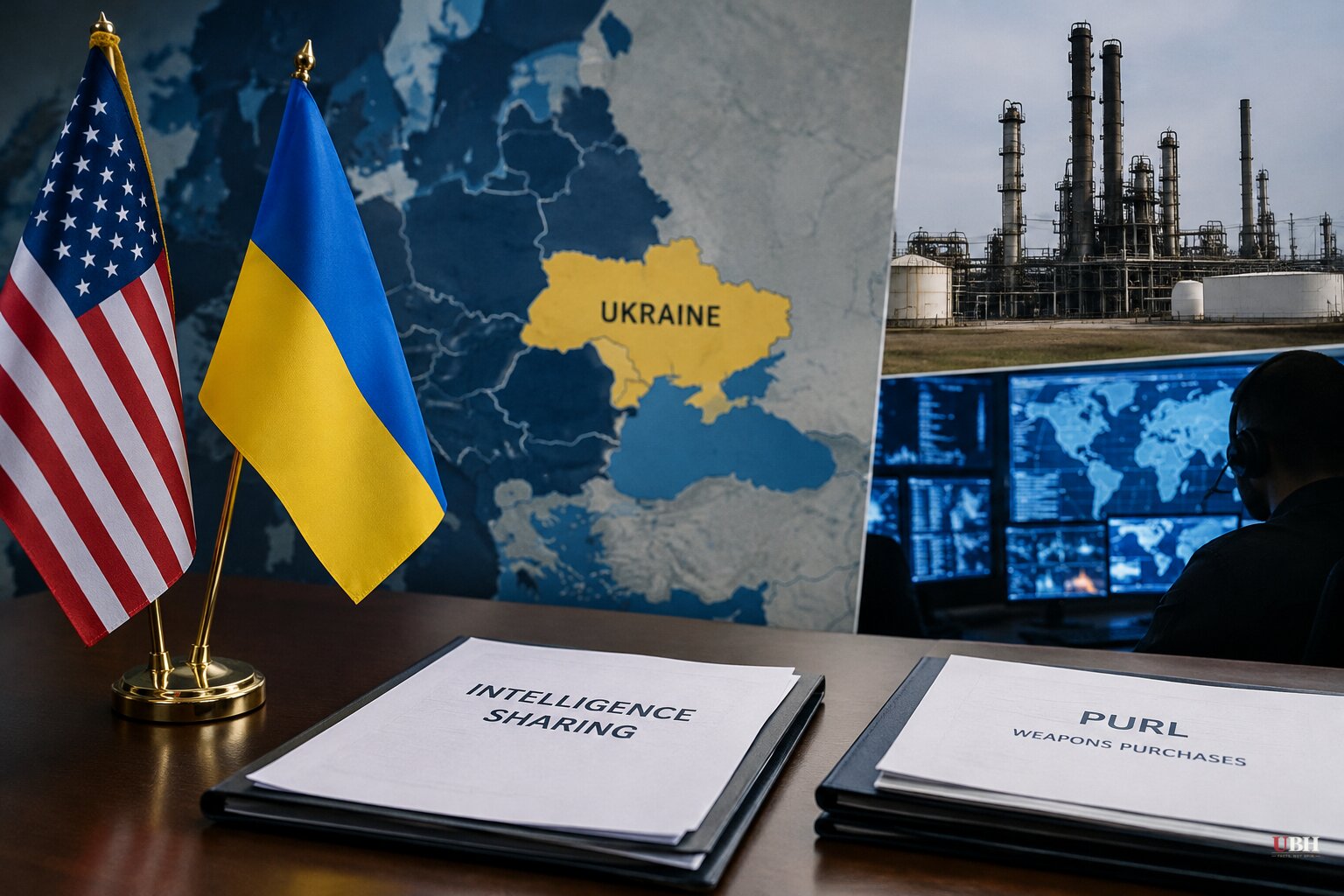
The Trump administration is pressing Ukraine to stop striking Russian oil refineries, and European officials say Washington is willing to cut off weapons and intelligence to make it happen.
Officials who took calls from US defense officials on Saturday, Oct. 10 and Sunday, Oct. 11, or were briefed on them, told the Financial Times the message was blunt. Stop the deep strikes on Russian energy infrastructure, or the US could suspend intelligence sharing and the Prioritised Ukraine Requirements List, known as PURL.
"They are calling Kyiv... They are calling everyone [in Europe]," one European official said. The White House declined to confirm or comment on the calls.
What PURL is
PURL is a NATO-managed initiative. Kyiv's allies pay for US-made weapons, which are then delivered to Ukraine. The US makes no financial contribution to the fund.
The threat is not to withhold American-funded aid. It is to close the channel through which Europeans buy American weapons for Ukraine, and to pull intelligence that helps Ukraine pick targets and defend itself.
Trump's ceasefire announcement
Over the same weekend, Trump said Zelenskyy had "many times" had the chance to end the war and chose not to. "I think it is time for Ukraine to have a new president," Trump said.
He then posted on Truth Social: "Effective immediately, there is an ENERGY CEASEFIRE in the War between Russia and Ukraine. Both parties have agreed. Do not break it!"
Zelenskyy's office said it had no knowledge of any such agreement. A senior Ukrainian official close to Zelenskyy told the FT, "Nobody has heard [of the ceasefire]," while crews were still restoring power and water in Kyiv after Russian strikes.
Zelenskyy told Axios the deal "is new to me. But if the Russians agree to an energy ceasefire, Ukraine will also agree." Shortly before Trump's post, he had told ABC News he wanted such a deal. It was not immediately clear whether Russia had agreed.
The White House also declined to say whether Trump would back Zelenskyy's proposal to press Vladimir Putin into a full 60-day ceasefire so Ukraine could hold elections.
Why refineries
The refinery campaign has escalated sharply. In an interview with Reuters published Oct. 3, Zelenskyy said Ukraine would intensify attacks on Russian refineries but not target civilians. He said Ukrainian intelligence had seen documents showing Putin authorized a directive allowing attacks on infrastructure, logistics and cities, including "roads, schools, hospitals."
"With their attacks on our energy, we have to respond on their energy," Zelenskyy said. "First of all, oil refiners... what gives money to them for this war."
Russia's Defense Ministry said Oct. 5 it would intensify strikes on military and military-industrial facilities "as well as related infrastructure in Kyiv and other Ukrainian regions." Both sides deny targeting civilians.
Ukraine's Defense Ministry said Oct. 4 that 51 percent of Russia's refining capacity is out of action, citing analysts and Ukrainian intelligence. Those figures are Kyiv's claim. Russian officials have not published damage data. On Oct. 2, a Russian official indicated damage to refineries was decreasing. Russia has extended a gasoline export ban several times since July, most recently citing higher demand during the autumn harvest.
The price angle
Trump has said the repeated attacks on Russian refineries, following Moscow's strikes on Ukraine's power grid, have helped cause international diesel shortages and price spikes. The AP noted the global crunch also followed the Iran war, which curtailed oil shipments through the Strait of Hormuz.
Ukraine's argument is that its strikes answer Russian attacks on its own grid and cut into the revenue funding Russia's war. The Ukrainian official quoted above said crews in Kyiv were still restoring power and water after Russian strikes.
What is unconfirmed
The threats are described by European officials speaking to the FT. The White House has neither confirmed nor denied them. No US official has gone on the record saying weapons or intelligence will be cut.
The ceasefire claim is similarly unverified. Trump says both sides agreed. Kyiv says it had not heard of it, and has said it would accept one if Moscow does.
The next test is concrete: whether Russia publicly commits to halting energy strikes, and whether PURL deliveries and intelligence sharing continue uninterrupted this week. Europeans, who fund the purchases, are the ones watching the PURL pipeline most closely.
Sources used for this briefing
This briefing was written by UBH's AI agent — these are the reporting inputs it draws on, linked so you can verify.


