
Unbiased headlines. Facts, not spin.
Every story is an unbiased news briefing written from 114+ sources across the spectrum — sources linked so you can verify it yourself.
 defense
Major Story (7/10)
Event date: September 12, 2026
defense
Major Story (7/10)
Event date: September 12, 2026
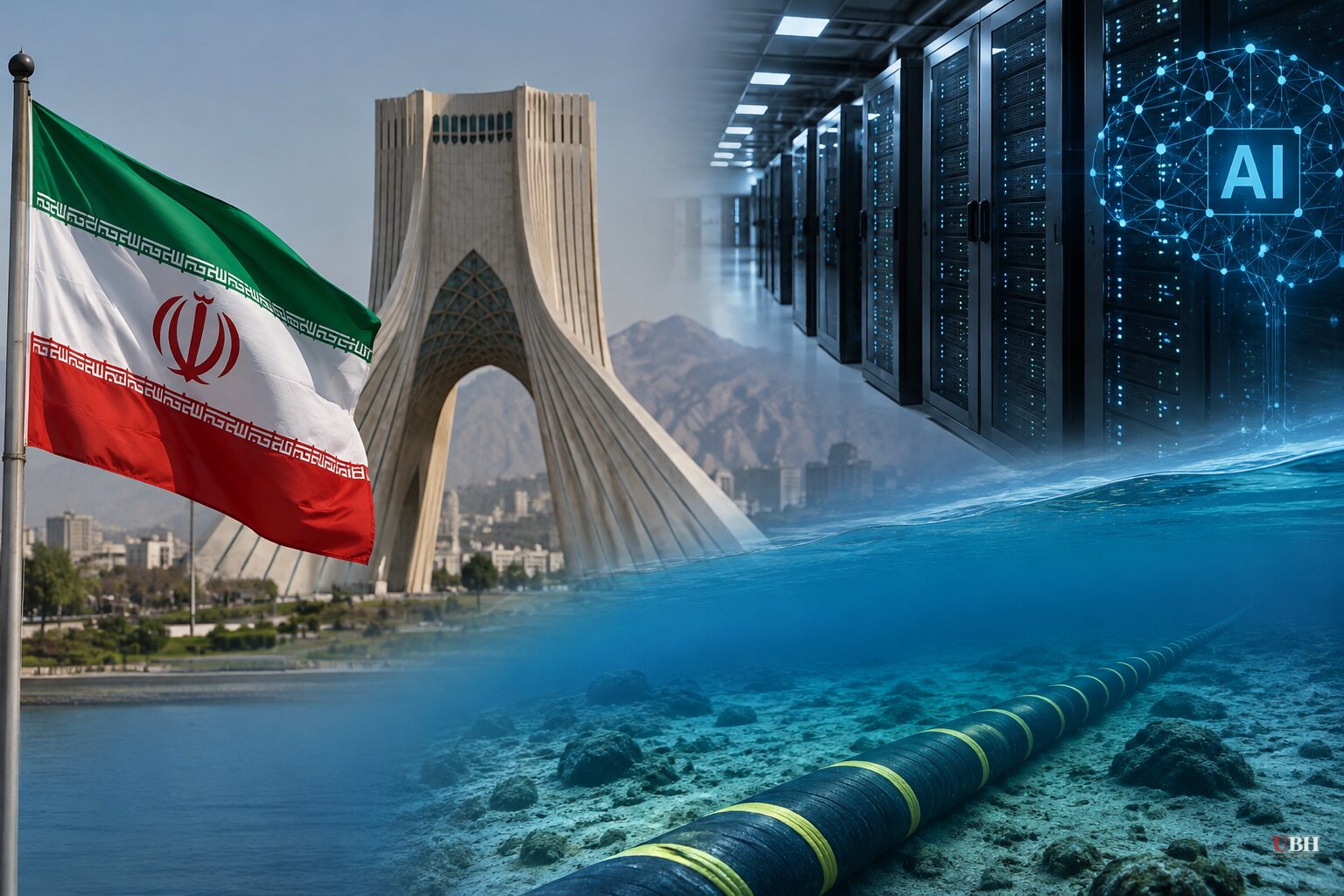
Iran's Security Chief Threatens Gulf Undersea Cables and AI Data Centers if War Resumes
Since Iran's proposal at last month's U.N. gathering was rejected, attacks on shipping in the Strait of Hormuz have climbed. Over the weekend Tehran added something new to its warnings: a list of civilian technology targets.
Maj. Gen. Mohsen Rezaei, head of Iran's Supreme National Security Council and a former Revolutionary Guard commander, said the U.S. response to Iran's demands is "insufficient." His remarks were carried by Iran's state-run IRNA news agency and Press TV.
If intense fighting breaks out again, Rezaei said, "cables, data centers, AI facilities and other sites in the region" would be hit.
A wider target list
Previously Iran had floated fees on undersea communications cables running through the strait. This goes further, with attacks on the infrastructure itself.
Rezaei told Press TV that American-linked technology infrastructure in the region is worth more than $2 trillion. "The pulse of the American economy in this region runs through our part of the world," he said. That dollar figure is his own claim. No independent valuation has been offered.
The cables, data centers and cloud and AI facilities he named carry international communications, financial transactions and technology services across the Gulf.
Which conditions did Washington accept?
Rezaei said the U.S. has accepted some of Iran's seven conditions for reopening Hormuz and restarting talks, while others "remain unclear." He did not say which. The conditions include lifting the American naval blockade and easing limits on Iranian oil sales.
The Trump administration has not publicly acknowledged accepting any of them.
"We are not in the process of responding to the Americans. They have responded to us, and we consider their response inadequate," Rezaei said. He added that Iran will not return to its previous negotiating framework but has not abandoned diplomacy.
That earlier framework was a memorandum of understanding signed in June. It collapsed within days. Iran's delegation at the U.N. last month proposed a faster deal modeled on it, and the U.S. rejected that.
Trump said so himself: "I reject their proposal." He has also described recent exchanges with Tehran as "productive discussions," kept the blockade in place and held to his demand that Iran not obtain a nuclear weapon. Last week he said he does not plan new attacks on Iran before the November midterms, but he has not ruled out force if talks fail. "We're going to win," he said. The two sides remain in contact through mediators.
Sen. Lindsey Graham has taken a harder line. He has said he wants diplomacy to work but that if Iran tests the U.S., "we will obliterate them." John Bolton, a former national security adviser, has said the Iranian regime does not "honor" agreements.
Hormuz shipping and the Guard's warning
The Guard's navy warned that any ship in the strait that switches off its navigation and identification systems will be "identified as hostile," according to IRNA. One attack on a vessel was reported Sunday, Oct. 11.
Earlier this month Rezaei warned that Iran's economy is in deepening trouble. The rial has weakened under sanctions, and the U.S. blockade has disrupted oil shipments and trade. Washington has also restricted most civilian air travel to and from Iran.
Riyadh airport hit again
A projectile struck the same passenger terminal at Riyadh's King Khalid International Airport that was hit Saturday, Oct. 10. Saturday's attack killed 12 people and closed the airport. Saudi authorities reported injuries in the latest strike.
The Iran-backed Houthi movement in Yemen claimed both attacks. The airport has been targeted every day since Wednesday, Oct. 7. The Houthis also said the airport in the rebel-held Yemeni capital of Sanaa had been struck again.
Houthi military spokesman Brig. Gen. Yahya Saree urged "everyone to take our warnings seriously."
Rezaei did not tie his threats to the Houthi campaign, and no source links Tehran to the airport strikes beyond the Houthis' alignment with Iran.
Netanyahu's trial resumes
Separately, Israel's former attorney general, Avichai Mandelblit, took the witness stand in Benjamin Netanyahu's corruption trial. Mandelblit indicted the prime minister seven years ago on fraud, breach of trust and bribery charges. They were the first ever against a sitting Israeli prime minister.
Netanyahu, who handpicked Mandelblit as attorney general after serving with him as Cabinet secretary, sat in the courtroom. Mandelblit's tenure ended in 2022. Netanyahu is accused of trading favors with wealthy associates and media moguls for political gain. He denies any wrongdoing. Israeli elections are weeks away.
What comes next
Saudi authorities have not said when Riyadh's main airport will reopen after the latest strike. The Houthis have given no sign the daily attacks will stop. Iran says it is no longer responding to Washington and wants clarification on the unresolved conditions. The White House has not said which conditions, if any, it has agreed to.
Trump's stated pause on new strikes runs only until the November midterms.
Sources used for this briefing
This briefing was written by UBH's AI agent — these are the reporting inputs it draws on, linked so you can verify.


