
Unbiased headlines. Facts, not spin.
Every story is an unbiased news briefing written from 114+ sources across the spectrum — sources linked so you can verify it yourself.
 defense
Major Story (7/10)
Event date: October 10, 2026
defense
Major Story (7/10)
Event date: October 10, 2026
Mojtaba Khamenei Praises Iran's Police Force as U.S. Army Publishes Identification Guide to Iran's Regular Army
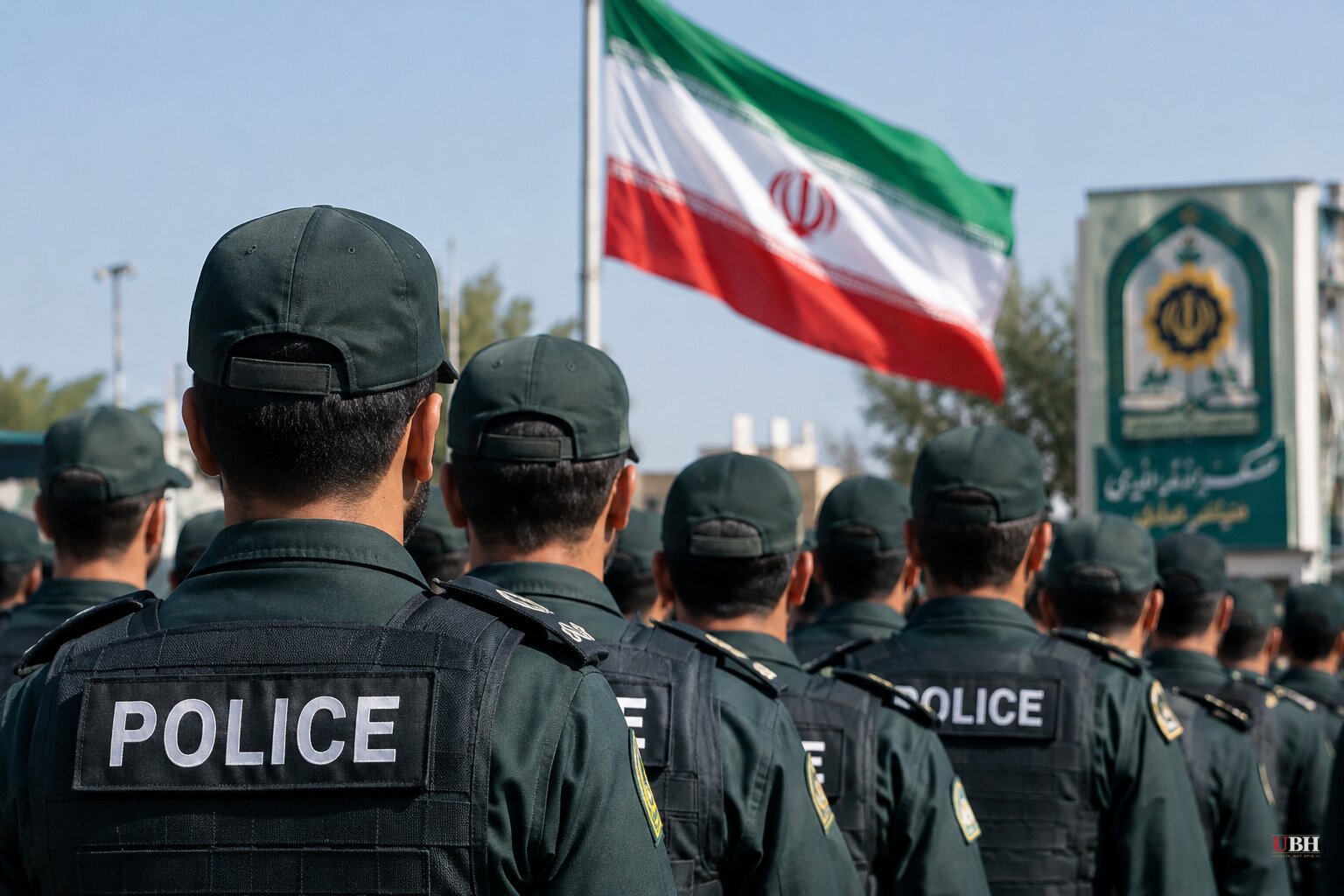
Iranian Supreme Leader Mojtaba Khamenei said in a statement posted on X on Oct. 8 that U.S. and Israeli strikes have failed to weaken Iran's domestic security forces. He praised the police and called for the force to be built up.
"The criminal US-Zionist enemy's desperate efforts and malicious attacks on the pillars of social order and security, which are unparalleled throughout history, have not caused the courageous personnel of the Police Force to waver even a fraction in their mission," Khamenei wrote.
He said the strikes on the force, "from its highest command levels down to those who are on the frontline," had only underscored its importance. The strikes were launched in February under operations the U.S. and Israel named Epic Fury and Roaring Lion.
Who runs the force
Khamenei's statement focused on FARAJA, Iran's Law Enforcement Command. It is one of three branches of the country's security apparatus. The other two are the Artesh, the conventional army, and the Islamic Revolutionary Guard Corps.
FARAJA is commanded by Brig. Gen. Ahmadreza Radan, whom Khamenei called a "brave, tireless and intelligent commander." The U.S. Treasury Department designated Radan for sanctions in September 2010. It cited his responsibility for beatings, killings and arbitrary arrests of protesters after Iran's disputed 2009 presidential election.
Iran Human Rights Monitor describes the force as a powerful internal security institution involved in suppressing anti-government demonstrations, monitoring political activity and enforcing the regime's ideological restrictions.
Khamenei called for strengthening the force through more personnel, equipment and technology. He specifically urged the use of artificial intelligence for data analysis.
The U.S. Army's guide to the Artesh
The statement came as the U.S. Army's Training and Transformation Command published a "Know the Threat" battlefield recognition guide to help American troops identify members of the Artesh. The guide was published Sept. 24 and highlighted by Defense News on Oct. 9. The Jerusalem Institute for Strategy and Security estimated in June that the Artesh's ground forces number about 350,000 personnel, including 220,000 conscripts.
The institute also found that the Artesh had suffered severe losses across its air, naval and air defense components during the opening phase of the U.S.-Israeli campaign, while its ground forces remained structurally intact because there had been no ground invasion.
President Donald Trump has said Iran's military has been significantly degraded. He claims Iran has fewer drones and missiles and that its navy and air force have been destroyed. Khamenei's message argues the opposite about the police. The extent of Iran's military recovery remains unclear.
An attack in Sistan and Baluchestan
On Oct. 9, a roadside bomb struck a security forces vehicle near Cheshmeh Ziarat outside Zahedan. It killed Nosrat Eftekhari, deputy for cultural and social affairs of the Sistan and Baluchestan police command. Police described Eftekhari as an official involved in strengthening relations among ethnic and religious communities and addressing problems in marginalized areas.
On Oct. 10, Interior Minister Eskandar Momeni sent a special delegation to the province to investigate recent attacks and identify those involved. Radan publicly vowed that revenge for Eftekhari was "certain."
The National Council of Resistance of Iran, an exiled opposition group, argues that the attack undercuts the leader's message. It says the regime is projecting confidence while sending emergency teams to a province where senior police personnel are being targeted. That is the group's interpretation, not an established finding.
The economy
Iran's economic numbers are also bad. The same opposition group cites new estimates from the Central Bank's Monetary and Banking Research Institute that put the spring contraction at 12.1%. That is worse than the Statistical Center's earlier estimate of 10.1%. Growth remained negative in July at -5.6% year-on-year, with industry and mining down 12.2% and the oil sector down 10%. Agriculture was the only major sector to record positive growth, at 6%.
The group also reports that Iran's state news agency IRNA said on Oct. 10 that the currency crisis cannot be reduced to sanctions or war. IRNA reportedly pointed to domestic causes including liquidity growth, chronic budget deficits, banking-system imbalances, weak production and trade restrictions.
A leader nobody has seen
Khamenei's messages are text. Iran Wire reports that in the nearly seven months since he was chosen as Supreme Leader, he has made no public appearance. His official record is confined to more than 25 written messages.
On Aug. 9, Basij deputy commander Ghasem Ghoreshi promised that footage of Khamenei among the public and meeting military commanders would be released "in the near future." Iran Wire reports that no photographic or video evidence of his presence at any gathering has been made public.
Iranian officials have offered other accounts. At a rally in Tehran's Shohada Square on Oct. 1, a cleric said Khamenei had visited the crowd two nights earlier for about half an hour. The mother of Khamenei's late wife, Zahra Haddad-Adel, has said she saw him during funeral proceedings. Official narratives describe him as healthy and managing state affairs.
Fars News Agency and the Tabnak website both later said a widely shared photograph claiming to show him at his father's funeral did not show him. Iran Wire also reports that, following the strike on his compound, three medical facilities to which he was taken for treatment were hit.
The open questions are specific. The footage the Basij promised on Aug. 9 has not been released.
Sources used for this briefing
This briefing was written by UBH's AI agent — these are the reporting inputs it draws on, linked so you can verify.


