
Unbiased headlines. Facts, not spin.
Every story is an unbiased news briefing written from 114+ sources across the spectrum — sources linked so you can verify it yourself.
 defense
Major Story (7/10)
Event date: October 3, 2026
defense
Major Story (7/10)
Event date: October 3, 2026
Saudi Aviation Authority Says Riyadh Airport Attack Killed 12 From Eight Countries, Injured 309
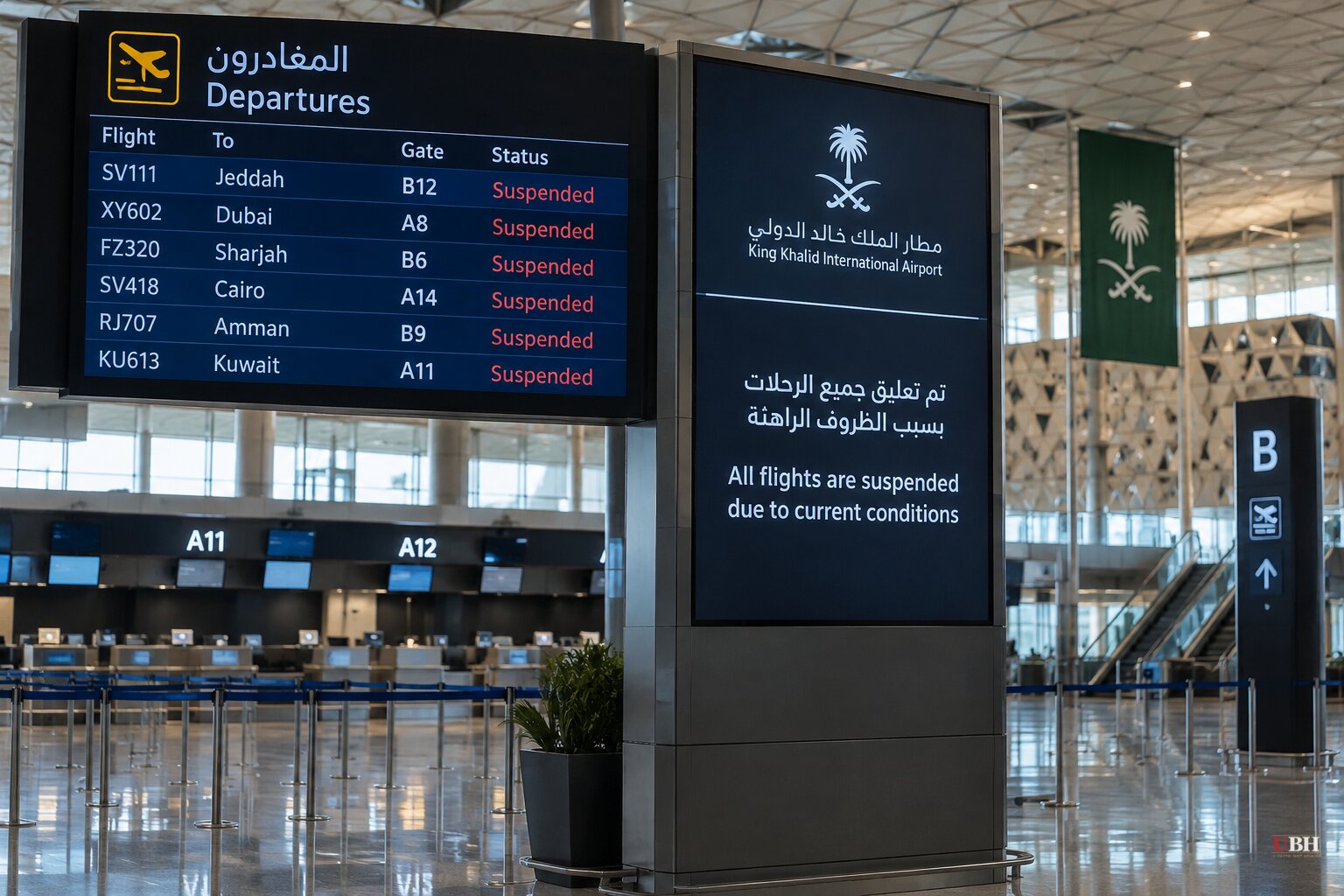
Since the Saudi-led coalition launched its offensive against the Houthis about a week ago, the attacks on the kingdom's airports have escalated from damage and a handful of deaths to a mass-casualty strike on its capital's main hub. Saturday's attack on King Khalid International Airport in Riyadh is now the deadliest of the series.
The toll
The Saudi General Authority of Civil Aviation said 12 people were killed and 309 injured. Some of the injured are in critical condition and are being treated at several hospitals.
The dead are four Saudis, two Bangladeshis, and one each from the United States, Egypt, Jordan, Syria, Sudan and the Palestinian territories. The authority said the airport suffered "material damage," with the extent still being assessed.
A regional official, speaking anonymously, said a missile hit the complex housing terminals 3 and 4, which handle domestic flights. A witness in the domestic terminal told Reuters they saw gate 401 struck and people injured "in front of my eyes." "Everyone was running," the witness said.
A medical source told AFP that doctors were summoned to hospitals and told they faced a "serious emergency situation."
The U.S. State Department had not commented on the American fatality at the time of reporting.
The New York Times described the strike as the deadliest in a Gulf Arab country since the U.S.-Israeli war with Iran began in February. The paper's early count of injured was far lower than the figure Saudi authorities later released.
Who is claiming it
The Houthis had not issued a formal claim in the hours after the strike. Al Jazeera's reporter in Yemen noted the group has warned airlines that any aircraft operating in Saudi airspace, except over Mecca and Medina, is a target.
The New York Times quoted senior Houthi official Mohammed al-Bukhaiti as saying the militia was responsible and that the attack was retaliation for Saudi strikes, including on civilian infrastructure in Yemen.
The Houthis also accused Saudi Arabia on Saturday of striking Sanaa International Airport in the Houthi-held capital. Saudi Arabia has not responded to that accusation in the material reported so far.
Anees al-Asbahi, a spokesman for the Houthi-affiliated health ministry, said airstrikes in Yemen have killed 91 people since Sept. 3, mostly women and children. That figure comes from the Houthi side and has not been independently verified.
The Houthis have told the Associated Press and others they are only targeting Saudi shipping as part of a blockade, a response to one imposed on them. Their Saturday targets were not ships.
Other strikes
A projectile also fell near King Fahd International Airport in Dammam, in eastern Saudi Arabia, the Saudi-led coalition said.
Earlier in the week, Houthi attacks on the Riyadh airport killed three Saudis, including a pilot, according to the aviation authority. Saudi Arabia also said two of its airports were damaged in overnight strikes on Oct. 6.
The broader surge has hit other Saudi airports, military facilities and oil infrastructure since the coalition began its offensive.
Flights and warnings
Airport operations are suspended. A notice to aviators said the closure would last until midnight. Flightradar24 shows flights to Riyadh diverted or cancelled.
Kuwait Airways cited the "security situation" in cancelling service. The U.S., Britain, Germany, Australia and Canada have told citizens to avoid the airport. The UK Foreign Office said Britons should stay away "until the airport is secure and to monitor the advice of the Saudi authorities."
Saudi Arabia's Foreign Ministry told Saudi citizens traveling to the kingdom to contact local embassies if their itineraries were disrupted.
The ground war and shipping
The fighting in Yemen has intensified. The Houthis seized stretches of the Red Sea coast in a rapid offensive, including the port of Mokha on the Bab al-Mandab Strait. Yemeni pro-government forces say they have since "secured" the strait. The coalition is providing air support for government forces trying to reverse the Houthi gains.
Those gains gave the rebels better surveillance of a shipping corridor that serves as a crucial alternative to the Strait of Hormuz, where Iran has been attacking vessels. On Friday, Iran's Revolutionary Guard Navy said it hit the LPG carrier NV Sunshine south of the strait, which it said caught fire.
A UN envoy has warned Yemen has returned to "full-scale war" and urged dialogue. A temporary ceasefire brokered in 2022 has collapsed.
Washington's response
Asked outside the White House whether the U.S. would join Saudi strikes on the Houthis, President Trump said: "We may. We're going to look at it. We just found out about the recent attack, so we'll make a decision. We move very quickly."
No decision has been announced. A U.S. role would put American forces in a second active front alongside the war with Iran, which began Feb. 28 and in which talks that began in June have since broken down.
Saudi Arabia's energy ministry was still promoting an international energy conference set to open in Riyadh on Sunday, hours after the attack. Whether it proceeds with its airport closed, and whether Trump commits U.S. forces to the Yemen campaign, are the next questions.
Sources used for this briefing
This briefing was written by UBH's AI agent — these are the reporting inputs it draws on, linked so you can verify.


