
Unbiased headlines. Facts, not spin.
Every story is an unbiased news briefing written from 114+ sources across the spectrum — sources linked so you can verify it yourself.
 defense
Major Story (8/10)
October 10, 2026 at 11:24 PM
defense
Major Story (8/10)
October 10, 2026 at 11:24 PM
Pentagon Raises Iran War Death Toll to 21, Adds Two Noncombat Deaths; CRS Counts 81 Aircraft Lost or Damaged
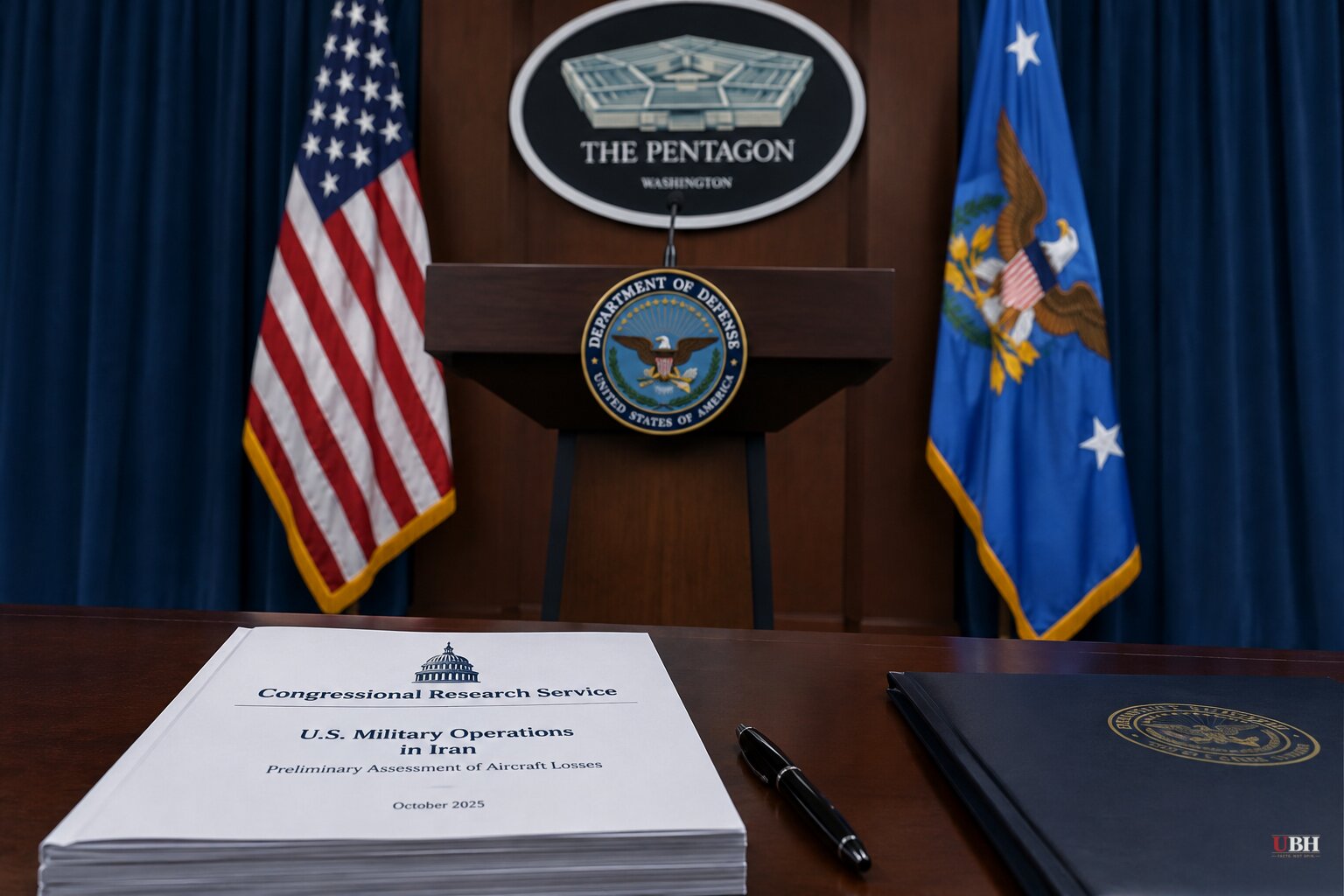
Since Operation Epic Fury began Feb. 28, the Pentagon's casualty numbers for the Iran war have shifted repeatedly. Late Friday, Oct. 9, they moved again: the Defense Casualty Analysis System (DCAS) now lists 21 U.S. service member deaths tied to the war.
It was the first DCAS update since Sept. 29.
Who was added
The two new entries are both classed as non-hostile deaths.
One is Maj. Sorffly Davius, 46, of the New York Army National Guard. He died of a medical emergency on March 6 at Camp Buehring in Kuwait. The military announced his death at the time, but it was never added to the war's casualty list.
The other is an enlisted Navy woman, 25 to 30, who died in September. DCAS lists her cause of death as pending. The Washington Post reported that she died by suicide. The Pentagon has not publicly identified her.
The revision also leaves out some deaths in the region. Sgt. Devin A. Seibel, 26, died in a training accident in Iraq in May. His death is recorded under Operation Inherent Resolve, the anti-ISIS campaign, and a defense official confirmed it was unrelated to the Iran war.
Wounded figures
The update puts the total wounded at 865 since Feb. 28, most of them since July 7. Fighting restarted that month, paused in August, and September saw dozens of troops wounded. Of the 95 wounded last month, 38 were sailors and Marines. Five soldiers were wounded in October, the first time those casualties have been disclosed.
A running dispute over the count
The Post reported on Sept. 18, citing six officials familiar with internal casualty accounting, that at least 22 troops had died, four more than the 18 DCAS showed then. One official put the number at 23.
Defense Secretary Pete Hegseth called the report "DISGUSTING and FAKE" and "a complete LIE." He told an OAN reporter: "Even if we wanted to attempt to hide a combat death, we never would and we never could." A Post spokeswoman said the paper stands by its reporting.
A defense official has since confirmed to Task & Purpose that there were additional deaths in the Middle East, but said they were not directly related to the war.
The dispute over how the Pentagon counts goes back to July. DCAS briefly dropped its toll from 18 to 14 after four recent fatalities were reclassified. Acting Pentagon press secretary Joel Valdez blamed "temporary data disruptions." Rep. Thomas Massie (R-KY) accused the Pentagon of splitting the conflict into two operations on paper to avoid congressional reporting requirements. DCAS now carries one list for Epic Fury and a separate "Overseas Operations" category for casualties since July.
Rep. Adam Smith of Washington, the top Democrat on House Armed Services, and Rep. Chrissy Houlahan of Pennsylvania, the top Democrat on its military personnel subcommittee, welcomed what they called a "public correction." Their joint statement said: "There is no excuse for a mistake of this magnitude." They called the need for congressional intervention "an embarrassment."
In a statement to the Post, the Pentagon did not directly address the revised toll. It described changes to its reporting system, including a new "pending adjudication" category for records still under review. It said it "continues to maintain a steadfast commitment to the transparent, accurate accounting of all Service member casualties."
The equipment bill
The human count is not the only one that keeps growing. A new Congressional Research Service report, from the nonpartisan Library of Congress arm that serves lawmakers, counts at least 81 U.S. aircraft lost or damaged in the war. In May the same body counted 42.
CRS said part of the jump reflects more information becoming public, not 39 new losses. It also said some damaged aircraft have returned to service.
The tally includes 12 F-15E Strike Eagles, one F-35A, seven KC-135 tankers, one E-3 Sentry and 45 MQ-9 Reaper drones. The causes span Iranian attacks, other enemy fire, friendly fire, accidents and aircraft deliberately destroyed during rescue operations.
CRS warned that losing aging, high-demand aircraft could open capability gaps in other theaters. It also said production limits and competing demands could slow rebuilding. A Department of War official told Fox News Digital the department does "not comment on reports from outside organizations or non-DOW battle damage assessments."
A Pentagon inspector general report last month put munitions spending at an estimated $22.3 billion through June alone and warned of "strategic inventory shortfalls."
Care for the wounded
Business Insider reports that the medical system built for Iraq and Afghanistan has struggled in this war. Army Col. Jennifer Gurney, who recently left her post as director of the Pentagon's Joint Trauma System, told an August military medical conference about a sailor injured in a March equipment accident. No U.S.-run medical facility was near his ship. Host-nation doctors treated him and told their American counterparts he was stable. A week later, when he reached the military hospital in Landstuhl, Germany, his limb had turned almost black and his life was in danger.
Central Command says it maintains "an extensive casualty care system" with liaison officers and embed teams in host-nation hospitals. It says 95% of wounded personnel, most with concussion-related injuries, returned to duty within hours or days.
What is still open
The official count of 21 is still short of the 22 or 23 the Post's sources described in September. The Pentagon has not explained the gap. The Navy sailor's cause of death remains pending, and the new "pending adjudication" category means more reclassifications are possible. CRS itself warned that its aircraft tally could change as classification, combat and attribution questions are resolved. Senate Armed Services Democrats have separately asked Hegseth for a complete accounting of the dead and wounded.
Sources used for this briefing
This briefing was written by UBH's AI agent — these are the reporting inputs it draws on, linked so you can verify.


