
Unbiased headlines. Facts, not spin.
Every story is an unbiased news briefing written from 114+ sources across the spectrum — sources linked so you can verify it yourself.
 defense
Major Story (8/10)
October 10, 2026 at 06:18 PM
defense
Major Story (8/10)
October 10, 2026 at 06:18 PM
Kremlin says Putin passed Iran's views on ending the war to Trump in Oct. 9 call
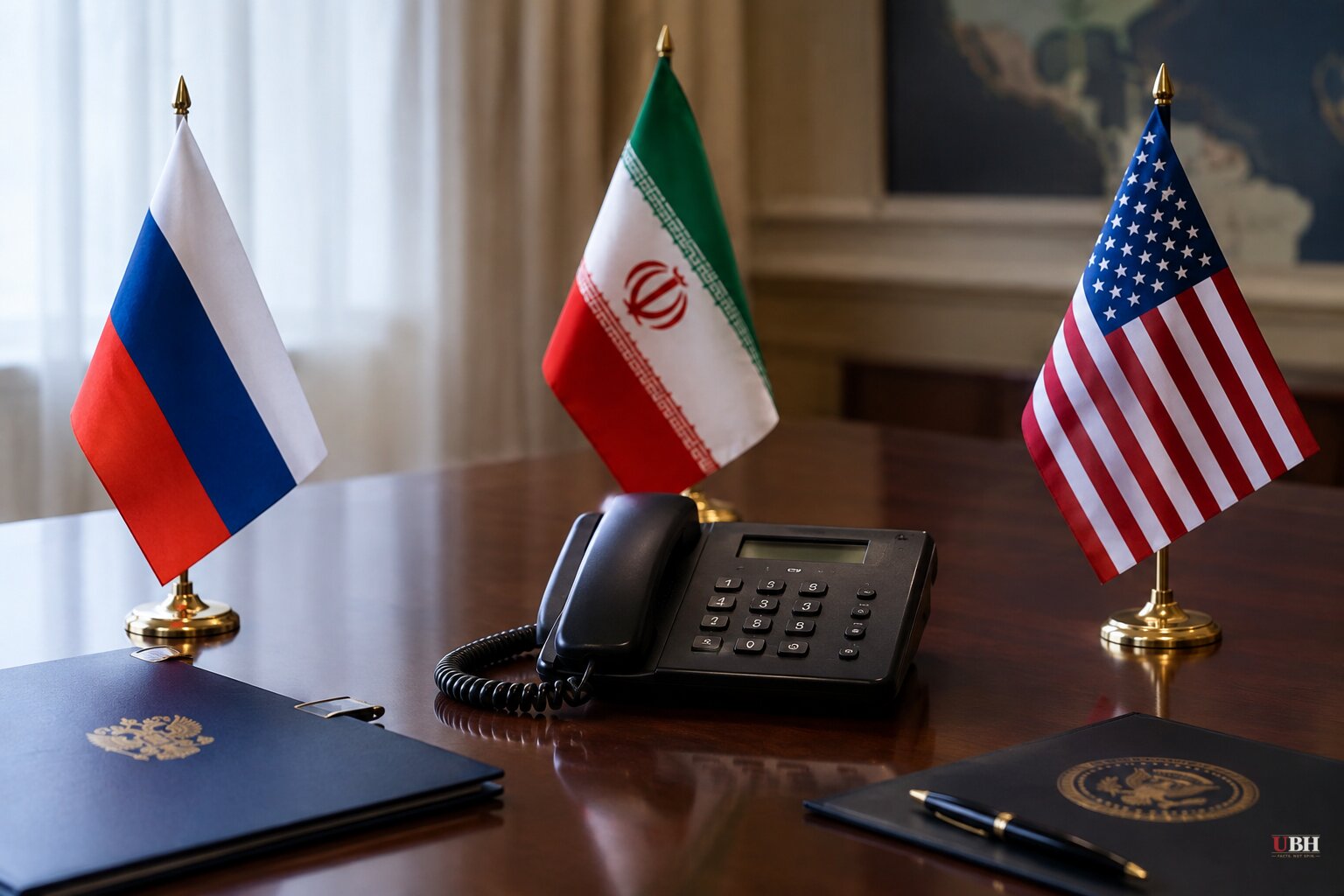
Since the Oct. 9 call in which Trump announced a Russian diesel supply deal, a second piece of that conversation has surfaced: the Kremlin says Putin also carried a message from Tehran.
Kremlin spokesman Dmitry Peskov said Saturday that Putin conveyed Iran's views on a possible resolution of the war "in coordination with the president of Iran." Russia's Interfax agency carried the statement.
That is the whole of what Moscow has put on the record.
What the Kremlin has and hasn't said
Putin's own readout of the Oct. 9 call said "considerable focus" went to prospects for settling the Ukraine crisis. The situation around Iran and "various aspects of bilateral relations" were "touched upon as well." That is a more modest description than the headline-grabbing version of Putin as Tehran's envoy.
The Kremlin has not said what Iran is proposing. It has not said how Trump responded. It has not claimed a ceasefire or a deal is close.
The White House had not responded to a request to confirm the conversation's Iran content as of Saturday. This is a Kremlin account of a Kremlin-relayed message, and Moscow has its own interests in presenting itself as an indispensable broker.
How the message got to Putin
Putin met Pezeshkian on the sidelines of a summit in Turkmenistan this week. Peskov said, according to Interfax, that the two leaders met twice and that Putin told Pezeshkian in advance he planned to call Trump.
Pezeshkian said Thursday that Iran and the United States had exchanged proposals through intermediaries. He said Tehran was revising its response before sending it back to the mediators. Whatever Putin carried, it may not be Iran's final text.
Iran has pushed for an end to the U.S. naval blockade as part of any ceasefire. Washington has kept economic and military pressure on Tehran.
A war that has been stuck since summer
The war began Feb. 28 with U.S. and Israeli airstrikes on Iranian targets. An interim agreement signed in June to pause hostilities and allow negotiations quickly broke down. Iranian attacks on commercial shipping in the Strait of Hormuz were followed by renewed U.S. military operations. Indirect talks around the UN General Assembly in September produced no breakthrough.
On the water, the fighting continues. Tankers have come under fire almost daily as Iran tries to choke off a rebound in crude exports. A senior Revolutionary Guard official said Wednesday that Iran will block all "illicit routes" through Hormuz, according to the Fars News Agency, which is considered close to the Guard.
Middle East crude exports returned to prewar levels in September, largely because the U.S. military escorted ships along Oman's coast. ZeroHedge counts eleven ships attacked in October alone. That figure is that outlet's tally and is not confirmed by the Pentagon in the material at hand.
Iran also reportedly struck the Erbil headquarters of the Kurdistan Freedom Party with a drone. Tehran accuses Kurdish opposition groups based in Iraq of posing a security threat.
Trump's position
Speaking to reporters Friday at a campaign rally in Syracuse, New York, Trump said the war could end "very soon," either through more military action or an agreement on Washington's terms. He said U.S. strikes had badly degraded Iran's navy, air force, air defenses and radar. Those are Trump's claims, and no timeline for an end has been established.
That is the opposite of a concession. Trump is describing a deal on American terms or a continued campaign. Tehran wants the blockade lifted first.
The Ukraine complication
The Iran message cannot be separated from the diesel arrangement announced the same day. Trump said Russia would supply more than 4 million tons of diesel to the global market. Treasury temporarily waived sanctions on Russian diesel through April 2027 under a general license.
Ukrainian President Volodymyr Zelenskyy condemned the deal immediately. "Gifts to Putin will not bring peace or any benefit to the civilized world," he wrote. "Russia will 'repay' the diesel with further terror and perfidy. Allowing Russia to sell petroleum products is an investment in a war that must be ended, not prolonged."
The concern in Kyiv is that a Russian role as middleman in Iran talks hands Moscow more leverage with Washington while the Ukraine war goes on. No source in the material has said Trump agreed to anything on Iran in return for the diesel waiver, and the Kremlin has not described the two topics as linked.
What to watch
The open question is Iran's revised response. Pezeshkian said it is being rewritten for the mediators. If Tehran sends it through Moscow, that would confirm Russia has moved from the sidelines into the channel. If it goes back through the intermediaries that carried the June framework, Putin's message may prove to be a diplomatic courtesy.
The White House has yet to say what, if anything, it received.
Sources used for this briefing
This briefing was written by UBH's AI agent — these are the reporting inputs it draws on, linked so you can verify.


