
Unbiased headlines. Facts, not spin.
Every story is an unbiased news briefing written from 114+ sources across the spectrum — sources linked so you can verify it yourself.
 defense
Major Story (7/10)
October 10, 2026 at 06:25 PM
defense
Major Story (7/10)
October 10, 2026 at 06:25 PM
Iran War Exposes Gaps in US Military Casualty Care, Medical Officials and Wounded Soldiers Say
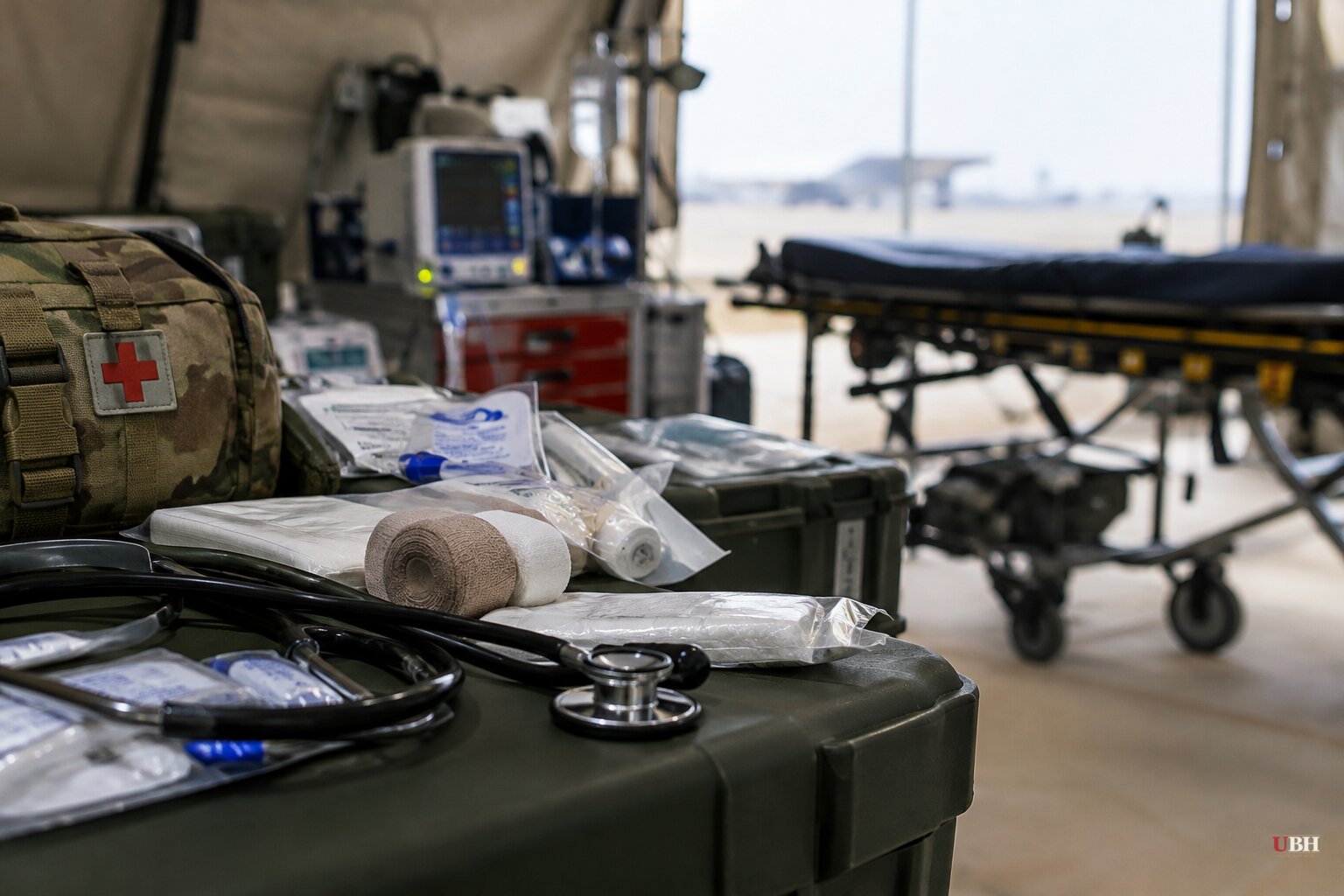
A US sailor's crushed limb looked salvageable to the American doctors advising from afar. When he finally reached the military hospital in Landstuhl, Germany, a week later, it had turned almost black and his life was in danger.
Army Col. Jennifer Gurney described the case to an audience of military medical professionals at an August conference. Until recently she was director of the Pentagon's Joint Trauma System.
The service member had been deployed aboard a ship in the Middle East. An equipment accident in March left him with injuries beyond what the ship's medical staff could handle. No US-run medical facility was close enough, so he went to a host-nation hospital, where local doctors treated him and told their American counterparts he was stable.
A system built for a different war
Gurney was not alone. Other military leaders at the conference, plus half a dozen military medical officials interviewed separately by Business Insider, described a casualty-care system straining against a battlefield unlike Iraq and Afghanistan.
These officials said medical capabilities near the fighting were constrained early in the Iran war by persistent drone and missile threats. Medical facilities on or near military centers have only recently received better protection, they said.
They also said large US-run hospitals are absent from the region. The US ran big Role 3 hospitals during the Global War on Terror. Now American forces lean on host-nation hospitals, and the officials said that comes with limits on US oversight and fragmented records. That makes it harder to track patients and to learn lessons from the war.
A Pentagon Inspector General report to Congress, released in mid-September, documented operational challenges in casualty care during the conflict. It found the military relied on foreign medical centers because of resource and force-protection constraints.
CENTCOM's defense
Central Command disputes the picture of a system in trouble. A spokesperson said the command maintains "an extensive casualty care system" with liaison officers and "active embed teams" inside host-nation medical facilities. The command surgeon's office, the spokesperson said, "follows every case all the way back home."
CENTCOM said the system performed effectively overall. By its count, 95% of wounded service members returned to duty within hours or days. Most of those had concussion-related injuries.
That figure measures return to duty. It does not speak to the harder cases, such as a crushed limb or shrapnel near an artery, where delays carry steeper costs.
Kuwait: nine soldiers on the record
The sharpest criticism comes from troops hit in Iran's March 1 drone strike on Port Shuaiba in Kuwait. The strike hit a makeshift tactical operations center in the early hours of the war. Six US military personnel were killed and more than 30 were injured.
Nine wounded service members described their care on the record to the Associated Press. Their accounts are their own and have not been confirmed by an official review. The Pentagon has said the medical care was appropriate.
Army Lt. Col. Arturo Lincón, a veteran of Iraq and Afghanistan, had shrapnel injuries including damage to his left vertebral artery, which raised his stroke risk. He said his injuries were not judged serious enough for admission to Landstuhl. He was sent to the Army barracks and told to schedule outpatient appointments. "I was just kind of on my own, at least it felt like that," he told the AP.
Lincón later had weeks of specialized outpatient care at Walter Reed. Months on, he said, he is still trying to get traumatic injury benefits under Servicemembers' Group Life Insurance.
Maj. Stephen Ramsbottom said he waited more than four months for MRI results after shrapnel was removed from his head. "I've had to build my own case for everything," he said.
Chief Warrant Officer 4 Rodney Bearman, who had shrapnel in his face and legs, was in a group not evacuated from Kuwait for 10 days. Some of the most seriously hurt had left within two days. Bearman said the group was flown to Germany strapped to the floor of a cargo plane. On arrival, he said, they learned the military had not documented them as wounded in combat, which meant no treatment at Landstuhl. He said the cause was a coding error.
"Never did I think that if I was wounded that these things would happen," Bearman told the AP. "Some sacred trust that I thought would never be broken was broken."
Several of the troops told the AP they learned only after returning to the United States that they had traumatic brain injuries. Many did not know how severe those injuries were.
What comes next
The two sets of accounts overlap in one place: when care leaves the American system, records get thin and nobody has clear ownership of the patient. In the sailor's case, reassurance from a host-nation hospital did not match what doctors found a week later. In Kuwait, the paperwork category assigned to the wounded reportedly decided where they could be treated.
Lawmakers are pushing for public hearings on the Kuwait attack. The sources name no scheduled date. Whether the Pentagon answers the soldiers' specific accounts, including the coding error and the MRI delay, under oath is the open question.
The Inspector General's findings are already in Congress's hands.
Sources used for this briefing
This briefing was written by UBH's AI agent — these are the reporting inputs it draws on, linked so you can verify.


