
Unbiased headlines. Facts, not spin.
Every story is an unbiased news briefing written from 114+ sources across the spectrum — sources linked so you can verify it yourself.
 defense
Major Story (7/10)
Event date: October 3, 2026
defense
Major Story (7/10)
Event date: October 3, 2026
Riyadh Airport Attacked Again and Evacuated, Two Regional Officials Say
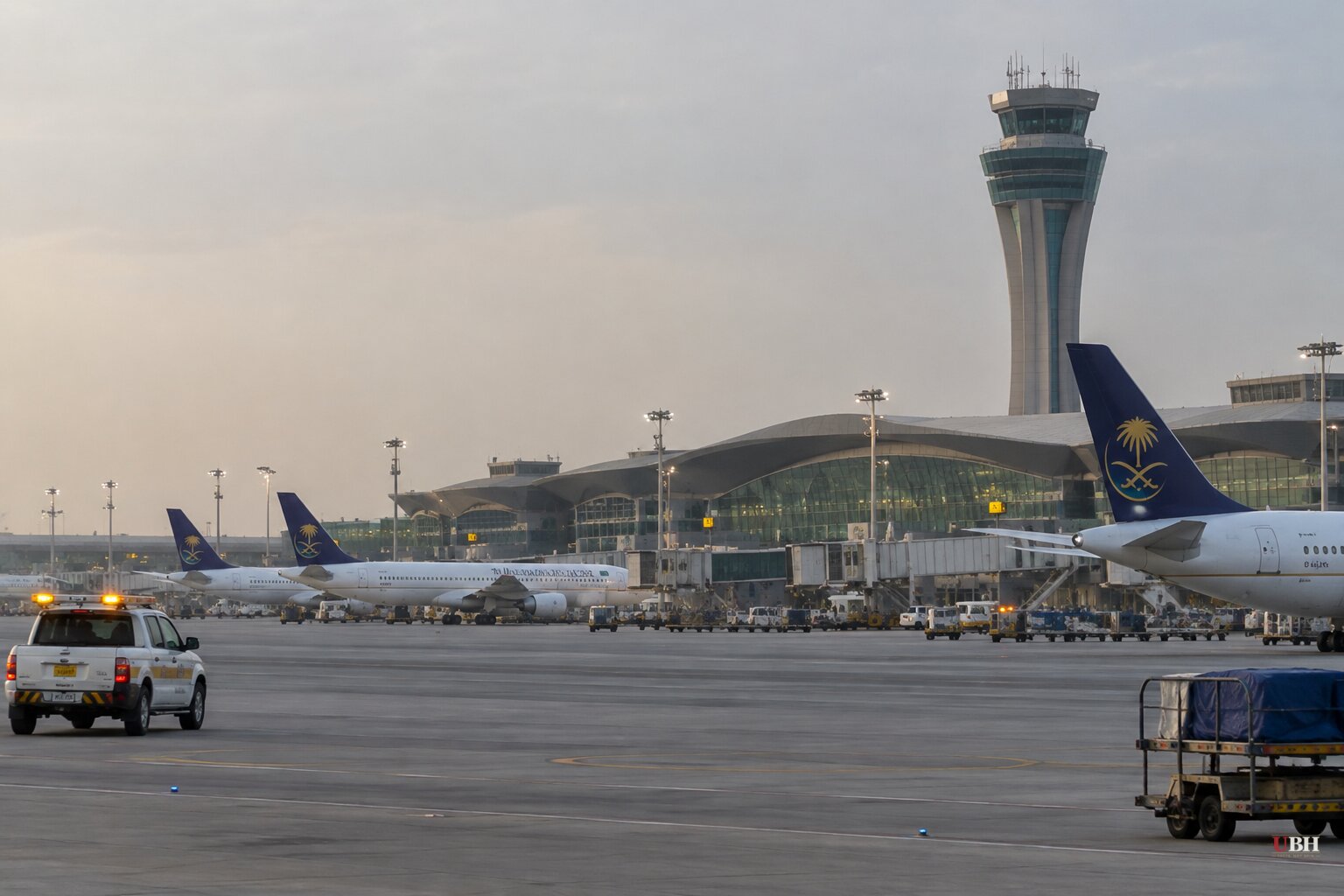
Since a Saudi-led coalition launched its offensive against Yemen's Houthi rebels a week ago, King Khalid International Airport in Riyadh has been hit repeatedly, and on Saturday, Oct. 10, it was attacked again.
Two regional officials, speaking anonymously because they were not authorized to brief media, said the airport was evacuated and air traffic stopped. A Riyadh resident, Ahmed Sayed, told The Associated Press he heard at least two loud explosions that shook the capital. Ambulances were seen heading toward the airport.
The Saudi government has not issued a public account of the damage or casualties. The Center for International Communication, which oversees foreign media in the kingdom, did not immediately respond to a request for comment.
Flights diverted, cancellations pile up
Flightradar24 showed flights bound for Riyadh diverting elsewhere. The last flight landed at 2:05 p.m., almost four hours before the evacuation reports. Kuwait Airways said it was canceling flights because the airport had closed.
FlightAware counted at least 225 cancellations at the airport over the previous 24 hours. The airport's own alert was terse: check with your airline before heading to the terminal.
Canada's embassy told citizens to avoid all travel to the airport, citing "ongoing military activity."
What came before
The Houthis claimed responsibility for the earlier attacks on the airport. One on Wednesday killed a Sudanese national and wounded eight other people. Thursday's strike killed three Saudi citizens, including a pilot. The Houthis made no immediate statement Saturday.
The airport attacks are part of a wider escalation. Houthi forces have made recent gains along Yemen's Red Sea coast, which gives them a better view of shipping on a corridor that serves as a crucial alternative to the Strait of Hormuz. Iran has been attacking ships in that strait. The Saudi-led coalition is providing air support to Yemeni government forces trying to reverse those gains.
The Houthis have told The Associated Press and other outlets that they are targeting only Saudi shipping, as part of a blockade in retaliation for one imposed on them. Concerns about wider attacks persist. The Houthis hit other ships after the Gaza war began, calling it solidarity with Palestinians, until a U.S. bombing campaign ended that.
Washington's response so far
Saudi officials say U.S. help has included intelligence sharing, target identification and planning for the latest offensive. Riyadh has also asked the U.S. and other allies for support as airports, military facilities and oil infrastructure have come under attack.
Asked about the airport strikes Friday as he left the White House, Trump said, "It's not good" and "I'm not happy." There has been no immediate sign of U.S. military action in response. Trump had earlier rejected Saudi requests for direct U.S. military intervention against the Houthis.
That leaves Saudi Arabia leaning on diplomacy. The Saudi and Omani foreign ministers spoke by phone Saturday about "supporting diplomatic solutions to de-escalate tensions," the kingdom said.
The bigger war
The Houthi front sits inside the larger conflict that began with U.S. and Israeli strikes on Iran at the end of February. In the Strait of Hormuz and off Oman, 11 ships have been struck so far in October, according to the U.S. Naval Institute, which cited the International Maritime Organization and the UK Maritime Trade Operations. Most were crude oil tankers. The week of Sept. 28 through Oct. 6 saw the highest weekly total, with 12 attacks.
Bloomberg reported Friday, citing officials familiar with the matter, that Iran has kept the factories to produce missiles and drones despite repeated U.S. and Israeli bombing. Western officials told the outlet Iran still has plenty of ballistic missiles and some anti-ship weapons. Trump said this week that Iran is in "very bad condition."
On Friday, the Kremlin said Putin and Trump discussed the Iran war in a phone call. Trump said afterward that Putin had agreed to release diesel into the global market, starting with 300,000 tons "immediately."
What remains unanswered: the casualty count from Saturday's attack, whether the Houthis will claim it, and when Riyadh's main airport will reopen to commercial traffic. None of those has been announced.
Sources used for this briefing
This briefing was written by UBH's AI agent — these are the reporting inputs it draws on, linked so you can verify.


