
Unbiased headlines. Facts, not spin.
Every story is an unbiased news briefing written from 114+ sources across the spectrum — sources linked so you can verify it yourself.
 defense
Major Story (8/10)
October 11, 2026 at 10:11 AM
defense
Major Story (8/10)
October 11, 2026 at 10:11 AM
European Intelligence Officials Say Russia Is Stepping Up Plots to Kill Defense Industry Executives
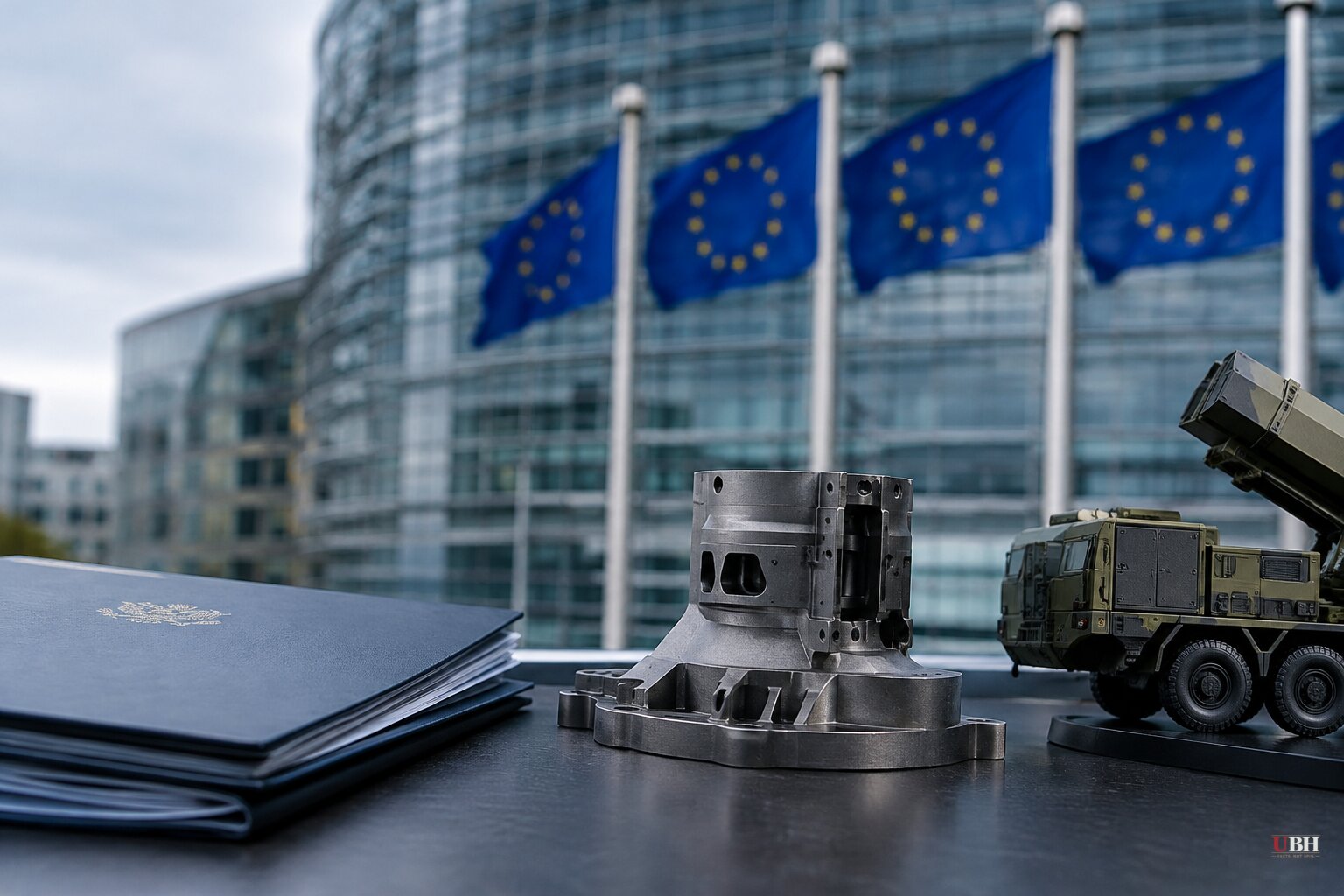
Western intelligence agencies have warned defense industry CEOs and senior staff that Russian operatives are targeting them, and companies are paying for more security as a result.
Officials from five European intelligence agencies told the Financial Times that Russia is stepping up efforts to assassinate European defense company bosses. Killing civilians in Europe was once considered taboo even by Russia's spy services. It is now becoming a prominent part of the Kremlin's plans, the officials said.
Who is being targeted
The threat is not limited to the big names. Executives at smaller firms, especially those making drones or drone components, are also in the frame.
"The threat level has risen in Europe. To property but also to people," one senior European intelligence official said.
Several defense executives, speaking anonymously, told the FT they strengthened close-protection arrangements over the past six months on the advice of government security services. Others said they take such measures only when traveling abroad.
Germany's domestic intelligence service, the BfV, has sharply increased contact with staff and executives at German defense companies, according to an official quoted in the reporting. The agency has even recommended private protection teams.
On the record from Germany
Sinan Selen, the BfV's head, told German lawmakers: "Russia is engaged in the deliberate planning of acts of violence against individuals by state or state-controlled actors."
Selen added: "We are observing a further development of these actions in terms of the targets, the methods and the actors involved, including the use of organised crime structures."
How the plots are changing
Responsibility for what Russian intelligence slang calls "wet work" largely falls to the GRU, the military intelligence service, according to the intelligence officials. They say the GRU is adapting.
Officers increasingly work with organized crime groups and with agent networks that operate across borders. Reconnaissance, logistics, planning and execution are split among different cells instead of resting on a single disposable recruit hired online for cash. In some cases plots already in the operational phase were identified and thwarted, the officials said.
The officials also said the Kremlin ordered a wider campaign of sabotage and hybrid operations in Europe because battlefield progress in Ukraine is deadlocked and Russia's economy is struggling. The goal is to weaken support for Kyiv.
Much of the effect is psychological, one intelligence official said. "Just by making people feel they might be a target, they are having their effect. They want individuals to think twice before doing business with Ukraine."
The same official cautioned that many Russian efforts are amateurish and easily countered. In August, two holidaymakers arrested in Sweden near the property of Saab CEO Micael Johansson were released shortly afterward. No charges were reported in that case.
Denmark's wider warning
The assassination warnings follow a broader assessment from the Danish Defence Intelligence Service. In an unclassified report released Sept. 24, it said Moscow "will intensify its hybrid war by carrying out more frequent attacks against the West and NATO, with greater consequences for the targeted countries than in the past."
The DDIS said that could include destructive cyberattacks on critical functions and sabotage with a high risk of casualties.
The agency put a "low but growing risk" on a limited Russian military attack against one or more NATO countries. Examples include isolated strikes on infrastructure that supports Ukraine, or a false-flag operation using Ukrainian drones. The aim, it said, would be to pull European resources away from Ukraine and split NATO if the alliance could not agree on a collective response. It said that could happen in the coming months.
An outright invasion of a Western country is "highly unlikely," the DDIS said. It defines that as under a 10 percent chance. DDIS chief Thomas Ahrenkiel said Russia could also put a limited number of troops into a NATO border area, possibly under the pretext of protecting Russian minorities. "The aim is not to take over the country, but to divide NATO," he said.
Moscow's answer
The Russian Embassy in Denmark rejected the assessment, saying it is not supported by credible evidence. It accused the West, led by Denmark, of escalating tensions over Ukraine. "Our persistent warnings about the destructiveness of such an approach are being ignored," the embassy said.
NATO Secretary-General Mark Rutte, speaking at the 9/11 Memorial on Sept. 24, agreed with the Danish judgment on invasion. "I think the Danish intelligence is right there. That's highly unlikely," he said. He added that NATO should not be "naive," pointing to Russia's buildup of its armed forces and national industry.
What is known and what is not
The assassination claims rest on unnamed officials, apart from Selen's on-record remarks. No specific plot against a named executive has been made public. No charges tied to the Saab arrests have been reported.
The DDIS timeline is the concrete one to watch. It says a limited Russian strike or border incident is possible in the coming months, while Russia is still fighting in Ukraine. Whether NATO could agree on a collective response in that scenario is the question the Danish assessment itself says Moscow is counting on.
Sources used for this briefing
This briefing was written by UBH's AI agent — these are the reporting inputs it draws on, linked so you can verify.


