
Unbiased headlines. Facts, not spin.
Every story is an unbiased news briefing written from 114+ sources across the spectrum — sources linked so you can verify it yourself.
 defense
Major Story (8/10)
October 11, 2026 at 04:28 AM
defense
Major Story (8/10)
October 11, 2026 at 04:28 AM
US Jet Disables Panama-Flagged Bulk Carrier in Gulf of Oman, CENTCOM Says Crew Ignored Warnings
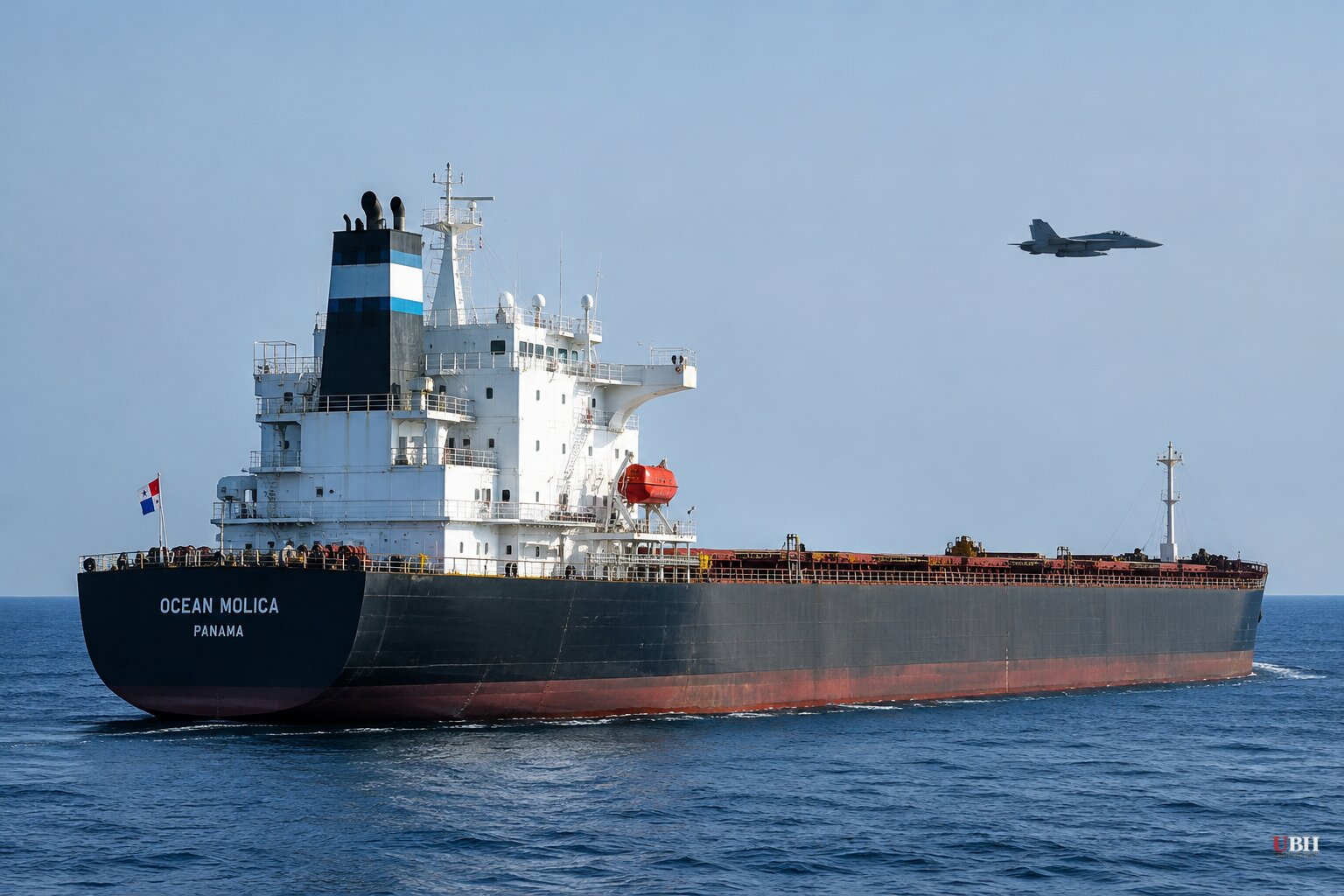
Since the U.S. resumed its blockade of Iranian ports on July 14, CENTCOM says its forces have turned back 135 ships, disabled four commercial vessels and destroyed 10 tankers tied to the Islamic Revolutionary Guard Corps. The latest disabling came Saturday, Oct. 10.
According to CENTCOM, a US fighter jet struck the stern of the Panama-flagged M/V Ocean Molica, also known as the Arika Sun, with a precision munition. The command said the strike "fully disabl[ed] the ship's propulsion without harming the crew."
CENTCOM's account is that the crew "ignored repeated warnings and attempted to run the ongoing naval blockade against Iran." It said the large bulk carrier was moving through regional waters after leaving an Iranian port. CENTCOM posted video it says shows the strike.
What CENTCOM says the blockade has done
CENTCOM puts the three-month tally at four vessels disabled, 135 ships turned around and 10 tankers destroyed. It describes the destroyed tankers as part of the IRGC's "multibillion-dollar shadow network." The 135 figure is up from the 133 ships reported diverted as of Oct. 9.
The stated goal of the blockade, reimposed in mid-July, is to pressure Tehran into reopening the Strait of Hormuz by cutting off its oil export revenue. Before the war, the strait carried about 20% of the world's oil consumption. The US and Israel launched the war on Iran in February.
CENTCOM told mariners in the Gulf of Oman and the approaches to Hormuz to heed blockade warnings, monitor Notice to Mariners broadcasts and contact US naval forces on bridge-to-bridge channel 16.
The ship's operator has not commented. Reuters said it could not immediately reach the bulk carrier's operator. No one has said whether the vessel remains adrift, is under tow, or what happens to its cargo and crew.
Murphy: "What is this all for?"
Democratic Sen. Chris Murphy of Connecticut challenged the strategy on X. "What is this all for? Why are taxpayers paying billions to hit commercial ships?" he wrote.
Murphy argued the aim appears to be leverage "to convince the Iranians to let us pay them billions to return everything to the way it all was before the war." His verdict: "What a disaster."
The administration's side of that argument rests on the blockade's purpose as CENTCOM states it. The strike also drew no reported casualties, and CENTCOM says it gave repeated warnings first. The blockade is meant to choke Iran's oil income, and Iran-linked tankers are the main channel for that income.
Secretary of War Pete Hegseth has said, according to Al-Quds, that the US has "absolute control" over Hormuz, that the blockade is "extremely tight," and that commercial flows are approaching pre-tension levels. Ship-tracking data points the other way. Kpler data showed only seven commodity vessels crossed the strait on Tuesday, Oct. 6, the lowest count since July 23.
Iran claims its own strike
The blockade is only part of the story. Iran's IRGC said in a statement carried by official Iranian media that its forces "have taken control of the administration of the strait." It said that a few hours before the statement it struck the LPG carrier NV Sunshine, owned by NatWit, for trying to use an "illegal route" south of Hormuz.
The IRGC's claim comes from Tehran alone. No independent confirmation of the strike or of damage to the vessel appears in the reporting.
Tanker attacks in and around the strait reached their highest weekly level last week since the war began in February, per Reuters. Traffic through Hormuz fell to its lowest point in more than two months. That has kept pressure on crude prices.
Two navies, or one navy and one militia, are now each claiming the right to decide who moves through the same narrow waterway. Commercial crews are caught between a US blockade of Iranian ports and an IRGC "administration" of the strait. The ships taking fire in this campaign are not warships.
What to watch
CENTCOM has not said how many more disabling strikes it expects to need. Murphy's question about cost is unanswered: no figure for what the blockade has cost taxpayers has been published in the reporting. And the ship's owner has not said whether it will contest the characterization that its crew ignored warnings.
Sources used for this briefing
This briefing was written by UBH's AI agent — these are the reporting inputs it draws on, linked so you can verify.


