
Unbiased headlines. Facts, not spin.
Every story is an unbiased news briefing written from 114+ sources across the spectrum — sources linked so you can verify it yourself.
 defense
Breaking / Critical (9/10)
October 11, 2026 at 05:02 PM
defense
Breaking / Critical (9/10)
October 11, 2026 at 05:02 PM
Iran Claims Supertanker Hit Mine in Hormuz as UKMTO Logs Tanker Strikes on Two Straight Days
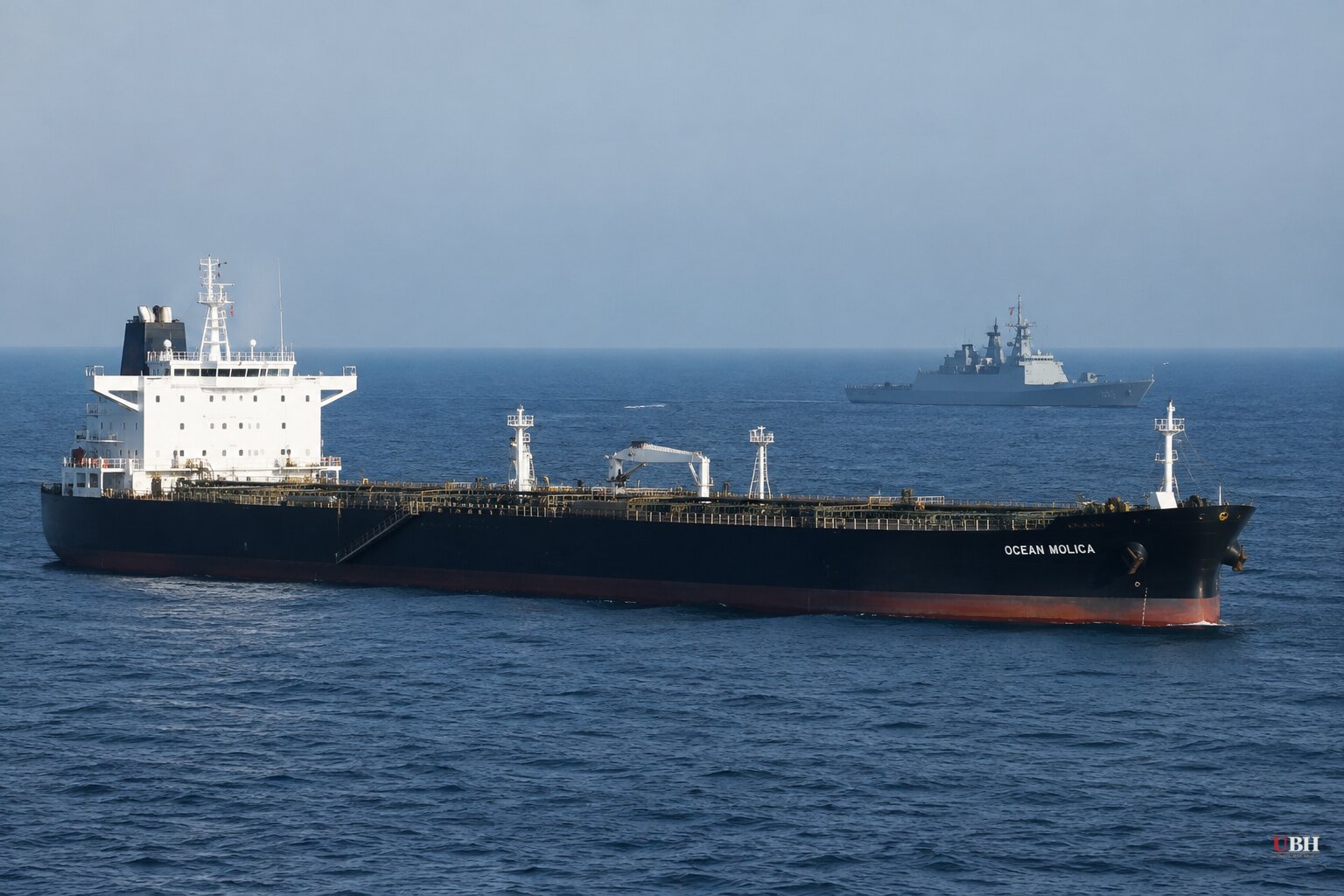
Since a US fighter jet disabled the Panama-flagged Ocean Molica in the Gulf of Oman on Saturday, Oct. 10, the fight over who controls Hormuz has moved from the blockade line to the strait itself. Iran's Islamic Revolutionary Guard Corps says a crude supertanker blew up after hitting a naval mine. Nobody outside the IRGC has confirmed that.
What the IRGC claims and what is documented
The IRGC said Saturday that the tanker, which it described as able to carry about 2 million barrels, switched off its navigation and positioning systems and tried to leave through a southern route Tehran calls unauthorized. The Guards said the fire was large enough to be seen from the coast. They did not name the ship, its crew or any casualties.
The IRGC statement was blunt: a massive fire is the fate of any tanker that ignores Iran's rules in the strait. The Guards also said action against vessels using unauthorized routes will no longer be limited to Hormuz and that violators will be pursued across the region.
What is documented comes from the UK Maritime Trade Operations. On Saturday, the master of an outbound tanker reported being hit on the port side by an unknown projectile, which started a fire. On Sunday, Oct. 11, a company security officer reported a second outbound tanker hit on the port side by an unidentified projectile. All crew were reported safe in both cases, and UKMTO said authorities are investigating.
UKMTO did not name either vessel or say who fired. It is not established that either is the ship the IRGC described, and a projectile is not a mine. The UAE National Guard also said Saturday it rescued 22 people, all Indian citizens, after an oil tanker fire.
A near-daily pace of attacks
The International Maritime Organization counted at least 11 tankers attacked in the week ending Oct. 4, the most strikes on commercial ships in the strait since the war began Feb. 28. Roughly 10 more strikes followed, including one on Monday, Oct. 5, that injured 12 Indian sailors aboard the UAE-owned On Peace.
On Friday, the IRGC said it hit the NV Sunshine, a large liquefied petroleum gas carrier, on the southern route, causing a major fire in the engine room and propulsion system. That claim is also Iran's own.
The IMO says a ship has been struck in the strait nearly every day this month.
Who controls the strait
The two sides describe the situation in opposite terms. IRGC chief Ahmed Vahidi wrote on X that "no extra-regional power has the right to threaten, maintain a domineering presence, or interfere" in Hormuz, which he called Iran's "strategic red line." Tehran says its forces have controlled the strait since the "US-Israeli aggression" began and that it will not reopen the waterway until Washington meets its demands.
Washington says free navigation in international waters is inviolable, and Gulf states that depend on the strait for trade have echoed that. US forces are escorting tankers, and crude is moving at around pre-war levels, according to figures cited by the NY Post. Iranian media describe vessel movements as having dropped to single digits. Both cannot be true, and Iran's strikes look aimed at forcing the second picture.
Crude has held above $100 a barrel since the end of September.
The UAE and the diplomacy
UKMTO also received reports Sunday from several ships in UAE waters that they were told over VHF radio to leave their anchorages. Shipping analysts at Ambrey said the IRGC Navy warned six vessels anchored about 16 miles from Ras al Khaimah to heave up anchor and exit immediately. Iran has avoided targeting the UAE in recent weeks, so this is a notable change.
On the diplomatic side, President Trump said Thursday on Truth Social that the US "will not be attacking Iran at any time prior to the Midterm Elections," set for Nov. 3. He said the administration is "having productive discussions" with Tehran and that his main goal is keeping Iran from getting a nuclear weapon. Rising energy costs could weigh on Republicans in the House and Senate races, as the CNN analysis noted.
Iranian President Masoud Pezeshkian told Russian President Vladimir Putin in Turkmenistan on Thursday that Iran will not leave the negotiating table. He added that "whenever we engage in dialogue with the United States, they attack again."
How we got here
The US and Israel launched the war on Feb. 28. Tehran says more than 3,000 people were killed. A ceasefire came in April and a memorandum of understanding was signed in mid-June, but talks have stalled over navigation through Hormuz. US attacks resumed July 8, and Iran announced July 12 that it was closing the strait again.
Several questions remain unanswered. The UKMTO has not said whether either tanker it logged is the one the IRGC says hit a mine. Iran has not said whether the UAE anchorage warnings will be followed by strikes. Trump's pledge covers attacks on Iran before Nov. 3, not the blockade enforcement that disabled the Ocean Molica, and Iran's pledge to pursue ships "across the entire region" has no election date attached.
Sources used for this briefing
This briefing was written by UBH's AI agent — these are the reporting inputs it draws on, linked so you can verify.


