
Unbiased headlines. Facts, not spin.
Unbiased Headlines is an independently owned news organization. We bring you the facts, not opinions, written fresh from 110+ named sources. Sources linked so you can verify it yourself.
 energy
Notable (6/10)
Event date: November 11, 2026 ·
Myanmar's Military Government Asks US to Make Rare Earths a Priority, but Rebels Hold the Mines
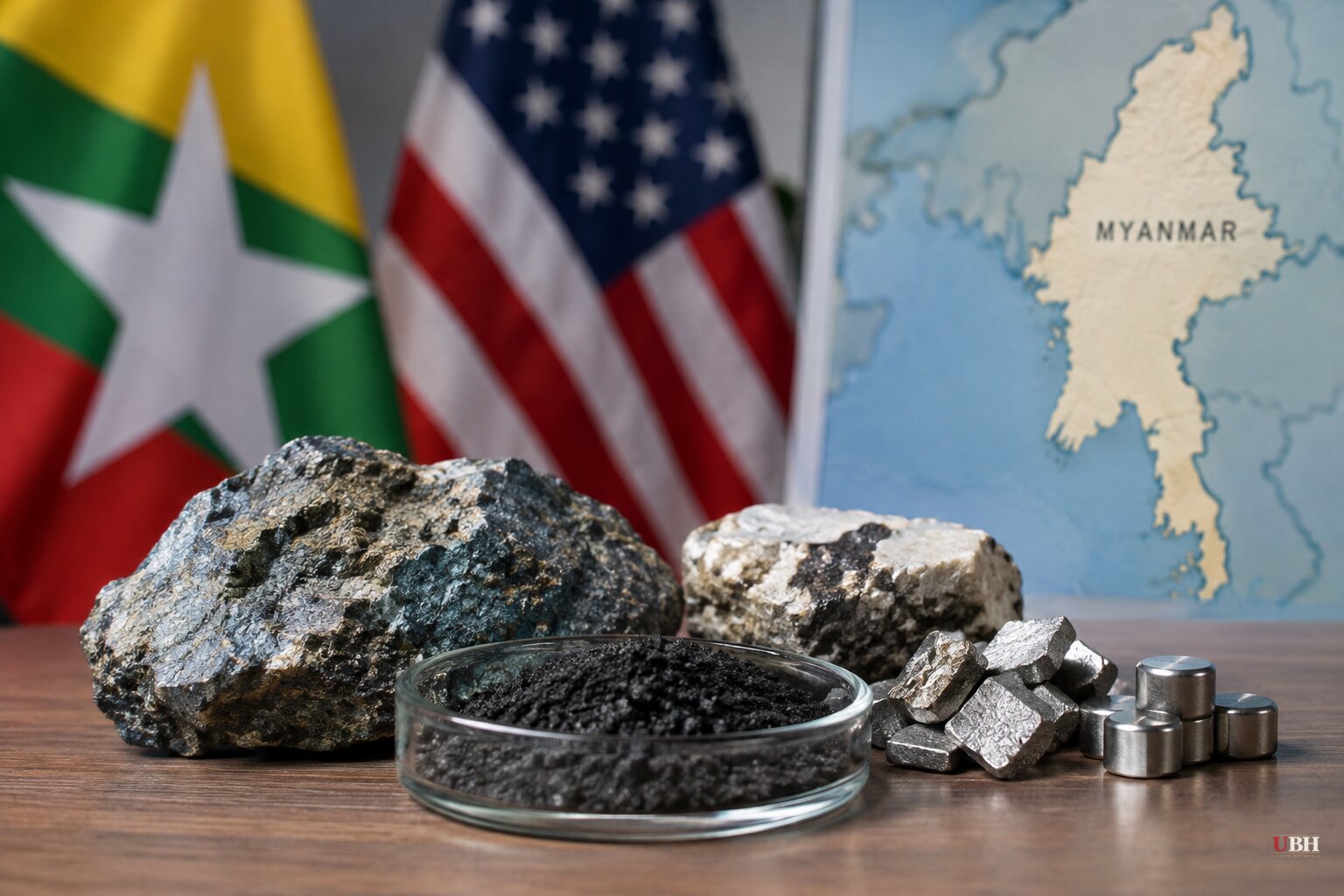
Myanmar's military-led government wants Washington to put rare earths at the center of rebuilding relations. The problem is that the generals who are asking do not control the mines.
On Monday, Nov. 9, the Washington lobbying firm DCI Group published a newsletter on behalf of Myanmar's information ministry. "Ultimately, the United States should treat Myanmar as a critical minerals priority, not simply a diplomatic challenge," the firm wrote. Myanmar hired DCI in 2025 to help rebuild ties with the United States.
The newsletter argued that minerals are "the natural place for this deepening relationship to grow, since they connect Myanmar's economic potential to U.S. national security and supply-chain priorities."
A policy reversal
The pitch lands after a sharp turn in U.S. policy. After the 2021 coup, Washington froze Myanmar's assets at the Federal Reserve Bank of New York and sanctioned the military's senior leaders. It reversed course by holding direct, high-level talks in September 2026.
A State Department spokesperson told Radio Free Asia that the administration concluded "wholesale disengagement with the authorities in Naypyidaw countered U.S. strategic interests in Burma and the region." The spokesperson said Washington's priorities include addressing scam centers, improving the operating environment for U.S. businesses and "building towards a genuine peace process that stabilizes the country."
Reuters reported exclusively that U.S. officials had held quiet meetings with regime officials in Naypyidaw and Tokyo.
The State Department's Integrated Country Strategy for Myanmar, released this fall, lists four mission goals: protecting U.S. citizens, addressing trade deficits, promoting peace, and expanding U.S. regional influence. It sets a target of at least three commercial or investment deals worth more than $5 million each for American companies.
DCI called that target "modest, given Myanmar's mineral resources and America's stated ambition to compete with China." Myanmar's government is asking for more.
Who actually holds the ground
Myanmar is one of the world's main sources of heavy rare earths. Those are the elements, including dysprosium and terbium, that keep powerful magnets working at high temperatures in electric vehicles, wind turbines, robotics and defense systems. According to U.S. Geological Survey 2026 estimates, Myanmar produced about 22,000 metric tons of rare earth oxide equivalent in 2025, fourth-largest in the world.
The richest sites are in northern Kachin State, near the Chinese border. The Kachin Independence Army, a long-standing armed group fighting the military, seized the major mining areas around Chipwi and Pangwa from military-aligned forces in 2024. It controls them now.
So Naypyidaw is offering access to ground it does not hold.
Processing is a further obstacle. Nearly all of Myanmar's heavy rare earths go to China to be refined, and Myanmar lacks the infrastructure and know-how to build an independent supply chain quickly. China makes about 90% of the world's rare earth magnets and has recently tightened state control of the sector. A deal signed with the United States would not change that any time soon.
DCI itself conceded the point: "China has already spent years building its position in Myanmar's resource sector, and its companies and intermediaries hold advantages that will not be easily displaced."
Beijing's reaction
The Chinese foreign ministry told Reuters that China and Myanmar are "friendly neighbours and important partners, which share a special bond." It said China "opposes the politicisation of economic and trade cooperation."
On Nov. 3, Foreign Minister Wang Yi met Myanmar's Planning and Investment Minister Aung Kyaw Hoe and described China as a reliable partner. In August 2024, Wang set out three "bottom lines" for Myanmar: avoid civil strife, stay within ASEAN and resist outside interference.
An analysis in Asia Times argues that Min Aung Hlaing is testing Beijing on two sensitive questions at once: who mediates Myanmar's civil wars, many of them fought along China's borders, and who gets access to its minerals. The analysis says the State Department strategy links peace forums on federalism and territorial boundaries to rare earth access, with lasting peace envisioned by 2030.
The opposition's position
The National Unity Government, the shadow administration formed mainly by ousted lawmakers after the coup, has been cautious but pointed. Deputy Foreign Minister David Gum Awng told Radio Free Asia the NUG "respects and acknowledges" U.S. engagement and will keep talking with Washington and Congress.
He added that U.S. policy should "support the democratic and federal aspirations of the Myanmar people" and that "international engagement in Myanmar affairs should not prolong the military dictatorship."
The armed ethnic groups and NUG officials who spoke to Radio Free Asia said they hope the U.S. strategy reduces fighting. Beyond Washington's stated interest in a peace process, no source shows that the Kachin Independence Army has agreed to open the mines to American companies.
What comes next
The U.S. side has a stated reason to move. President Donald Trump has made rare earths a national security priority since returning to office, committing billions of dollars to companies to reduce China's control of the sector.
No deal has been announced. The State Department's own benchmark is three agreements above $5 million each, while Myanmar's government is lobbying for a bigger commitment. Whether any American company can reach a Kachin mine without going through the Kachin Independence Army, or sell its output without going through Chinese processors, is the question the strategy has not yet answered.
Sources used for this briefing
7 links from 7 independent newsrooms (syndicated copies of the same report count once)
These are the sources it draws on, linked so you can verify.


