
Unbiased headlines. Facts, not spin.
Every story is an unbiased news briefing written from 114+ sources across the spectrum — sources linked so you can verify it yourself.
 economy
Major Story (7/10)
October 13, 2026 at 09:30 PM
economy
Major Story (7/10)
October 13, 2026 at 09:30 PM
Moody's Zandi estimates Iran war has cost the average U.S. household nearly $2,000
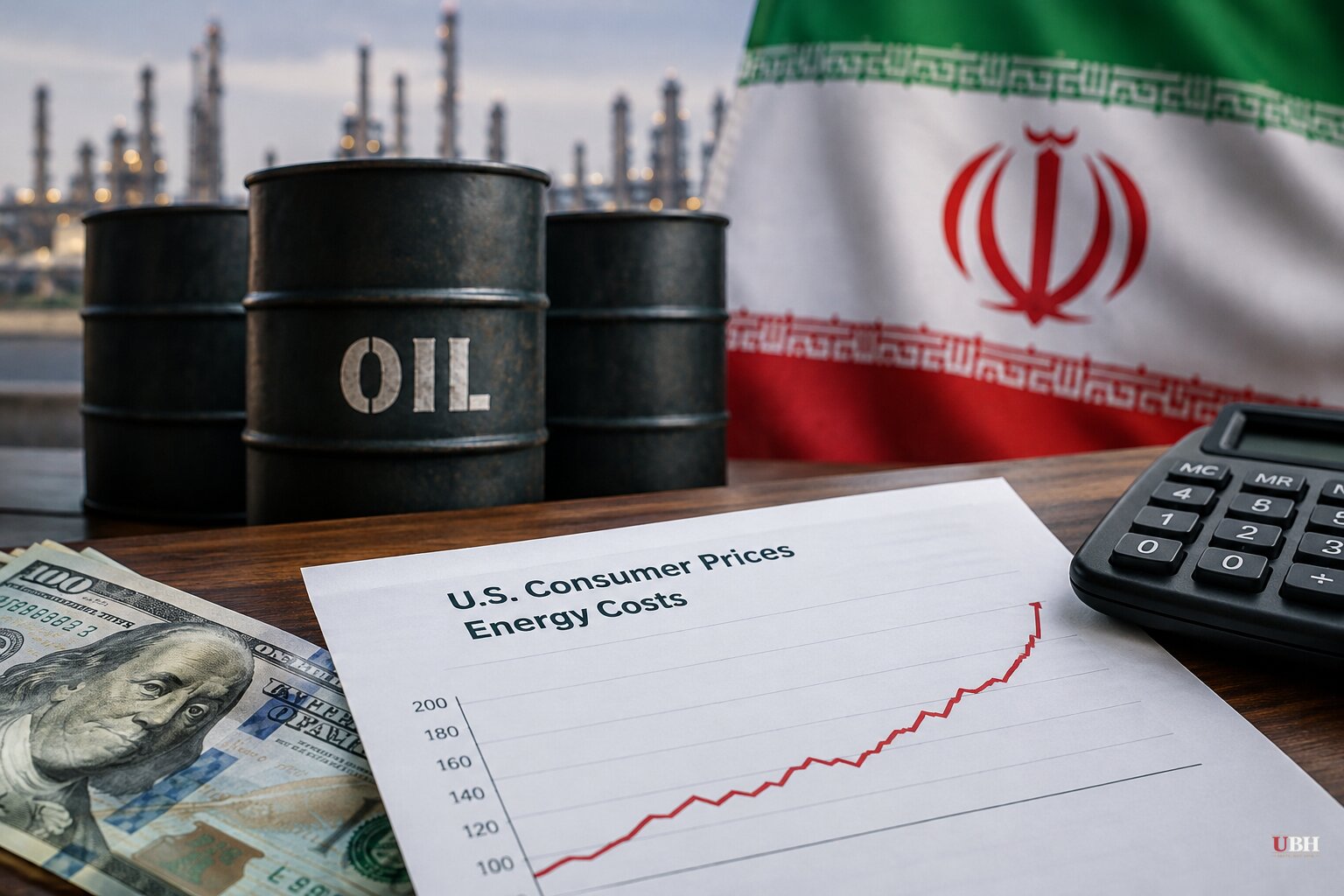
The Iran war has cost the average American household nearly $2,000 in just under eight months, according to Mark Zandi, chief economist at Moody's Analytics. Nationwide, he puts the toll on consumers at $265 billion.
"No wonder the war is so unpopular," Zandi wrote on X, noting the costs have absorbed about half of the average household's income gain over that stretch.
This is an estimate, not a government ledger. But the pieces are specific.
Where the $2,000 comes from
Zandi's math has three parts:
- Energy: about $1,100 per household. That covers gas and diesel at the pump, home heating, and the higher cost of anything moved by truck or plane.
- Interest rates: about $540 per household. Zandi ties the Federal Reserve's rate increase to war-driven inflation. Fixed mortgage rates have climbed to roughly 7.5% from below 6% before the war.
- Military operations: about $360 per household. This is the direct, taxpayer-funded cost.
The interest-rate figure is the most debatable link in the chain. It depends on Zandi's judgment that the war, and not other inflation pressure, drove the Fed's decision.
At current prices, Zandi says the energy tab keeps growing by roughly $50 per household each week.
The pump
Regular gasoline averaged $4.34 a gallon nationally Tuesday, according to AAA, up from $2.98 before the war. Diesel stood at $6.28, up from below $4.
CNN's review of AAA data found Tuesday was the 165th day this year with gas at or above $4. That is the most in any calendar year since AAA began tracking in 2000. The prior record was 158 days in 2022.
A separate tally from Brown University's Watson School of International and Public Affairs puts the extra spending on gasoline and diesel alone at $133.3 billion since Feb. 28. Gas is up more than 46% and diesel more than 70% over that period.
Heating oil is next. Zandi flagged higher home heating costs as winter approaches, and CNN has reported that oil-heat customers face a roughly 30% jump this winter.
Wages and spending
Paychecks are not covering the gap. Wage growth slowed in September to a five-year low, and CNN reports that real wages have declined almost every month since the war began.
The Commerce Department's latest figures show a mixed picture. Consumer spending rose 0.9% in August, but real disposable income was flat and the saving rate dropped to 4.1% from 4.6% in July. The Fed's preferred inflation gauge, the PCE price index, was up 3.4% from a year earlier. Core PCE was up 3.0%.
Sentiment is poor. The Conference Board's confidence index fell to 81.9 in September, the lowest since 2014. The University of Michigan's gauge ended the month at 48.1.
The official bill is much smaller
The Pentagon's own numbers are a fraction of Zandi's total. Acting Pentagon comptroller Jules Hurst III told the House Appropriations Committee in early May that costs were nearing $29 billion. The American Enterprise Institute estimated $38.6 billion in late June, and the Center for Strategic and International Studies put it near $40 billion.
Hegseth gave the Senate Appropriations Committee a figure around $37.5 billion for Feb. 28 through late July, when Democratic Sen. Dick Durbin asked. He said the Pentagon would need another $67 billion for further operations in the Middle East.
CNN reported, citing sources familiar with the matter, that the Pentagon told lawmakers in September the war had cost $45.1 billion, not counting repairs to damaged U.S. bases and buildings in the region.
Those figures measure what the Defense Department spent. Zandi's number measures what the war's ripple effects cost everyone else. They are not the same thing, and the gap between them is the argument.
The White House response
The White House did not dispute Zandi's numbers line by line. A spokesperson told CNN: "Mark Zandi is a Democrat donor who is frequently wrong, including predicting multiple recessions that never happened."
Trump has argued before that higher gas and diesel prices are a small price to pay for keeping Iran from getting a nuclear weapon, according to CNN. That is a trade-off argument, not a rebuttal of the dollar figures.
What comes next
In June the White House asked Congress for $87 billion in supplemental funding to replace stockpiles and cover troop deployments in the U.S. Central Command theater. The bill will likely need Democratic votes to clear the Senate.
Diplomacy is moving slowly. Iran's Supreme National Security Council secretary, Mohsen Rezaei, posted on X that the U.S. has agreed to some of Iran's seven conditions but that its response is "INADEQUATE." Trump has told reporters the U.S. will not attack Iran before the Nov. 3 midterms and called the talks "productive."
Until a deal is reached, Zandi's meter keeps running at about $50 per household each week, and voters head to the polls in three weeks.
Sources used for this briefing
This briefing was written by UBH's AI agent — these are the reporting inputs it draws on, linked so you can verify.


