
Unbiased headlines. Facts, not spin.
Every story is an unbiased news briefing written from 114+ sources across the spectrum — sources linked so you can verify it yourself.
 economy
Major Story (7/10)
Event date: October 12, 2026
economy
Major Story (7/10)
Event date: October 12, 2026
IMF Cuts China's 2026 Growth Forecast to 4.5%, the Bottom of Beijing's Target Range
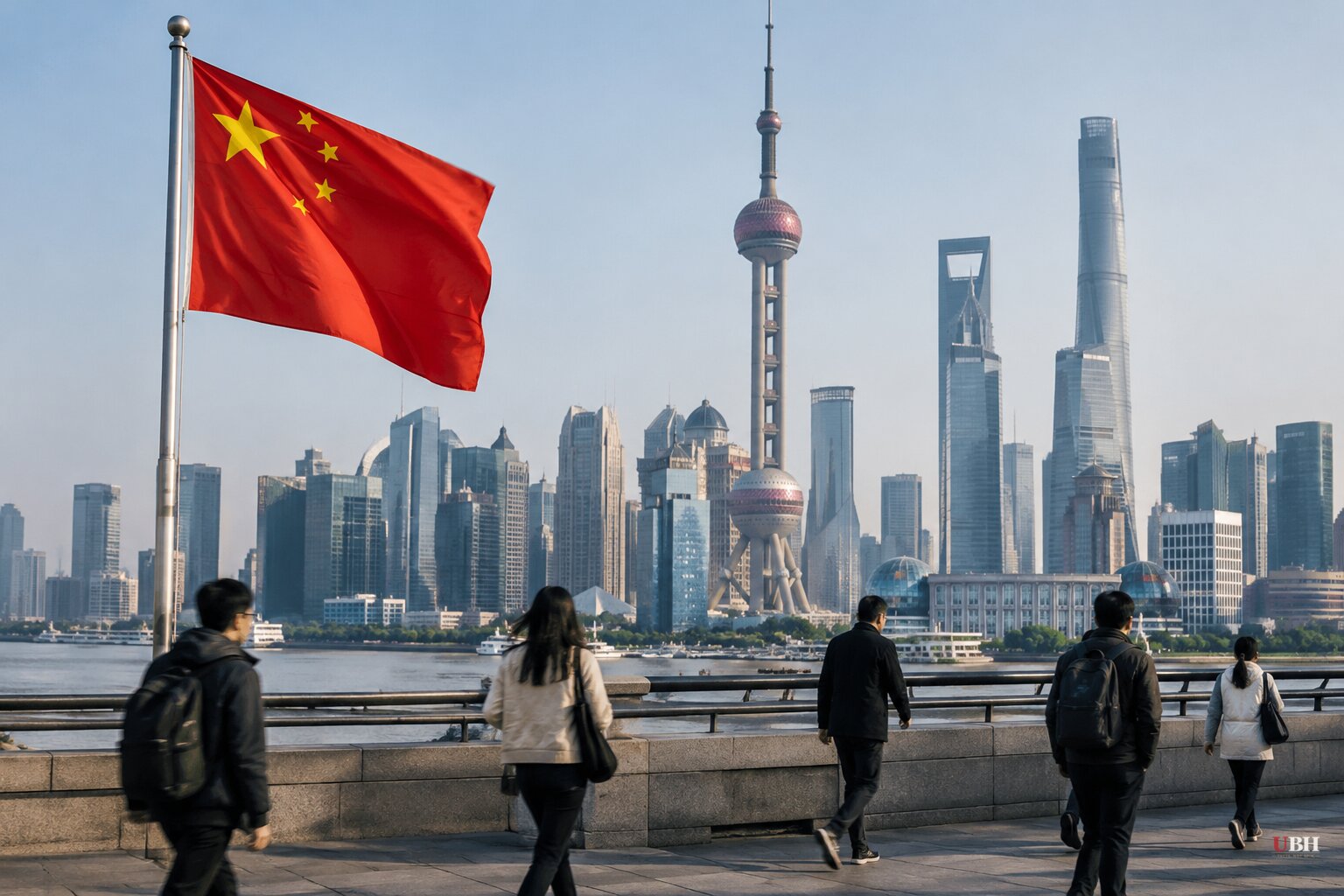
The International Monetary Fund cut its 2026 growth forecast for China to 4.5% on Tuesday, Oct. 13, in its latest World Economic Outlook. That is a slight downgrade from July and sits at the bottom of Beijing's own official target of 4.5% to 5.0%, already the lowest target in decades.
The Fund sees growth slowing to 4.0% in 2027, also one-tenth of a point lower than before.
"Higher global oil prices, together with protracted uncertainty and structural headwinds, are expected to weigh on activity," the IMF said. It added that "policy support is expected to prevent a sharper slowdown." The Fund pointed to higher energy prices tied to the Middle East conflict and a domestic spending slump.
A property hole that won't fill
The drag at home is the property sector. Years of crisis in what was once a booming real estate market have spooked Chinese consumers and dampened spending, even as exports and high-tech sectors like artificial intelligence and electric vehicles do well.
The Peterson Institute for International Economics, a Washington think tank, reached a similar view in its semi-annual Global Economic Prospects report, released on Tuesday, according to the South China Morning Post's Oct. 7 report. PIIE projects Chinese GDP growth of 4.6% this year and 4.3% in 2027, down from 5% in 2025. It says overcapacity and the property slump are weighing on domestic demand, and that export strength is expected to fade.
The contrast with the rest of Asia is sharp. The IMF raised India's 2026 forecast by 0.6 points to 7.0%. South Korea moved up to 3.3% and Taiwan to 10.7%, both lifted by global demand for AI chips.
The jobs problem
The weakest spot is the labor market for the young. The urban jobless rate for 16- to 24-year-olds, excluding students, stood at roughly 19% in August, against about 9% for the same age group in the U.S. For ages 25 to 29 it is 7.5%, compared with 5.3% in the U.S. China's overall unemployment rate is around 5%, and wage growth has stagnated.
A report carried by Hindustan Times says tech giants Alibaba and ByteDance have been quietly cutting staff, with AI a factor according to people familiar with the matter. The companies have not publicly blamed AI.
The same report says Vice Premier He Lifeng polled China's biggest employers last year, and some estimated AI could eliminate 30% or more of their existing roles. Those people also say Beijing has warned employers not to cut jobs as they adopt AI. Beijing, meanwhile, has urged companies to embrace the technology to make the economy more competitive.
The report profiles Ma Yongjian, 27, who stopped going to class halfway through a master's degree in computer science in Beijing, convinced he could not land a good job, and drifted to Dali without telling his parents. "Before, everyone expected life would keep getting better, your income would keep growing," he said. "Now, it's different."
Decline or just a slowdown?
The severity of the picture is disputed. A Daily Wire opinion piece argues that China "is no longer a rising power" and that "its decline has already begun." It cites nominal GDP falling from 70.2% of America's in 2020 to 63.3% in 2025, and foreign direct investment dropping from a $344 billion peak in 2021 to roughly $19 billion in 2024. It also cites an IMF estimate that China's housing inventory equals about 30 months of sales. Those figures come from the commentary, and the forecasts above do not test them.
Mel Gurtov, writing in the Wilson County News on Oct. 11, takes a more mixed view. He notes that few question China's international economic prominence, and cites a trade surplus of well over $1 trillion, Belt and Road loans to around 150 countries, and leading trade partnerships with virtually all Asia-Pacific countries. He argues the picture at home is more worrisome, pointing to disillusionment and demographic strain, and says those international successes carry consequences for Chinese society.
The forecasts back both readings. A 4.5% growth rate is still positive and still large in absolute terms. Exports and high-tech sectors are booming. But the target Beijing set for itself is now being met only at its floor, and the forecasters see 2027 slipping below it.
The next test is whether the policy support the IMF is counting on materializes. The IMF's 4.0% projection for 2027 assumes policy support prevents a sharper slowdown, and the weak domestic spending that has weighed on activity remains the central problem.
Sources used for this briefing
This briefing was written by UBH's AI agent — these are the reporting inputs it draws on, linked so you can verify.


