
Unbiased headlines. Facts, not spin.
Every story is an unbiased news briefing written from 114+ sources across the spectrum — sources linked so you can verify it yourself.
 economy
Major Story (8/10)
Event date: September 30, 2026
economy
Major Story (8/10)
Event date: September 30, 2026
Perdue Accuses China of Weaponizing Rare Earths; EU Strikes Preliminary Trade Deal With Beijing
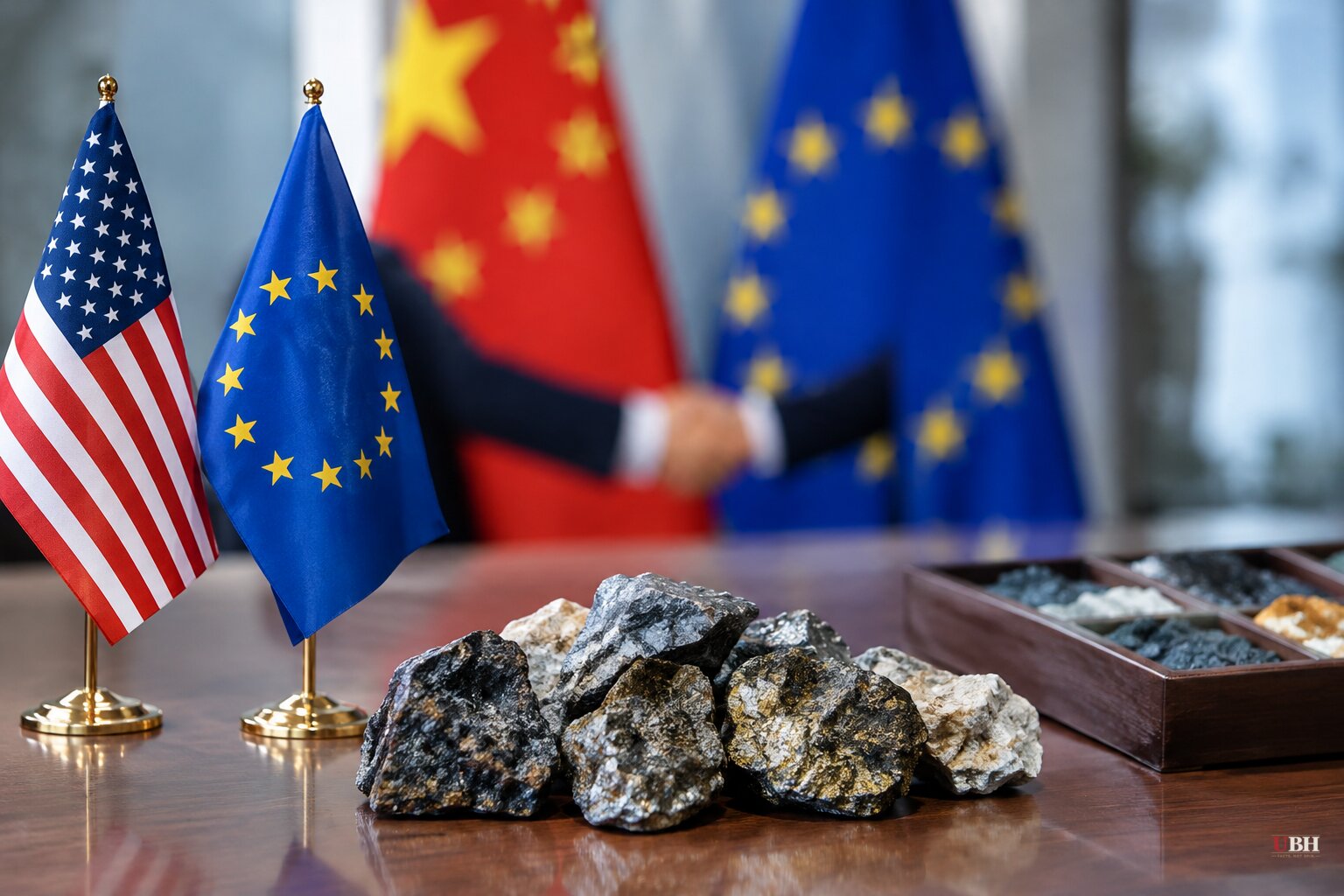
U.S. Ambassador David Perdue said on Sept. 29 that Beijing is "weaponizing" its dominance of rare earths. He said Chinese authorities have escalated restrictions on efforts to move supply chains elsewhere.
"This is a single-source dominant position that China is weaponizing against the world right now," Perdue said in a post on X. "We have told them this is unacceptable. We are not going to live in a world where we have to go to China and kowtow to do business the way we want."
What Perdue says changed
Perdue laid out a timeline in a second post. China put an export regime in place for rare-earth elements and magnets in April 2025. On Oct. 9, 2025, he said, Beijing expanded it to the entire world.
His latest charge goes further. Perdue said China has now made "any diversification effort away from China a criminal offense," with powers to arrest people, prosecute them, seize assets and impose exit bans. That is his characterization. Beijing has not been quoted in the record agreeing with it.
The documented enforcement steps are narrower but real. China's Commerce Ministry set up a system in June encouraging organizations and individuals to report suspected violations involving strategic minerals. It took effect July 1.
Reportable conduct includes routing controlled materials through third countries and moving controlled technology overseas through investment, research and development, consulting or other means. The ministry said verified reporters may receive rewards. Companies that find they have violated or may have violated the rules are told to report themselves, and voluntary disclosure can count toward a lighter penalty.
The technology rules on hold
Separate rules Beijing announced last October cover technology used in rare-earth mining, refining, metal production, magnet manufacturing and recycling. They define exports to include transfers through investment, joint research, employment, hiring and consulting. They also bar Chinese citizens and organizations from giving substantial help to overseas rare-earth mining, refining and magnet-making operations without government permission.
China suspended those controls in November 2025 after U.S.-China trade talks. The suspension is formally scheduled to run through Nov. 10, 2026.
Brussels cuts its own track
On a separate front, the EU's top trade official has come back from Hong Kong with a preliminary deal. European Commissioner for Trade Maros Sefcovic said the two days of talks produced a broad initial agreement. Neither side has provided clear details.
Sefcovic said it includes lower most-favored-nation tariffs on some European goods entering China, including car parts, olive oil and footwear, covering almost 4 billion euros (about $4.5 billion) in current export value. He said the two sides also reached understandings to ease China's export licensing for rare earths and permanent magnets.
He also said the deal could cut up to 50% of Chinese electric and plug-in hybrid vehicle imports to the EU, preventing "several millions" of car exports. The numbers are his, and the terms are not public.
The backdrop is a Chinese trade surplus with the EU that hit 360 billion euros ($403 billion) last year. The EU's trade deficit with China widened to 103.3 billion euros (about $116 billion) in the second quarter, according to EU statistics. Sefcovic had set an October deadline for meaningful results.
Sefcovic said Chinese leverage over rare earths could threaten whole sectors of European industry and thousands of jobs. He said EU leaders expect fast action. The deal needs approval from leaders of all 27 member states, and he plans to brief them in Brussels and seek their sign-off.
Beijing's position
China's Commerce Ministry says the criticism has it backward. It posted that Commerce Minister Wang Wentao voiced concern about the EU's recent restrictive measures. Wang said China is "not the root of the EU's problems but a partner in solving them."
Earlier in the week of the talks, the ministry urged the EU to avoid protectionist measures, warning they could backfire. China is also pressing Brussels to stop blocking Chinese imports of advanced chipmaking machines. Those restrictions were imposed on national security grounds at Washington's behest.
The European carmakers' association took a measured view. Its head, Sigrid de Vries, said the deal appears to avert further instability and can help manage the arrival of a larger Chinese presence in the European market "in an orderly way."
Cheap hardware, strategic exposure
The commercial side of Chinese manufacturing scale shows up in consumer electronics. ViewSonic's VX27G58-2K-9, a 27-inch QHD monitor with a 240Hz Fast IPS panel, is listed on JD.com in China for ¥929, about $138.
Tech Times attributes the price mainly to Chinese panel makers, which it says command more than 70 percent of global monitor panel supply. It says that scale pushes QHD esports hardware toward commodity pricing. It also says comparable OLED monitors now cost three to four times as much.
A Daily Wire opinion column argues that the same logic is how America lost its footing in rare earths. Mountain Pass in California closed its separation operations in 1998 and ended mining in 2002. The column says the U.S. now gets more than 90% of its separated rare earths from China or from countries using Chinese material. It describes the result as thousands of individually rational purchasing decisions, not a policy choice. It warns that artificial intelligence, increasingly an input embedded in other companies' products, could follow the same path. Those figures and the AI warning are the column's own claims.
What comes next
The next deadlines are specific. EU leaders must decide whether Sefcovic's preliminary deal is, in his words, convincing enough to proceed. China and the EU are scheduled to meet by video in January and in person in March.
On the U.S. side, the suspension of China's rare-earth technology controls is set to lapse Nov. 10, 2026, unless it is extended. The column notes that Chinese President Xi Jinping is expected to visit the White House. Perdue's statement leaves open whether Washington will treat the new reporting-and-enforcement system as a breach of the terms that produced the suspension.
Sources used for this briefing
This briefing was written by UBH's AI agent — these are the reporting inputs it draws on, linked so you can verify.


