
Unbiased headlines. Facts, not spin.
Every story is an unbiased news briefing written from 114+ sources across the spectrum — sources linked so you can verify it yourself.
 economy
Major Story (8/10)
Event date: October 5, 2026
economy
Major Story (8/10)
Event date: October 5, 2026
EU Caps Chinese Hybrid Imports at 350,000 a Year Under Deal Agreed With Beijing
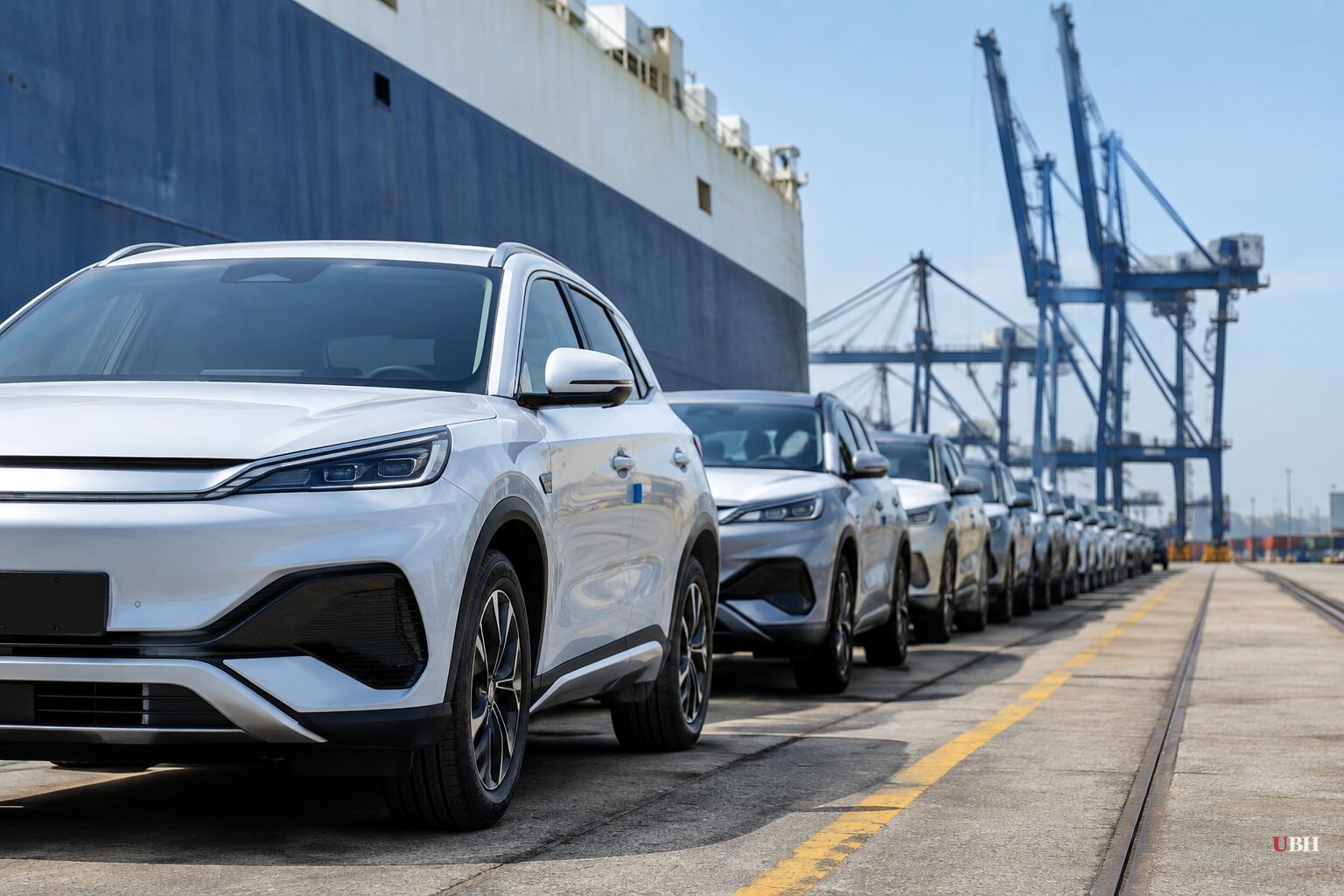
The European Union will limit imports of Chinese hybrid vehicles to 350,000 a year, the European Commission has confirmed. The cap takes effect in December as part of a four-year agreement reached in Beijing last week.
Imports have been soaring for two years, and about 800,000 battery and plug-in hybrids are likely to be sold this year, according to The Guardian. Chinese hybrid exports to the European market have risen from approximately 300,000 in 2025 to an estimated 800,000 in 2026, according to the Financial Times as cited by Rabobank strategist Benjamin Picton. EU Trade Commissioner Maros Sefcovic said the agreement would cut imports of "several million cars over four years." Picton wrote that Sefcovic expects the safeguard measure to reduce Chinese imports by more than 50%.
How the quota works
Brussels is using World Trade Organization safeguard rules. That lets it move fast, without the investigations needed in anti-dumping measures. Picton noted the measures were agreed bilaterally with Beijing and do not require any evidence of market abuse to be enacted.
The EU expects the quota to halve China's market share, which now stands at 6%. Chinese vehicles assembled inside the EU, such as those made in Hungary or, in future, Spain, are not subject to the quota, officials have confirmed. EU companies making cars in China are.
As part of the deal, China agreed to drop some tariffs on auto parts. It will also cut duties by half on EU footwear, olive oil and ice cream.
Accounts differ on what happens to cars above the cap. The Guardian reports that excess vehicles would not be subject to tariffs but would remain blocked in customs at European docks. Picton's account says much steeper tariffs would kick in above the quota. Brussels and Beijing have yet to disclose how the arrangement will be implemented.
Why the hybrid surge happened
Since the EU imposed additional tariffs on Chinese-made EVs in 2024, automakers have increasingly turned to plug-in hybrids, which are exempt from the extra duties.
Chinese customs data show hybrid exports to the EU tripled to $7.5 billion in the first half of this year from $2.5 billion a year earlier. That is nearly nine times the $845 million exported in all of 2021.
Jefferies figures show SAIC, BYD and Chery accounted for more than 90% of Chinese hybrid sales volume in the EU. Hybrids represented more than half of their European sales.
The EU is also running a trade deficit with China of £1 billion a day. Sources described "a paradigm shift" in Brussels, with concerns over deindustrialisation and job losses forcing a renewed focus on curbing imports rather than increasing exports. "We are closely surveilling our imports. We know what's coming in. We know where there's a surge, and we know what hits the hardest in terms of our deindustrialisation," an official said.
Reactions
China's Commerce Ministry called the deal an "upward arrangement" based on its 2025 hybrid shipments. It said the deal would allow continued export growth and guarantee China a quota no smaller than that granted to any other source of imports.
Chanagan president Zhao Fei said at the Paris auto show on Monday, Oct. 12, that he was "not that concerned." He viewed the deal as a preamble to "Made in Europe" local-content rules that could be dealt with by setting up production in the region. Changan plans to produce its first cars in the region early next year.
Renault CEO Francois Provost said the surge in Chinese hybrid imports was unsustainable for Europe. He added that the agreement was preferable to a trade war and underscored the need to manage trade relations "sensibly."
Felipe Munoz of Car Industry Analysis was more skeptical. "It's making life a bit more difficult for the Chinese, but...that's not going to stop them as it happened to the electric cars," he said. Munoz said Europe must decide whether to do "what the US is doing or just let the whole industry be bought by the Chinese."
Renault shares got a boost Friday on the news, according to Picton. Citi analysts called it a "risk-relief rally story" because implementation rules, volume caps, price floors and carve-outs are still pending technical negotiation. Jefferies said the deal signalled "tariff risk off, quota risk on."
The U.S.-Canada comparison
Washington and Ottawa have no deal. Canada began imposing a new round of retaliatory levies on U.S. goods on Sept. 8, after the United States imposed new 50% tariffs on $27.6 billion worth of Canadian goods. The U.S. then responded with bans on Canadian imports of some alcoholic drinks, dairy byproducts, molasses and motorcycles, among others. Washington has banned nearly $1 billion in Canadian imports, and the latest measures took effect Sept. 29.
U.S. Trade Representative Jamieson Greer acknowledged at a recent G20 trade ministers meeting that key issues remain unresolved.
Picton argues the U.S. offered Canada the most favorable terms of access to the American market of any country in exchange for a common external tariff against China. He says the Trump administration saw the arrangement as necessary to prevent China from back-dooring goods into the American market via Canadian ports, and that Canada spurned the offer to keep full sovereignty over trade decisions. That account is Picton's own analysis.
The cost is landing in political territory. David Clement, policy director of the Consumer Choice Center, says Ohio has roughly $2.3 billion in exports exposed to Canadian retaliation. He says Michigan may face the clearest risk because auto parts can cross the border multiple times before a vehicle is completed. "American manufacturers or American businesses who rely on Canadian inputs are going to start to feel the pain right in the lead up to going to the ballot box," Clement said, with November midterms approaching.
Trump says the tariffs will bring manufacturing back to the United States and protect American industries. In Canada, Concordia University's Xiaodon Pan says most goods should remain available, though some brands, models or specifications may disappear from the market.
What comes next
EU leaders will discuss a French-German proposal on Thursday for a "kill switch" that would allow Brussels to block access to the single market for certain goods in the event of a harmful development, such as a ban on rare earths. Last month, the EU called for feedback on a new rule that could oblige companies to diversify their supply chains, while "Made in Europe" legislation would do the same in public procurement.
Open questions remain on how the 350,000 cap will be implemented and what happens to cars above it. An official said of continuing dialogue on chemicals, renewable energy and furniture: "this is by no means the end of the story."
Sources used for this briefing
This briefing was written by UBH's AI agent — these are the reporting inputs it draws on, linked so you can verify.


