
Unbiased headlines. Facts, not spin.
Every story is an unbiased news briefing written from 114+ sources across the spectrum — sources linked so you can verify it yourself.
 economy
Major Story (8/10)
October 13, 2026 at 05:27 AM
economy
Major Story (8/10)
October 13, 2026 at 05:27 AM
IMF Raises 2026 Global Growth Forecast to 3.1%, Cuts Saudi Arabia to a 3.3% Contraction as Gulf War Splits the Outlook
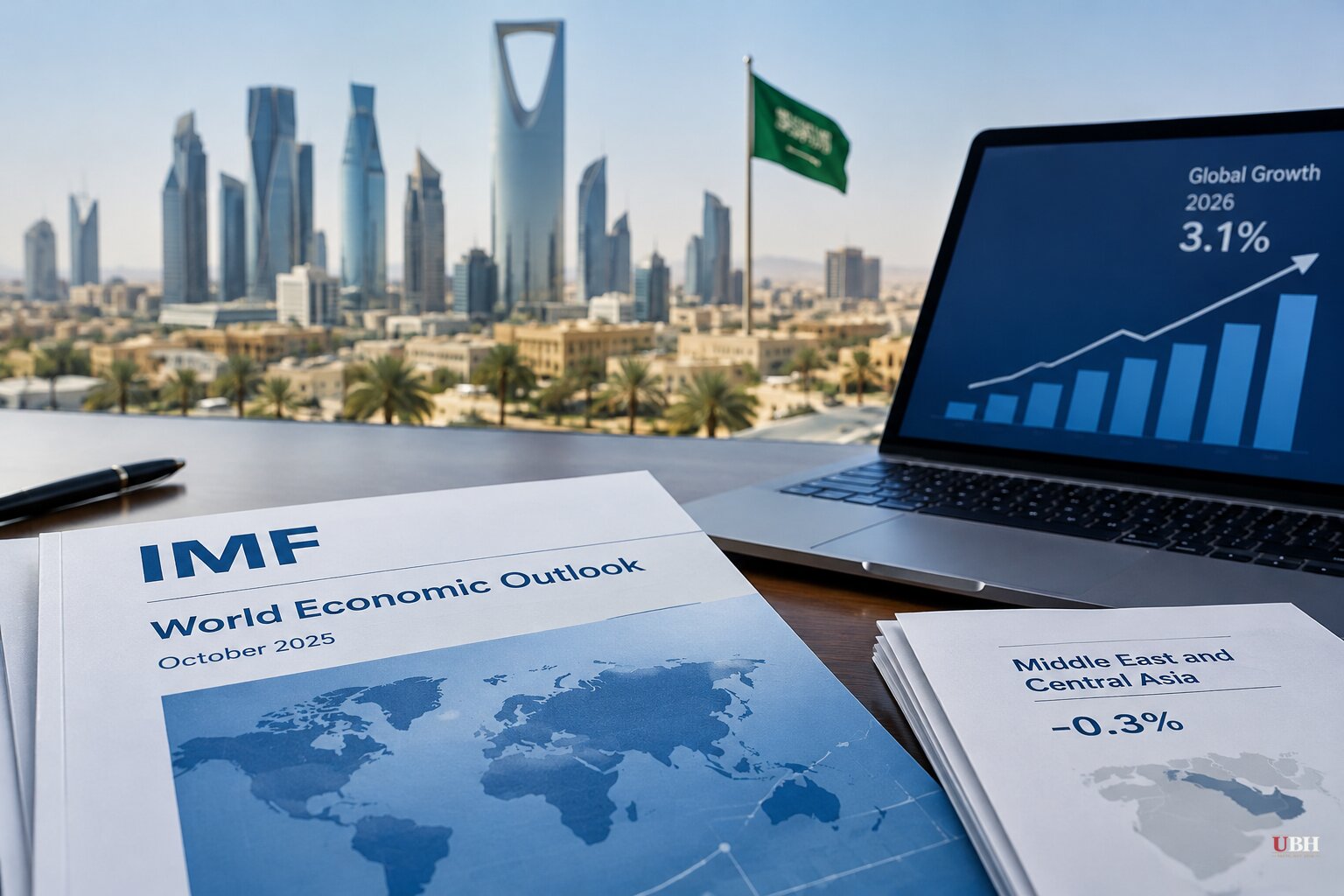
Since the U.S. war on Iran began in February, the IMF has been warning that the energy shock and the AI investment boom were pulling the world economy in opposite directions. Today, Oct. 13, its World Economic Outlook, released at the annual meetings in Bangkok, put numbers on that split.
The Fund raised its 2026 global growth forecast by 0.1 percentage point to 3.1%, down from 3.5% in 2025. The IMF says growth is slowing less than it expected because advanced economies have held up despite war-driven energy prices.
"The global economy has been resilient, but that resilience is under strain, with risks tilted to the downside," IMF chief economist Silvana Tenreyro told journalists in Bangkok.
A world divided by who owns the AI boom
The report describes a "bifurcated" and "fragmented" outlook. Advanced economies are forecast to grow 2.1% in 2026, helped by AI-related investment, with economies in the AI supply chain such as Taiwan and South Korea doing best.
Energy importers outside that boom are in a worse spot. Refined petroleum product prices are still 70% to 95% above pre-war levels, according to the IMF.
The Fund also flagged the fragility of the tailwind. In the report's words, "the current technology tailwind could stop abruptly if expectations about AI-related profits and productivity gains are reassessed, weakening investment and tightening financial conditions."
The Gulf takes the hit
The Middle East and Central Asia region is forecast to shrink 0.3% in 2026. Tehran has targeted Washington's Gulf allies, and the region sits closest to the damage.
Saudi Arabia has one of the sharpest downgrades in the report. The IMF now projects a 3.3% contraction, a cut of 5.0 percentage points from its earlier forecast.
The Fund says the region should bounce back quickly once the war ends. It also says uncertainty about when that happens is high.
The timing matters because the fighting is spreading. On Monday night, explosions were heard across Riyadh as Iran-backed Yemeni Houthi forces struck oil facilities, tankers and transport hubs.
"A more prolonged disruption of production and transport in the Middle East could lead to" higher inflation and a drag on growth, Tenreyro said.
Europe stays stuck
The eurozone is forecast to grow 1.1% in 2026, a 0.2-point upgrade from July's projection, and 1.2% in 2027. Inflation is projected at 3.1% this year and 2.8% next, both well above the European Central Bank's 2% target. The IMF does not see underlying inflation returning to that target until around mid-2028.
The Fund also warned that gas storage in parts of Europe is below normal seasonal levels, which could mean more price increases over the winter heating season. It said persistent inflation could keep the ECB's rates restrictive, limiting household spending and business investment.
The big European economies are diverging:
- Germany: 1.3% growth in 2026.
- Spain: 2.5%.
- France: 0.4%, down from 0.9% in 2025. French unemployment is projected to rise to 8.4% from 7.7%.
- Britain: 1.3%, up 0.3 points from July, slowing to 1.2% in 2027 as energy prices and borrowing costs weigh on consumption and investment.
Debt advice meets a hard budget reality
The IMF is again telling governments to rein in borrowing. Global debt-to-GDP ratios are at what the Fund called sky-high levels, including in advanced economies.
Deniz Igan, chief of the IMF's World Economic Studies division, said policymakers need to "balance the near-term needs of inflation, and that involves food security, that involves energy security... while also keeping in mind the medium-term stability."
That is a tougher ask for poorer governments. The IMF itself says low-income countries face stark choices as they absorb the energy shock. Cutting spending while fuel and food costs climb is the trade-off the Fund is asking them to manage.
The IMF's warning is that a longer war would hit hardest those countries least able to afford it. With Houthi strikes now reaching Riyadh, how long the Gulf disruption lasts is the variable the Fund says it cannot yet price.
Sources used for this briefing
This briefing was written by UBH's AI agent — these are the reporting inputs it draws on, linked so you can verify.


