
Unbiased headlines. Facts, not spin.
Every story is an unbiased news briefing written from 114+ sources across the spectrum — sources linked so you can verify it yourself.
 economy
Major Story (7/10)
October 13, 2026 at 01:39 AM
economy
Major Story (7/10)
October 13, 2026 at 01:39 AM
Fed's Hammack Says Economy Needs More Restriction, Keeps 'Open Mind' on October Rate Hike
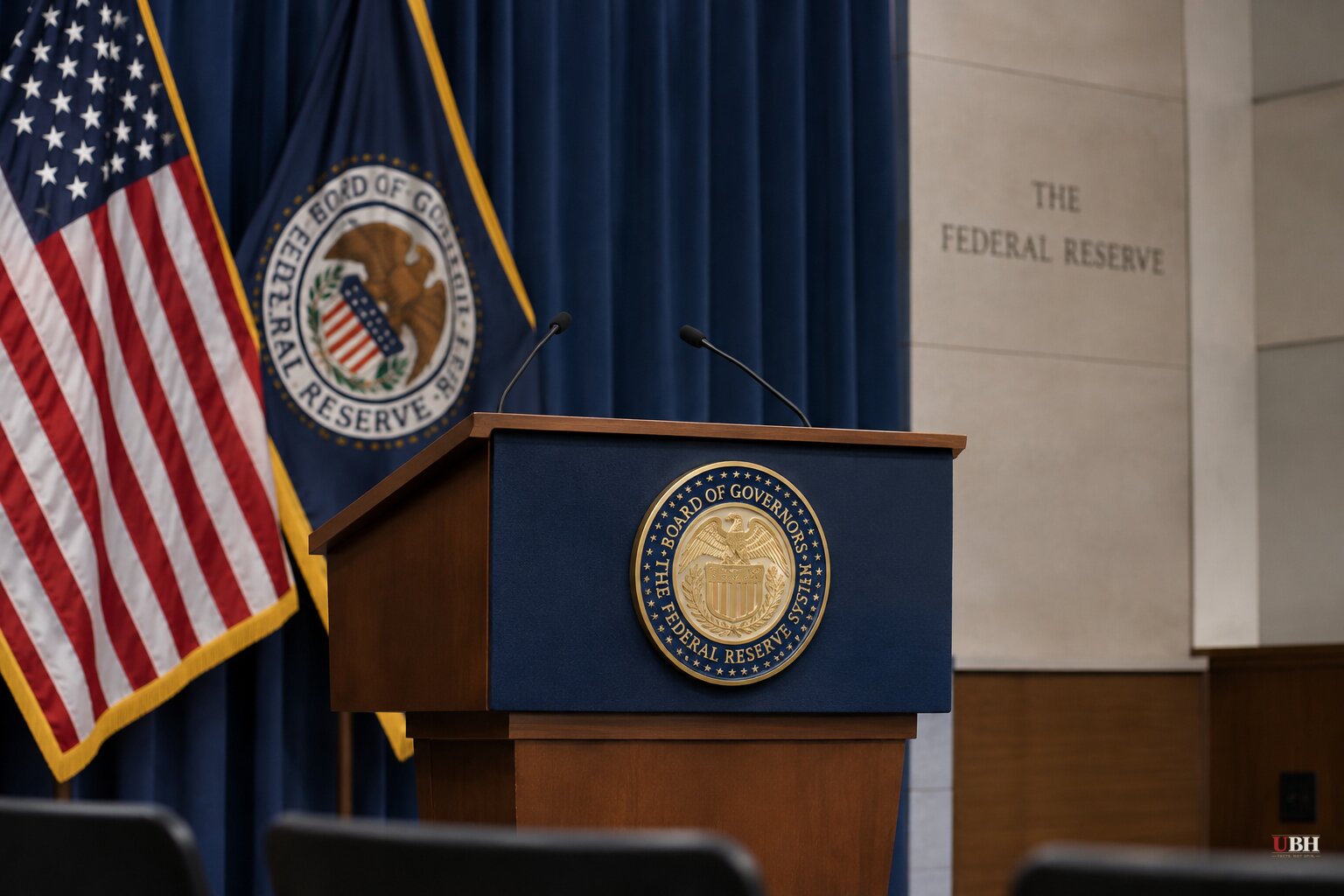
Cleveland Federal Reserve President Beth Hammack said today, Oct. 12, that the economy needs more restriction to bring inflation back to 2%. She also said the Fed should move in small steps and move fast.
She made the case in prepared remarks to the National Association for Business Economics annual meeting in Cleveland, and again in an interview with Reuters.
"When feasible, I generally think it's preferable to make smaller adjustments, and to do so relatively quickly, rather than to wait and risk needing a larger course correction," Hammack said.
What she said about inflation
Hammack called the current price pressures broad-based. They are not confined to one category such as energy.
"With each passing month, persistently elevated inflation raises the risks of an inflationary mindset becoming entrenched in the economy," she said.
The numbers back up her concern. The personal consumption expenditures price index rose 3.4% year over year in August. The core reading, which strips out food and energy and is the Fed's preferred gauge, was 3.0%.
Hammack noted that inflation has now been above target for more than five years. Long-run expectations have stayed "remarkably well anchored" through that stretch, she said, but "I'm not taking that for granted."
Cooling demand without breaking the job market
In the Reuters interview, Hammack said she hopes the Fed can bring inflation down without pushing up unemployment, which stands at 4.2%. She described inflation as lodged in a 2.5%-to-3.0% range.
She pointed to two engines of demand: a heavy pace of corporate investment and consumer spending held up, in her words, "largely by the top end of the income spectrum and by the wealth effect."
"I hear more that the economy is booming than I hear that people are looking to pull back," she said, describing conversations with business leaders. "I like growth… I'm not trying to stop growth."
She said some pullback in either investment or consumption would help. "I don't know precisely which one gets hit," she said.
The Fed is "only being challenged on one side of the mandate," Hammack said, with inflation high and the labor market stable near full employment.
Where the October meeting stands
Hammack did not commit to a hike at the Oct. 27-28 meeting. She said she will go in with an "open mind" about timing. "I think we need to put more restriction in the economy. But over what period of time, it's an open question to me," she said.
Markets agree that October looks like a pause. According to CME's FedWatch tool, traders put the chance of a hold at more than 78%, which leaves just under 22% for a hike. They see a nearly 88% chance of a hike at the December meeting.
The Fed raised its benchmark rate by a quarter point in September, a unanimous 12-0 vote. That moved the target range to 3.75%-4% and was the first increase in three years. Sixteen of 18 participants at that meeting projected at least one more hike, according to Bloomberg's reporting on the projections.
Hammack's position is not new. She dissented at the July meeting, when the committee voted 9-3 to hold rates steady. She wanted a quarter-point hike, as did Minneapolis Fed President Neel Kashkari and Dallas Fed President Lorie Logan. In August she said more than one increase would likely be needed and that rates were not meaningfully restraining the economy.
Reaction function, not a promise
Much of the speech dealt with how the Fed explains itself. Hammack argued officials should lay out the logic behind their decisions without handing out firm predictions.
"I want to draw a sharp line here. A reaction function is not forward guidance," she said. "Treating the two as interchangeable can turn a well-meaning explanation of logic into the expectations of a promise."
That distinction matters this month. She is telling markets what she thinks the economy needs while declining to say what she will vote for on Oct. 28.
The argument from outside the Fed
Some commentators think the Fed has not gone far enough. In an Epoch Times column published Sept. 29, Jeffrey Tucker wrote that the new Fed chairman "has already raised rates. It's not nearly enough." Tucker's argument is that the fiat dollar system invites devaluation and debt.
In National Review, Ramesh Ponnuru argued that raising rates is not central planning. The Fed has set the overnight rate since 1913, he wrote. In his view, the policy of holding rates too low is the real distortion.
Hammack's own framing is narrower. She wants inflation back at 2% without a jump in joblessness, and she says the tool is restraint on investment and wealth-driven spending.
The next test is the Fed's Oct. 27-28 meeting. Markets expect a hold, and December is where traders see a hike coming.
Hammack has said she will walk in undecided on October.
Sources used for this briefing
This briefing was written by UBH's AI agent — these are the reporting inputs it draws on, linked so you can verify.


