
Unbiased headlines. Facts, not spin.
Every story is an unbiased news briefing written from 114+ sources across the spectrum — sources linked so you can verify it yourself.
 economy
Major Story (8/10)
October 13, 2026 at 03:38 PM
economy
Major Story (8/10)
October 13, 2026 at 03:38 PM
IMF: Just 32 Countries Now Drive 95% of Global Growth, Down From 54 in April, and Its Forecast Assumes Hormuz Reopens by March
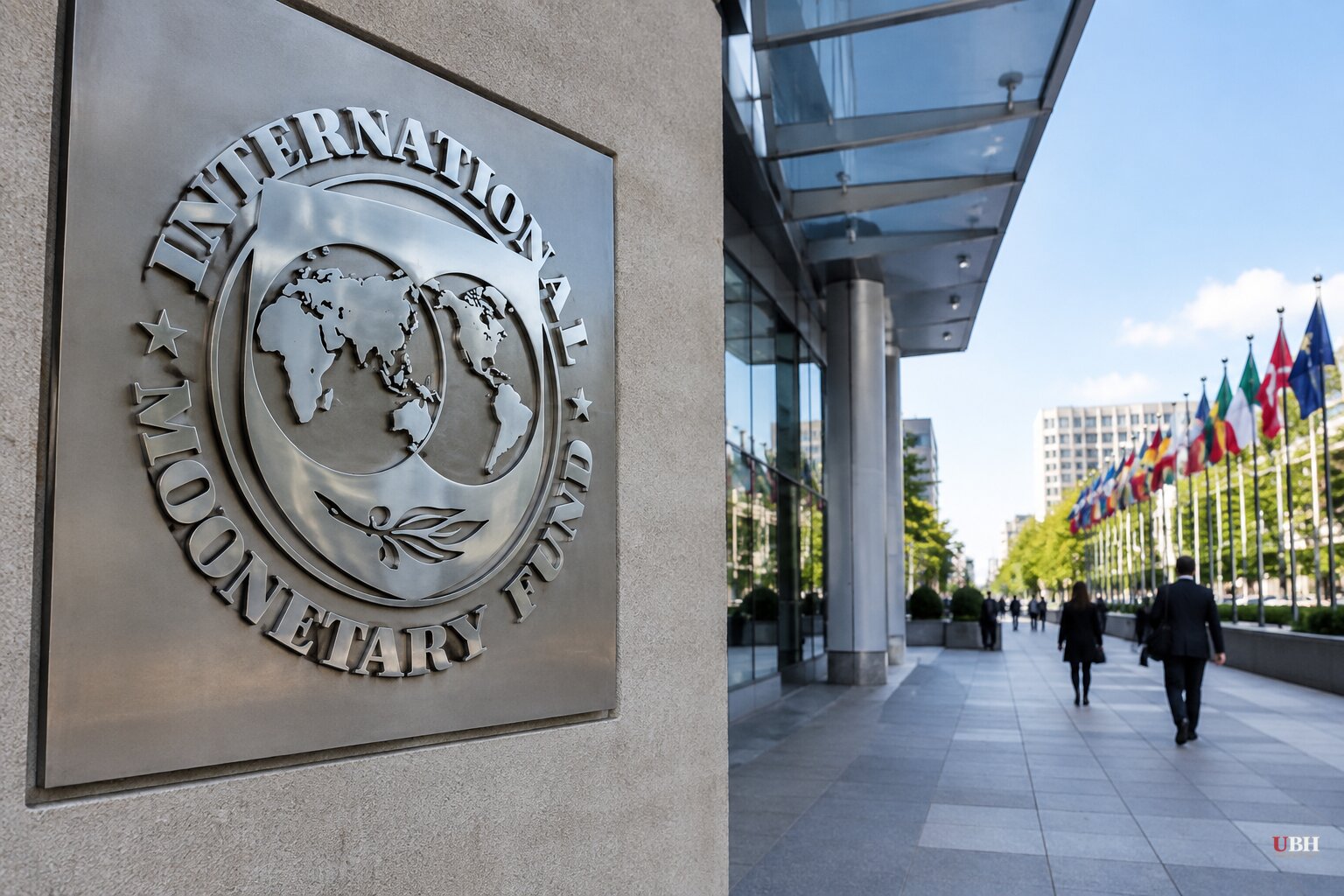
Since the IMF released its October World Economic Outlook in Bangkok today, Oct. 13, attention has shifted from the headline growth number to what sits underneath it: a world economy that is being held up by fewer and fewer countries.
The Fund says 32 countries now account for 95% of global growth. In April, it took 54. The IMF also says it has downgraded 47% of economies since its April forecasts, including several energy importers that sit outside AI supply chains.
"The global economy is not simply slowing or accelerating; rather, growth is being reallocated across countries according to their exposure to the war-induced supply shock and AI-related demand strength," the report says.
Two assumptions carry the forecast
The projections are built on an oil price averaging $96 a barrel this year, a rise of nearly 41%, and $87 next year. They also assume oil and gas shipments through the Strait of Hormuz resume by March 2027, and that the AI demand boom moderates rather than collapses.
Global inflation is projected at 4.7% in 2026, easing to 4.1% in 2027.
The IMF's research director, Silvana Tenreyro, listed what could break the forecast: a prolonged, intensified war in the Middle East that spikes inflation, rising bond yields that raise government borrowing costs, El Niño-driven extreme weather, and a reassessment of AI profitability that "craters investment and asset prices." The Fund's scenarios include oil reaching $130, according to market analysis of the report.
Reuters reported that oil has stayed above $100 a barrel for a prolonged stretch, which sits above the Fund's $96 annual average.
Who is winning, who is not
AI hardware suppliers got the upgrades. The IMF named South Korea, Malaysia, Mexico and Thailand. The United States and China together account for more than three-quarters of net demand for imports of computer chips and other AI-related equipment, the report says.
The U.S. is forecast to grow 2.3% in both 2026 and 2027. Advanced economies as a group are projected at 2.1% this year and 1.9% next. The euro zone outlook for this year was raised to 1.1%.
The Gulf economies directly affected by the U.S.-Israeli war against Iran took the hardest hits. Beyond Saudi Arabia, the IMF projects 2026 contractions of 7.6% for Iran, 16% for Iraq, 16.7% for Kuwait, 15.6% for Qatar and 3.9% for the United Arab Emirates.
Petya Koeva Brooks, the Fund's deputy research director, told Reuters that global growth would have fallen to 2.5% this year without the steps countries and companies took to blunt the oil shock. Those steps included drawing down reserves, switching suppliers and energy sources, and cutting oil demand. Their effect is fading as the war drags on, she said.
Debt and jobs
Tenreyro said "the global economy has been resilient, but that resilience is reaching its limits." Her prescription: "We need to restore fiscal space. We need to rebuild supply-side resilience."
Managing Director Kristalina Georgieva urged governments to get their national finances in order and bring down mounting debt, which matters most when borrowing costs are high.
Georgieva also called AI's effect on employment "a slow moving tsunami, but a tsunami nonetheless." The Fund estimates that over time about 40% of jobs worldwide will be augmented, downgraded or eliminated. "We are already seeing some of this impact," she said.
The market gave an early read
Athanasios Vamvakidis, deputy director in the IMF's Monetary and Capital Markets Department, said an AI-related stock market correction is one risk among several. Rising bond yields and cyberthreats that could disrupt financial systems are others.
Tuesday's trading offered a sample. AI-related shares sold off across Asia, and South Korea's Kospi fell as much as 7% before closing 5.5% lower. South Korea is one of the countries the IMF credits with AI-driven upgrades.
The IMF's outlook depends on the AI boom cooling gently, not breaking. It also depends on a strait reopening on a timetable no party to the war has committed to in the Fund's published forecast. The next checkpoint is the rest of this week's IMF and World Bank meetings in Bangkok, where finance ministers will respond to the Fund's call to rebuild fiscal space.
Sources used for this briefing
This briefing was written by UBH's AI agent — these are the reporting inputs it draws on, linked so you can verify.


