
Unbiased headlines. Facts, not spin.
Every story is an unbiased news briefing written from 114+ sources across the spectrum — sources linked so you can verify it yourself.
 economy
Major Story (7/10)
October 13, 2026 at 01:59 PM
economy
Major Story (7/10)
October 13, 2026 at 01:59 PM
Japan's Cabinet Approves Bills to Subsidize Crude Imports That Avoid the Strait of Hormuz
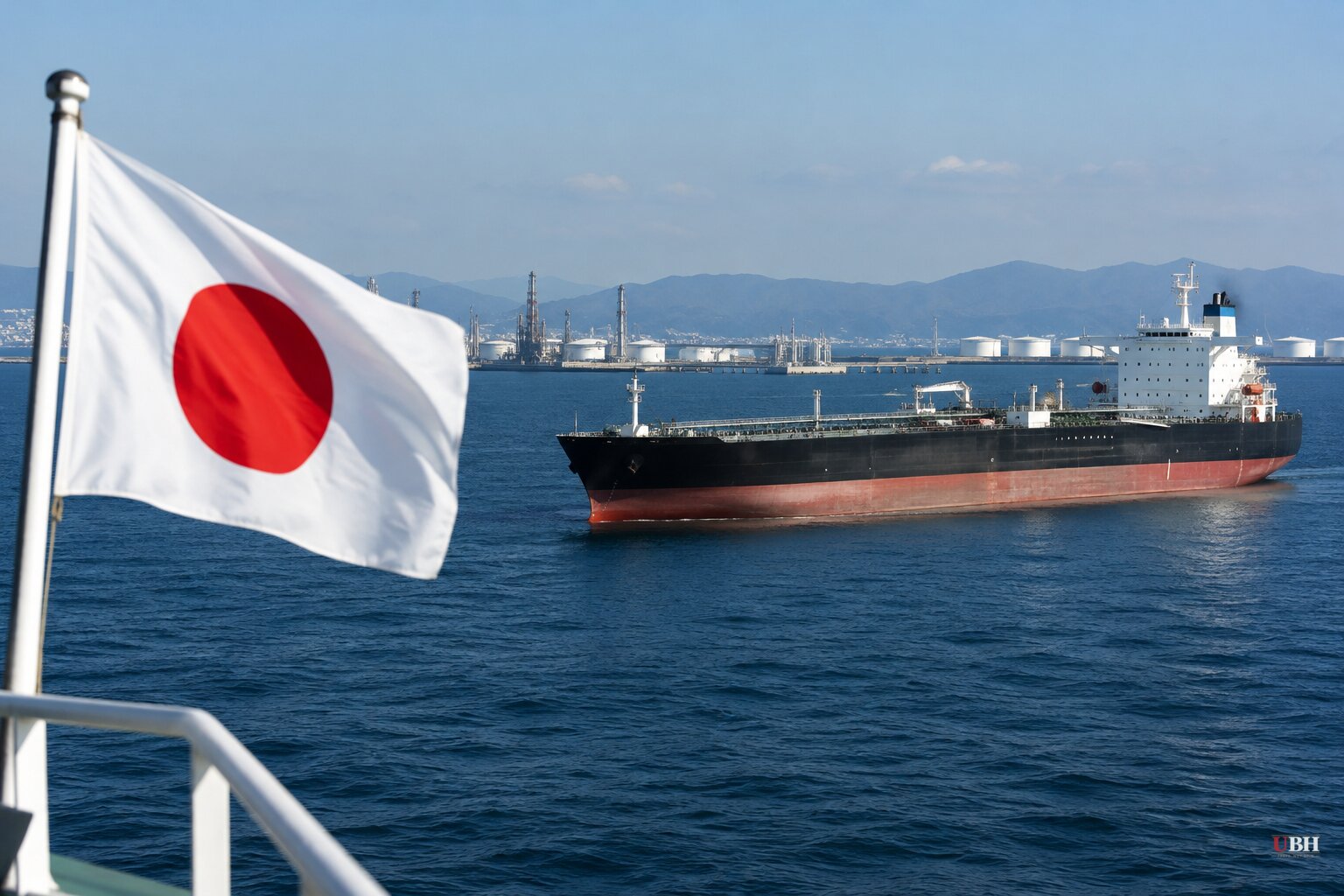
Japan's cabinet approved three bills on Tuesday, Oct. 13, aimed at one problem: the country gets almost all of its oil through a waterway that has been disrupted since February.
Industry Minister Ryosei Akazawa announced the package at a press conference. "Through these three bills, we aim to improve supply security by diversifying sources of crude oil and other fossil fuels and reducing related risks," he said.
The government plans to push the bills through the current extraordinary session of the Diet. They have not yet been voted on.
The numbers behind the push
Japan sourced 94% of its crude oil imports from the Middle East in 2025. Of those shipments, 93% passed through the Strait of Hormuz.
That dependence has been tested since late February 2026, when U.S. and Israeli strikes on Iran were followed by the effective closure of the strait. Tokyo released strategic petroleum reserves in coordination with other major economies and the International Energy Agency. It also introduced subsidies to limit gasoline prices and lined up alternative supply.
Those alternatives include Saudi crude moved by pipeline to the Red Sea, plus cargoes from the United States, Central Asia, Latin America and Africa.
Crude volumes fell sharply early in the crisis and recovered gradually over the summer. In September, renewed shipping disruptions hit cargoes that had been scheduled to pass through the Bab el-Mandeb Strait. Some vessels were rerouted through the Suez Canal, delaying deliveries by about a month, and strategic reserves covered the gap.
Akazawa said crude procurement for October is expected to reach about 100% of the 2025 monthly average.
What the three bills do
Procurement diversification. This bill creates a grant program. It compensates refiners and trading houses for the higher transport costs of buying crude oil and naphtha by routes that avoid chokepoints such as Hormuz.
Oil from the United States and other non-Middle Eastern sources takes more than twice as long to ship as Gulf crude, which drives up freight costs. Companies must submit procurement plans to the government in advance. Once the government confirms they are not overly dependent on Hormuz, they qualify for grants.
The program would be funded entirely by contributions from importers, including refiners, traders and petrochemical manufacturers. That means the industry paying into the fund is the same industry drawing from it. The levy rates and grant amounts will be finalized later.
Tanker insurance backstop. The second bill lets the government cover part of insurance payouts for oil tankers and other vessels carrying petroleum products and liquefied natural gas. It applies when foreign reinsurers cannot provide coverage because of heightened geopolitical tensions, an industry ministry official said.
JOGMEC powers. The third amends the law governing the Japan Organization for Metals and Energy Security. It would let the state-backed agency invest in infrastructure for alternative supply routes, including pipelines. It could also provide debt guarantees for pipeline construction in oil-producing countries in the Middle East.
Timeline and politics
The procurement diversification law is slated to take effect within six months of promulgation. The other two are slated to take effect within fiscal 2026.
The package follows an August plan to strengthen energy resilience. That plan said specific measures, including legislation, would be finalized by year-end. The broader framework was presented to the Green Transformation Implementation Council, which Prime Minister Sanae Takaichi chairs.
The region remains unstable. Iran reaffirmed its control over the Strait of Hormuz in early October, while the U.S. military said commercial traffic continued to flow, according to Epoch Times reporting on Oct. 8. Oil rose 4% that day on Hormuz attacks.
The open questions
The industry levy keeps the subsidy off the federal budget. The insurance backstop is different. It puts the government on the hook as contractual backstop if private reinsurers pull out, and no ceiling on that exposure has been disclosed.
The central unresolved figures are the levy rate and the grant size. Those details, still to come, will show how much of the added shipping cost the industry absorbs and how much the program offsets. They are to be finalized later.
Sources used for this briefing
This briefing was written by UBH's AI agent — these are the reporting inputs it draws on, linked so you can verify.


