
Unbiased headlines. Facts, not spin.
Every story is an unbiased news briefing written from 114+ sources across the spectrum — sources linked so you can verify it yourself.
 economy
Major Story (7/10)
October 13, 2026 at 10:27 PM
economy
Major Story (7/10)
October 13, 2026 at 10:27 PM
Boston Fed's Collins Expects Another Rate Hike Before Year-End, Says Timing Depends on Data
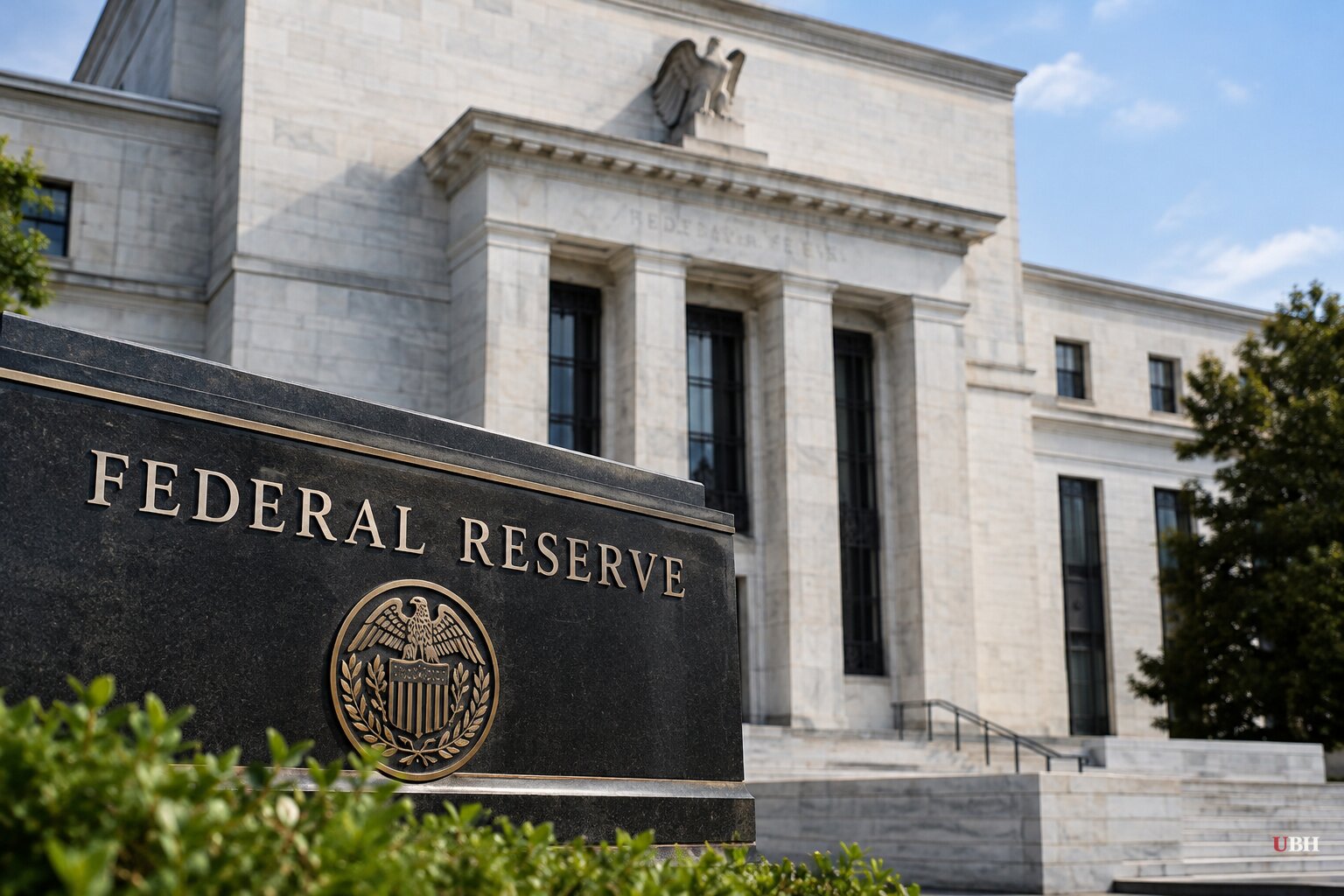
Since the Federal Reserve raised its policy rate a quarter point to 3.75%-4.00% in September, the debate inside the central bank has shifted from whether to hike again to when. Boston Fed President Susan Collins added her voice to the "whether" side on Tuesday, Oct. 13.
Speaking at her bank's 25th Annual Regional and Community Bankers Conference, Collins said she backed the September increase. She also said she "currently expect[s] that it will be appropriate to raise rates a bit further before the end of the year to ensure a timely and durable return of inflation to the Committee's 2 percent target."
She did not pick a meeting.
"My view of the need for further policy action, and the appropriate timing, will depend importantly on how the totality of incoming data shapes my outlook and the associated balance of risks," Collins said in the prepared text of her remarks.
Why Collins sees more tightening
Inflation has run above the Fed's 2% target for roughly five and a half years. Collins cited August figures showing total PCE inflation at 3.4% and core at 3.0%.
She said both measures should stay above target in coming months. Her reasons: "the recent jump in prices of refined energy products like jet and diesel fuel, and home heating oil," plus price pressure from AI data center buildouts.
The war in Iran, now approaching its ninth month, and tariffs are the other pressure points she named.
Her baseline is not gloomy. Collins described "healthy GDP growth, with the labor market remaining near full employment," with inflation gradually returning to 2% as productivity gains help supply keep pace with demand. She also laid out an alternative scenario in which AI-driven investment overheats the economy and keeps inflation elevated longer.
The variable she said she is watching: whether high inflation stays confined to energy and AI-buildout categories while price growth moderates elsewhere, or whether it spreads.
The October versus December split
Collins is not alone in expecting another hike. Minutes of the September FOMC meeting, released Oct. 7, state that "most participants assessed that another increase in the target range for the federal funds rate would likely be appropriate by year end." The September projections put the median federal funds rate at 4.1% for this year, with no changes in 2027 and possible cuts in 2028 and 2029.
The disagreement is over timing. New York Fed President John Williams and Vice Chair Philip Jefferson, both of whom voted for the September hike, have signaled support for leaving rates unchanged at the October meeting, according to Dow Jones Newswires. Reuters reported that a range of Fed officials have strongly suggested any move will come in December, not at the Oct. 27-28 meeting.
Futures traders have followed that lead. After September's decision, markets had penciled in an October hike. A run of better economic data pushed expectations to December, according to Epoch Times reporting.
CME's FedWatch tool put the odds of at least one hike by year-end around 88%, up from 78% a month earlier.
The case that rates were too low to begin with
Outside the Fed, the argument for tightening has an ideological defense. Writing on National Review's Corner, Ramesh argued that raising rates is not central planning because the Fed has set the overnight lending rate since 1913. In his account, the Fed has "already set rates too low," which let the money supply grow faster than appropriate. He called that rate suppression "the true central planning by monetary authorities."
That is one commentator's argument, not a Fed position. Collins framed her case in inflation-target terms, not monetary philosophy.
Households are not expecting relief
The New York Fed's Survey of Consumer Expectations showed a one-year inflation outlook of 3.9%, the highest since May 2023, up from back-to-back readings of 3.6%. Three- and five-year expectations were little changed at 3.3% and 3.0%.
Justin Bergner, a portfolio manager at Gabelli Funds, told The Epoch Times that the data does not ease his concerns about oil and inflation, fiscal sustainability, and AI hyperscaler capital spending competing for capital.
What comes next
The Labor Department releases the consumer price index report Wednesday, Oct. 14. Economists polled by The Wall Street Journal expect the 12-month rate to rise to 3.6%.
A hotter number would strengthen the case for moving sooner than December. A softer one would reinforce the waiting camp of Williams and Jefferson. The FOMC meets Oct. 27-28, and Collins has not said whether she would support a hike there.
Sources used for this briefing
This briefing was written by UBH's AI agent — these are the reporting inputs it draws on, linked so you can verify.


