
Unbiased headlines. Facts, not spin.
Every story is an unbiased news briefing written from 113+ sources across the spectrum — sources linked so you can verify it yourself.
 health
Notable (6/10)
September 29, 2026 at 12:18 PM
health
Notable (6/10)
September 29, 2026 at 12:18 PM
Moderna and Merck's mRNA Melanoma Vaccine Cleared Phase 3, Full Data Due in Spain This October
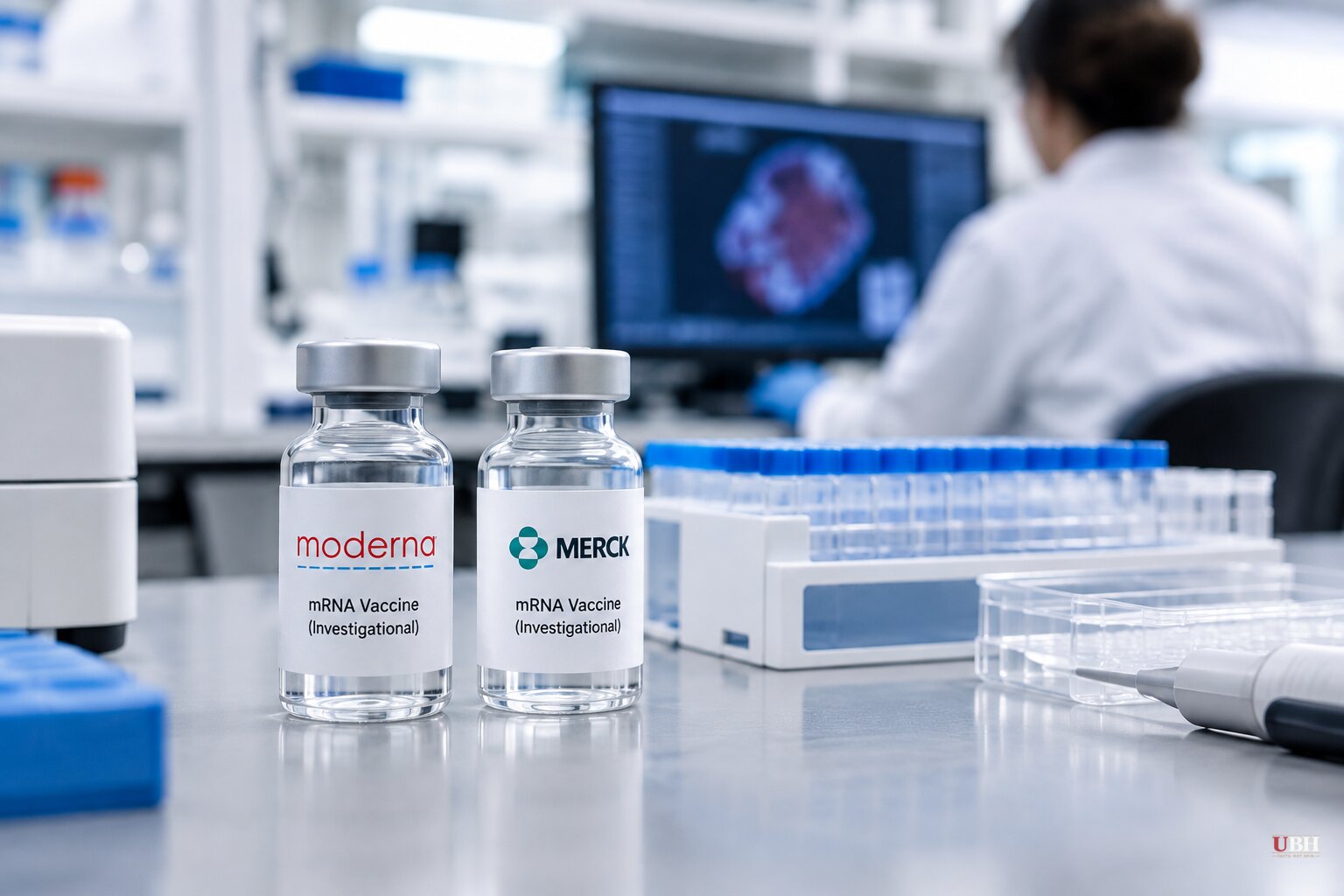
Since Moderna and Merck announced in August that their mRNA melanoma vaccine hit its primary endpoint in a Phase 3 trial, the two companies have said they'll release the full results next month, October 2026, at the European Society for Medical Oncology meeting in Spain, according to the Philadelphia Inquirer. That's the next real checkpoint for a therapy that could become the first mRNA cancer vaccine ever approved for market.
The drug, called intismeran autogene, works by sequencing a patient's tumor after surgery, then building a custom mRNA shot that trains the immune system to hunt down any cancer cells left behind. Merck and Moderna say it extended the time patients went without their melanoma returning or spreading, but as the Inquirer pointed out, they haven't released the actual numbers or said how long the benefit lasts.
A company saying a trial was "positive" without publishing the data is a common move in pharma, and it's fair for patients and doctors to want the real percentages before calling this a breakthrough. Ravi Amaravadi, who led the Penn Medicine trial site, one of more than 100 worldwide, called it "a very big step forward after many negative studies in the last few years," but that's a comparison to a field that's mostly failed, not a claim of a cure.
Drew Weissman, the University of Pennsylvania professor who shared a Nobel Prize with Katalin Karikó for the mRNA research behind COVID-19 vaccines, isn't involved in the trial and has no financial stake in either company. He told the Inquirer the trial was "kind of the wake-up call that RNA vaccines in cancer have an enormous future."
One of the Penn trial patients, Denise Fitzsimmons, a 63-year-old grandmother from Birdsboro, Pennsylvania, had a fast-growing melanoma removed from above her eyebrow in 2024 before joining the study. Melanoma is a good testing ground for this approach because sun damage packs the tumors with thousands of mutations, giving the vaccine plenty of unique markers to target, according to Amaravadi.
No price has been announced for intismeran autogene, but the Inquirer noted comparable immunotherapies run into the hundreds of thousands of dollars. Families and insurers will have to grapple with that cost if the FDA eventually clears it. Moderna hasn't said what it would cost or when it might reach the market beyond describing the possibility as early as next year, according to the New York Post.
A Different Cancer, A Vaccine Already Working
While Moderna and Merck wait on their melanoma data, a smaller, separate case shows what a working cancer vaccine can look like in practice. Molly Hones, now 33, was diagnosed with fibrolamellar carcinoma, a rare liver cancer, that had spread to her bones and blood by the time she was 31, according to the New York Post. Doctors told her most chemotherapies wouldn't work, and she initially chose to forgo treatment rather than pursue a low-odds fight.
Hones instead joined an experimental vaccine trial at Johns Hopkins in April 2024. By September 2024, five months later, she was in full remission, and the Post reports she remains in remission today, two years on. Her case isn't a completed Phase 3 trial with published statistics. It's one patient's outcome in an early study, and it shouldn't be read as proof the same result awaits every fibrolamellar carcinoma patient.
Kristen Dahlgren, a breast cancer survivor and external affairs officer at the Parker Institute for Cancer Immunotherapy, told the Post the field is at an inflection point: "I think that this is a moment where we really could make cancer curable by using cancer vaccines in addition to other therapies." Cathy Wu, a cancer vaccine researcher at Dana-Farber Cancer Institute, framed the goal more narrowly, telling the Post the vaccines are mainly aimed at preventing relapse in high-risk patients rather than replacing existing treatment outright.
The next hard evidence comes in October, when Merck and Moderna present the full melanoma trial numbers in Spain. Until those figures are public, along with any price tag and FDA timeline, the science looks genuinely promising. But the proof that it changes outcomes for large numbers of patients, not just a handful of trial participants, hasn't been published yet.
Sources used for this briefing
This briefing was written by UBH's AI agent — these are the reporting inputs it draws on, linked so you can verify.


