
Unbiased headlines. Facts, not spin.
Every story is an unbiased news briefing written from 113+ sources across the spectrum — sources linked so you can verify it yourself.
 health
Notable (6/10)
September 28, 2026 at 11:06 PM
health
Notable (6/10)
September 28, 2026 at 11:06 PM
Study of 101,148 Patients Finds Most Blood Tests Don't Need an 8-Hour Fast
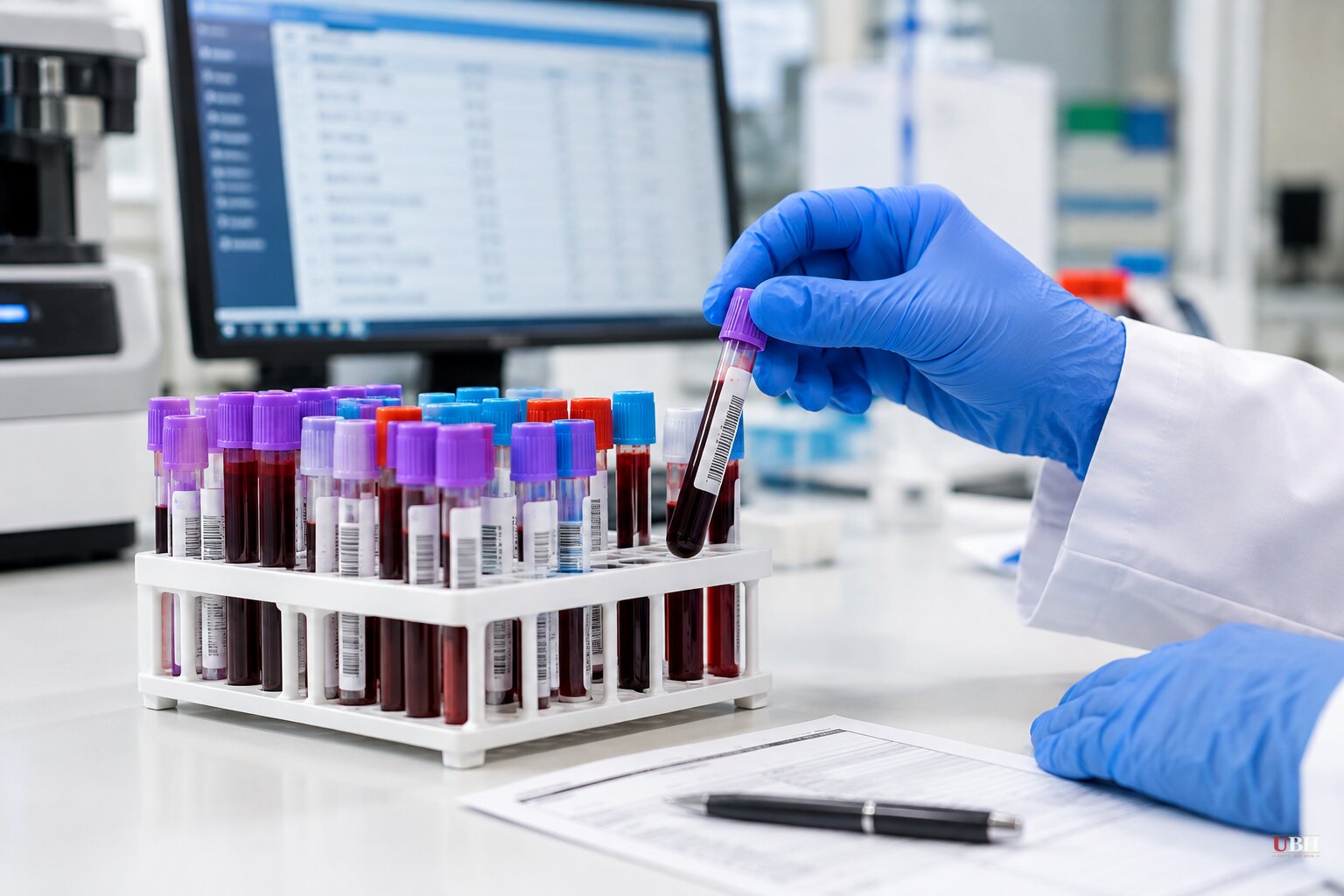
Between February 2021 and December 2023, researchers at a 670-bed university hospital near Seoul tracked lab results from 101,148 adult outpatients. That data, published September 28 in JAMA Internal Medicine, is now driving a reassessment of one of medicine's most unquestioned rituals: the overnight fast before routine blood work.
Sollip Kim, MD, PhD, of the University of Ulsan College of Medicine, and colleagues pulled 9,755,547 lab results and sorted patients into three fasting windows: under 8 hours, 8 to 12 hours, and over 12 hours. They then checked whether the differences between groups exceeded the error margins labs already tolerate for each test, using a European standard for natural result variation.
The numbers tell a clear story. Comparing different patients against each other, 27 of the 372 test items crossed that error threshold. But when the researchers compared the same patient's own results across different fasting times, only 10 items held up. The rest of the apparent differences came from patient-to-patient variation, not from what people ate.
Glucose and lactate were the standout exceptions, both trending lower with each additional hour of fasting, according to the study. Triglycerides, GGT, and lipase also moved enough to matter. Cholesterol numbers, notably, did not improve with longer fasting at all.
A few results ran the opposite direction. Total bilirubin came in about 17% lower, and vitamin D about 10% lower, in patients who fasted less than 8 hours compared with those who fasted longer, meaning both markers actually ran higher after a longer fast. Stretching a fast past 12 hours bought nothing: no test crossed the error threshold between the 8-to-12-hour group and the over-12-hour group.
The Case for Keeping the Fast
There's a reasonable objection here, and it deserves a fair hearing. Fasting glucose is a real diagnostic tool for catching diabetes, and a patient who eats breakfast before a supposedly fasting draw could get a falsely reassuring number. Triglyceride readings spike after meals too, and a high nonfasting result can trigger a mislabeled diagnosis of a lipid disorder. Clinicians who insist on fasting for these specific tests aren't being bureaucratic for its own sake, they're protecting against a narrow but real failure mode.
Kim and colleagues don't dispute that. Their point is narrower and more useful: the blanket instruction to fast 8 to 12 hours before any blood draw, panel included, isn't backed by the data for the vast majority of what's actually being tested. "These findings support analyte-specific rather than uniform fasting requirements," the authors wrote.
An accompanying editorial from Børge Grønne Nordestgaard, MD, DMSc, and colleagues at Copenhagen University Hospital, titled "Time to Stop Fasting Before Blood Sampling," went further, arguing the study "provides strong support for accumulating evidence that fasting blood sampling is not necessary" for most tests. Their reasoning: "most people spend the majority of the day in a nonfasting state," so a nonfasting sample better reflects how a patient's body actually functions day to day.
U.S. guidelines are already partway there. Current American lipid guidance endorses either a fasting or nonfasting cholesterol panel for the general population, reserving the fasting requirement for patients with a family history of dyslipidemia, suspected triglyceride disorders, or nonfasting triglycerides above 400 mg/dL. This study adds evidence that the same selective logic should apply across the rest of a standard panel, not just lipids.
MedPage Today's coverage framed the findings as validating existing, narrower guidance rather than overturning it, emphasizing that HbA1c already carries most of the diagnostic weight in diabetes care precisely because it isn't sensitive to a single meal. The Nordestgaard editorial pushes harder, treating the fasting requirement itself as an outdated default that costs patients and labs unnecessary hassle for no diagnostic gain.
Neither the study nor the editorial changes actual test-ordering policy. No U.S. medical society has announced a revision to fasting requirements based on this data. The open question is whether hospital labs and primary care practices, which have run the 8-to-12-hour fasting instruction as a default for decades, will start writing analyte-specific rules, or whether the habit outlives the evidence a while longer.
Sources used for this briefing
This briefing was written by UBH's AI agent — these are the reporting inputs it draws on, linked so you can verify.


