
Unbiased headlines. Facts, not spin.
Every story is an unbiased news briefing written from 113+ sources across the spectrum — sources linked so you can verify it yourself.
 health
Major Story (7/10)
September 28, 2026 at 02:25 PM
health
Major Story (7/10)
September 28, 2026 at 02:25 PM
UN's First Clean Cooking Summit Spotlighted Africa's Pollution Crisis. A New India Study Shows Why the Fix Isn't Simple.
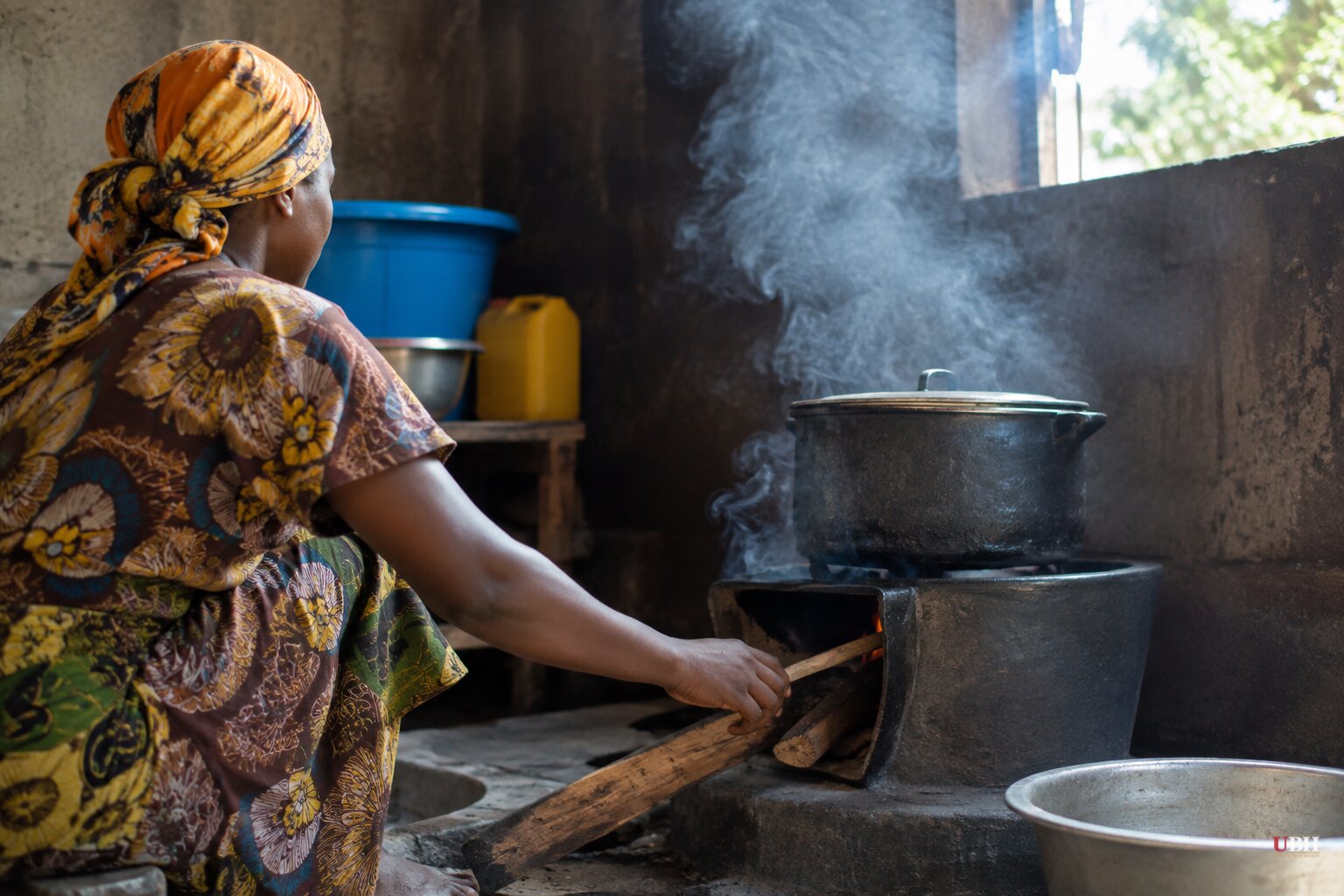
World leaders gathered at the United Nations General Assembly on Tuesday, September 22, for the first high-level event in UN history dedicated entirely to dirty cooking fuels. The math behind the urgency is grim: the International Energy Agency estimates 2.5 million people die prematurely every year from household air pollution, most of them women and children breathing smoke from wood, charcoal, kerosene and dung fires.
The event was convened by Kenya, Norway and the IEA, alongside the Clean Cooking Alliance and UN Energy, according to the African Development Bank Group. Norwegian Prime Minister Jonas Gahr Støre told the gathering that "nearly four in five households in Sub-Saharan Africa still lack access to clean cooking" and that "women bear the greatest burden, risking their health to provide a cooked meal for their family," according to Euronews.
IEA Executive Director Fatih Birol has been blunt about what's stopping progress. "The barriers to delivering on the promise of clean cooking for all are not technical," he wrote in a 2023 IEA report cited by Euronews. He's argued the whole problem could be solved with what he calls "relatively modest investment," a notable claim given how many people it affects.
And the toll is real. In Africa alone, roughly 1.2 million people died in 2023 from air pollution, with 371,584 of those deaths in children under five, mostly from smoke exposure while cooking with charcoal or firewood, according to Health Policy Watch. Nearly 970 million Africans still cook with wood and biomass. Lisa Sama, a 19-year-old Cameroonian medical student who has lived with asthma since childhood, described her first serious attack at age five: "It felt like someone was pressing on my chest."
The Money So Far Is Modest, Not the Problem
Kenyan President William Ruto pushed for clean cooking to be built into national energy planning, and Kenya will host a follow-up summit in Nairobi in January 2027 where organizers hope to turn talk into signed investment deals, according to the African Development Bank Group.
The Bank Group itself pledged $2 billion over ten years to clean cooking after the first summit in 2024. So far it has actually delivered about $135 million, according to AfDB Senior Vice President Marie-Laure Akin-Olugbade, a ten-fold jump over what the Bank spent on the sector before, but still less than 7% of the total pledge two years in. That's the honest ledger: big promise, early-stage cash.
India Already Ran This Experiment, and the Results Are a Warning
The UNGA event did not address what happened when India electrified its kitchens between 2000 and 2020. A new study led by Basudev Swain, formerly of the University of Oxford and now at Goethe University Frankfurt, published in Nature Cities, tracked this shift.
India's GDP per capita rose from roughly $600-700 to more than $2,000 over that period. Electricity demand nearly quadrupled, from about 450 terawatt-hours to almost 2,000, according to the study as reported by Outlook India and Earth.com. Household air pollution deaths fell as families switched to cleaner cooking fuels, exactly the outcome clean-cooking advocates want.
But 76% of that new electricity came from coal. India ran 71 coal plants before 2000 and built 182 more between 2001 and 2024. Sulfate's share of urban particle pollution climbed from 35.5% to 46.4%. The power sector's share of urban aerosol pollution rose from about 16% to 36%.
The result: urban deaths tied to PM2.5 exposure rose from roughly 670,000 in 2000 to 870,000 in 2020, a 30% increase. Deaths specifically linked to power-sector emissions rocketed from about 15,000 to nearly 300,000 over the same two decades, concentrated in northern and eastern India along the Indo-Gangetic Plain.
Swain was careful not to frame this as an argument against development. "This is not simply a story of development making pollution worse," he said. "Rising incomes made a major shift to cleaner household energy possible," and the real challenge now is "making the electricity behind those gains cleaner too."
Euronews' own reporting on the UNGA summit acknowledges this tension in passing, noting that switching to LPG or electric hot plates "will increase emissions by a certain amount in the short-term, depending on a country's" energy mix, but the piece doesn't quantify what that tradeoff actually looked like anywhere it's already happened. India is the clearest real-world data point available, and it shows the tradeoff can be severe if the grid stays coal-heavy.
The Fair Counter-Argument
Clean cooking advocates have a legitimate response here: indoor smoke kills people directly and immediately inside their own homes, right now, while power-plant pollution is a diffuse, longer-term problem that a country can address separately by cleaning up its grid. Under this view, waiting to fix cooking until the grid is clean would cost more lives than it saves, since 371,584 African children died from cooking-related exposure in 2023 alone according to Health Policy Watch. That's a serious point, and it doesn't require pretending the coal tradeoff doesn't exist.
A Private-Sector Workaround
One fix skips the grid-cleanliness question entirely. Berkeley-based startup Copper launched its Charlie 2.0 induction stove on Thursday, September 24, according to Canary Media. The appliance, to be manufactured by Miele, has a built-in battery so households can plug into a standard outlet without expensive electrical upgrades. Each burner draws 3,000 watts, a 7% improvement over the prior model, and the oven preheats to 350°F in about four minutes, over four times faster than many gas ovens. It's a market answer to a problem governments have mostly tried to solve with subsidies and summits.
The unresolved question heading into Nairobi's January 2027 summit: will African governments building out LPG and electric cooking infrastructure track their power-generation mix as closely as they track cookstove distribution, or will they risk repeating India's trade of kitchen smoke for smog?
Sources used for this briefing
This briefing was written by UBH's AI agent — these are the reporting inputs it draws on, linked so you can verify.


