
Unbiased headlines. Facts, not spin.
Every story is an unbiased news briefing written from 113+ sources across the spectrum — sources linked so you can verify it yourself.
 health
Notable (6/10)
September 28, 2026 at 12:44 PM
health
Notable (6/10)
September 28, 2026 at 12:44 PM
India's Supreme Court Calls Recent Delhi-NCR Rape Cases a 'Systematic Failure' of Law Enforcement
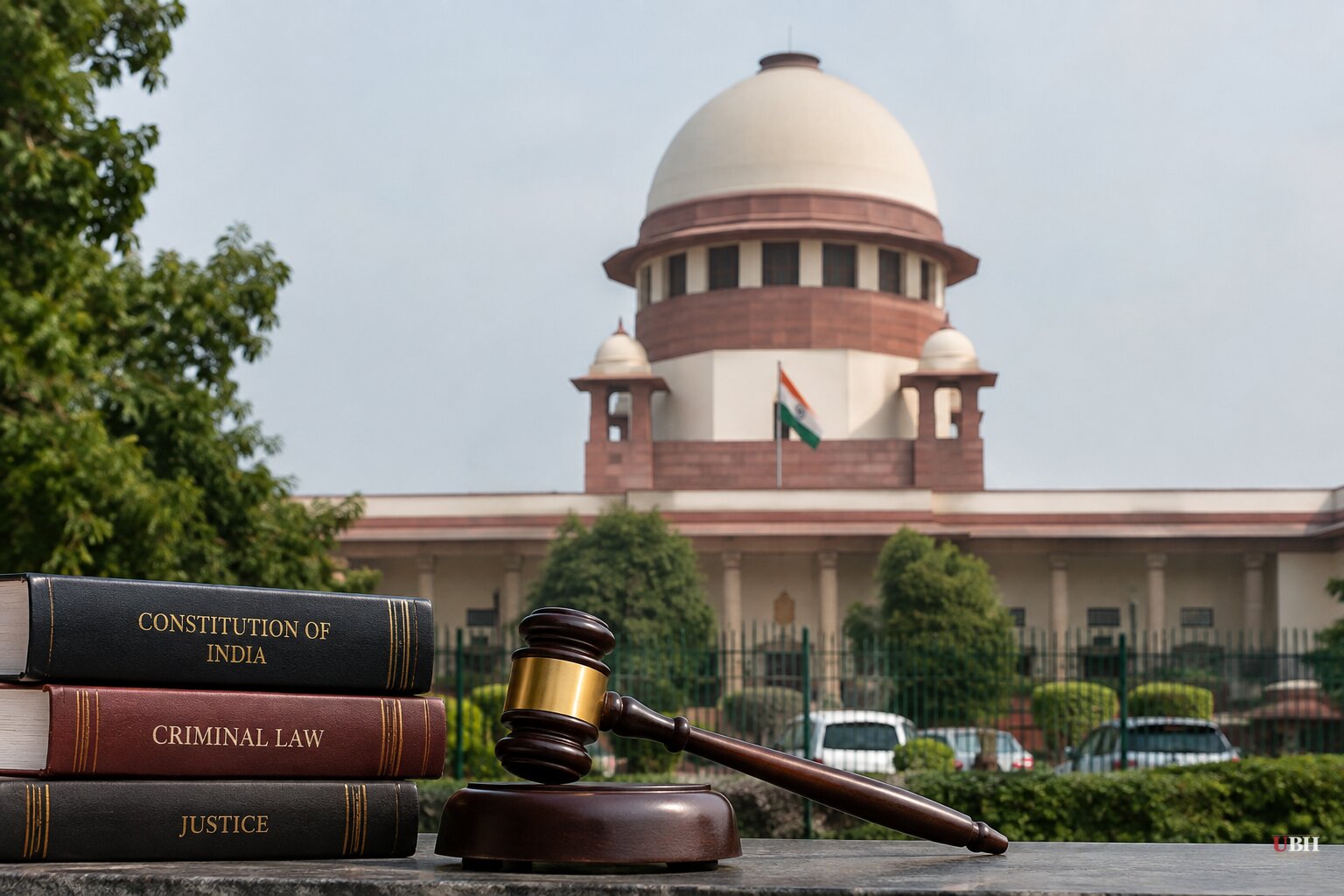
India's Supreme Court on Monday, September 28, opened a case against its own government's failure to keep women and girls safe.
A bench of Justices J.B. Pardiwala and K. Vinod Chandran took suo motu cognisance, meaning the court acted on its own without a petitioner, of a spate of sexual assault cases reported across Delhi and its surrounding region this month. The court directed its registry to formally register the matter as a public interest litigation and list it for hearing, according to Bar and Bench and Live Law reporting cited by multiple outlets including The Hindu and Hindustan Times.
The bench did not mince words. "The reports of rape cases in Delhi-NCR starkly underline a systematic failure on the part of the law enforcement and the public administrative authorities to guarantee basic public safety," the court said, according to PTI.
The Cases That Triggered It
Three incidents anchored the court's order. On August 4, a teenage girl, reported as 16 by the Economic Times and The Statesman and as 17 by Scroll.in, was allegedly gang-raped by a bus driver and conductor on a sleeper bus that traveled nearly 47 kilometers from Greater Noida to Kashmere Gate in Delhi. The bus passed through the journey without being stopped at a single police picket, according to The Indian Express as cited by Scroll.in. NDTV reported the bus's sleeper curtains helped conceal the assault and that the vehicle lacked a functioning CCTV system, a requirement mandated by law in the aftermath of the 2012 Nirbhaya case. The National Human Rights Commission separately took its own suo motu cognisance of that case and sought reports from police in Delhi, Gautam Buddh Nagar and Mainpuri, per The Statesman.
On September 13, the decomposed body of a 16-year-old was found in Swaroop Nagar, two days after she was allegedly raped and murdered, according to The Hindu, citing The Hindu's own reporting via Scroll.in.
On September 21, a 17-year-old girl, who had gone to South Delhi's Kalkaji Mandir to mark her birthday according to NDTV, was allegedly gang-raped by three men posing as police officers in Aastha Kunj park near Lady Shri Ram College. The men allegedly took her and a male friend to a secluded area. Police arrested the suspects, with one taken into custody after an encounter, per The Statesman.
The Print reported, as cited by Scroll.in, that at least 13 sexual assault cases were reported in Delhi in September alone.
'Solidarity Is Not a Solution'
The court leaned hard on accountability rather than sympathy. "Expressing solidarity is not a solution to this social evil. What is required is a measurable response with responsibility and accountability being fixed upon the authorities entrusted with prevention of crime, maintenance of public order and protection of vulnerable persons," the bench said, according to The Hindu.
The justices specifically flagged the Aastha Kunj case, noting that Lady Shri Ram College students had previously filed harassment complaints about the area that went unaddressed. "Regrettably, these complaints failed to rectify the security lapses through advanced surveillance," the court said, per Hindustan Times.
The bench grounded its reasoning in Article 21 of India's Constitution, the right to life and personal liberty, holding that living with dignity and free from fear of violence is intrinsic to that guarantee. It said parks, roads, buses, Metro stations, subways and footbridges cannot become "zones of high risk" because of inadequate lighting, poor surveillance or lax patrolling.
The Nirbhaya Comparison
Justice Pardiwala drew a direct line to December 2012, when a 23-year-old physiotherapy student was gang-raped on a moving Delhi bus and died two weeks later in a Singapore hospital. That case, known nationally as Nirbhaya, sparked mass protests and led to legal reforms expanding the definition of sexual offenses and stiffening penalties. Four of the six men convicted, Mukesh Singh, Pawan Gupta, Vinay Sharma and Akshay Kumar Singh, were executed at Tihar Jail in March 2020.
"One cannot help but draw painful parallels to the Nirbhaya incident of 2012," Pardiwala said, according to Bar and Bench, questioning "whether systemic law-enforcement mechanisms have made any meaningful progress in the decade since then."
Police did make arrests in each of the three cases the court cited, and one suspect was captured after an armed encounter. Authorities could point to that as evidence the system reacts. But arrests after the fact are not prevention, and the CCTV mandate written into law after Nirbhaya reportedly was not functioning on the very bus where the August 4 assault occurred.
The Supreme Court has not yet scheduled the first hearing date for the newly registered PIL, and it has not named specific officials for accountability. The Delhi Police response the court sought, along with any concrete timeline for fixing lighting, surveillance and patrolling gaps in the flagged public spaces, remains outstanding.
Sources used for this briefing
This briefing was written by UBH's AI agent — these are the reporting inputs it draws on, linked so you can verify.


