
Unbiased headlines. Facts, not spin.
Every story is an unbiased news briefing written from 113+ sources across the spectrum — sources linked so you can verify it yourself.
 health
Major Story (7/10)
September 28, 2026 at 12:28 PM
health
Major Story (7/10)
September 28, 2026 at 12:28 PM
Uttar Pradesh Flood Death Toll Climbs to 81 as Rivers Stay Above Danger Levels
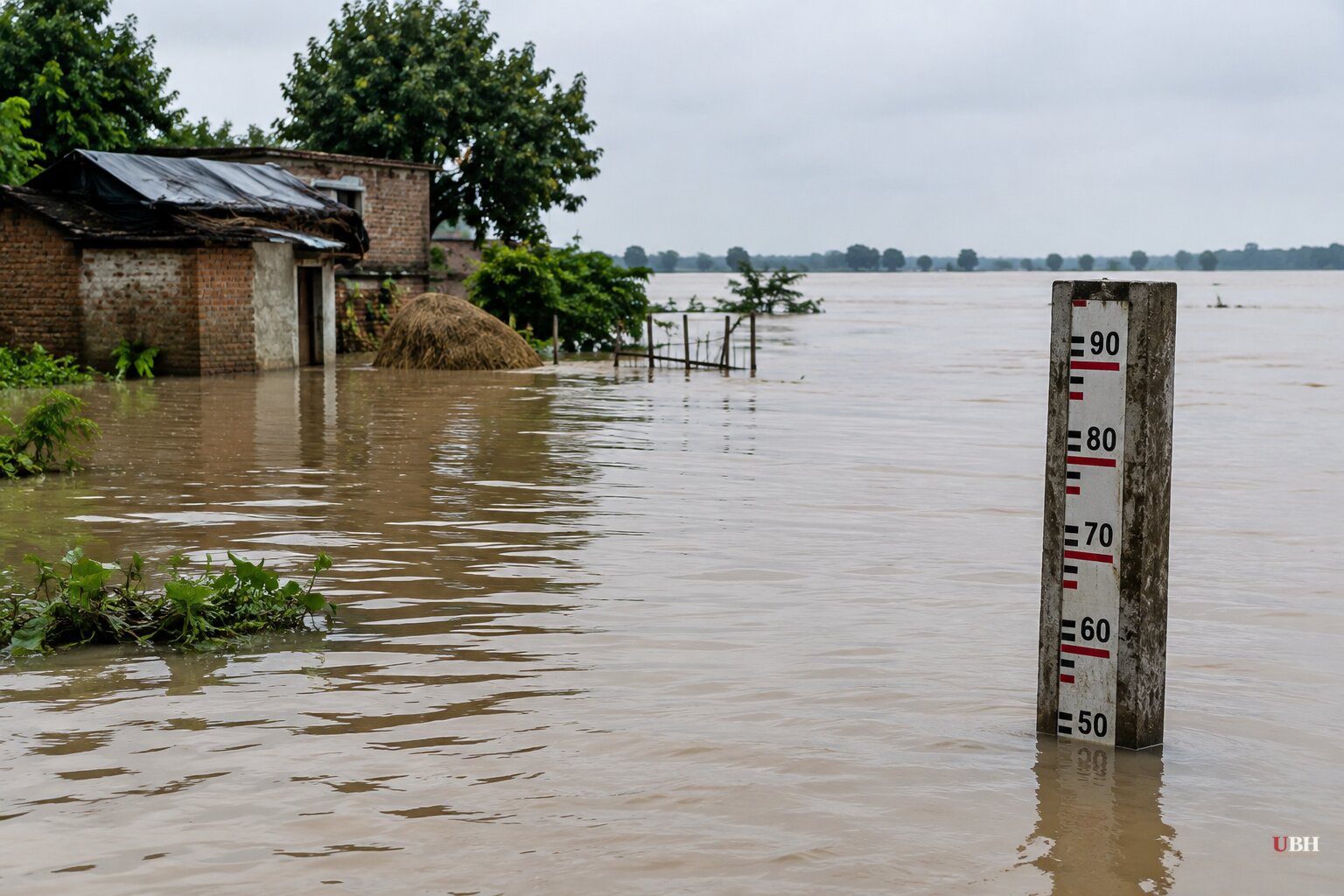
Since the Uttar Pradesh death toll hit 56 on September 26, three straight days of record monsoon rain have pushed it to 81 as of Monday, September 28, according to Uttar Pradesh Relief Commissioner Hrishikesh Bhaskar Yashod, cited by the Times of India and reported by Xinhua News Agency and the Oman Observer.
The state government also reported 62 people injured and more than 1,000 houses damaged, according to Euronews. The Oman Observer's version of the same disaster agency report put house damage higher, at more than 2,200 homes, along with 154 animal deaths and 81 hectares of farmland lost. The two figures diverge significantly and neither has been reconciled by Uttar Pradesh authorities as of Monday.
The Independent and Azerbaijan's APA, citing ABC News, are still reporting 62 dead and roughly 40-46 injured. Those figures match Sunday's numbers before the state's Monday update. Readers checking multiple outlets today will see both 62 and 81 presented as current.
How bad the rain actually was
The Independent reported Uttar Pradesh recorded 775% more rainfall than normal between September 25 and 27, with 66.5mm falling against an average of 7.6mm for that stretch.
Some districts blew past that. Farrukhabad logged rainfall 7,385% above normal. Kannauj came in at 5,664% above average, Shahjahanpur at 4,408%, Hamirpur at 4,240%, and Mahoba at 4,100%. Fifty-six of the state's 75 districts recorded what the weather department classifies as "large excess" rainfall, according to the disaster agency's report cited by the Independent.
Sitapur recorded the highest number of rain-related deaths at seven, with Lakhimpur Kheri, Bahraich and Balrampur each reporting five.
Schools and colleges closed Monday in several districts, including the capital Lucknow, along with Amroha, Shravasti, Pilibhit and Bijnor, according to All India Radio.
Rivers still rising
The Ghagra river was flowing above its danger level at Elginbridge in Barabanki, and the Rapti had crossed its warning level at Balrampur, authorities told the Independent.
Atul Kumar Singh, a senior scientist at the Regional Meteorological Centre in Lucknow, said rainfall should ease starting Monday as the weather system over the Bay of Bengal weakens, though he warned light rain could persist in eastern and western districts through Tuesday.
Relief Commissioner Yashod told reporters that "assessment of crop losses is still underway as district administrations continue to carry out rescue, relief and damage assessment operations in affected areas," a process with no set completion date.
A wider monsoon crisis
Uttar Pradesh isn't the only front. In Odisha, roughly 75,000 people were evacuated as officials warned that up to 800,000 cusecs of water could pass through the Mundali barrage on the Mahanadi river system by Monday, according to the Independent. That's a separate river system and a separate emergency from the Uttar Pradesh flooding, though both are tied to the same active monsoon pattern.
Across the border, Nepal's disaster management agency reported 21 deaths from weather-related incidents between Thursday and Sunday, with five people still missing, five injured, and 194 houses damaged by floods and landslides, according to Euronews. Nepal is still recovering from an August flood disaster that killed more than 1,400 people and left nearly 6,000 missing.
India's weather office has warned in recent years that extreme rainfall events are becoming more frequent, which officials and outside scientists link to rising temperatures, according to the Oman Observer. No meteorological agency cited in these reports has issued a formal attribution study for the September 25-27 rain event specifically.
Heading into the week, the key questions are whether the Ghagra and Rapti stay above danger levels as forecast rain continues through Tuesday, and whether Uttar Pradesh's own agencies settle on a single house-damage figure.
Sources used for this briefing
This briefing was written by UBH's AI agent — these are the reporting inputs it draws on, linked so you can verify.


