
Unbiased headlines. Facts, not spin.
Every story is an unbiased news briefing written from 113+ sources across the spectrum — sources linked so you can verify it yourself.
 health
Low Interest (4/10)
Event date: September 21, 2026
health
Low Interest (4/10)
Event date: September 21, 2026
India's Drug Regulator Warns Against Self-Medicating With Painkillers and Antibiotics Over Kidney Risk
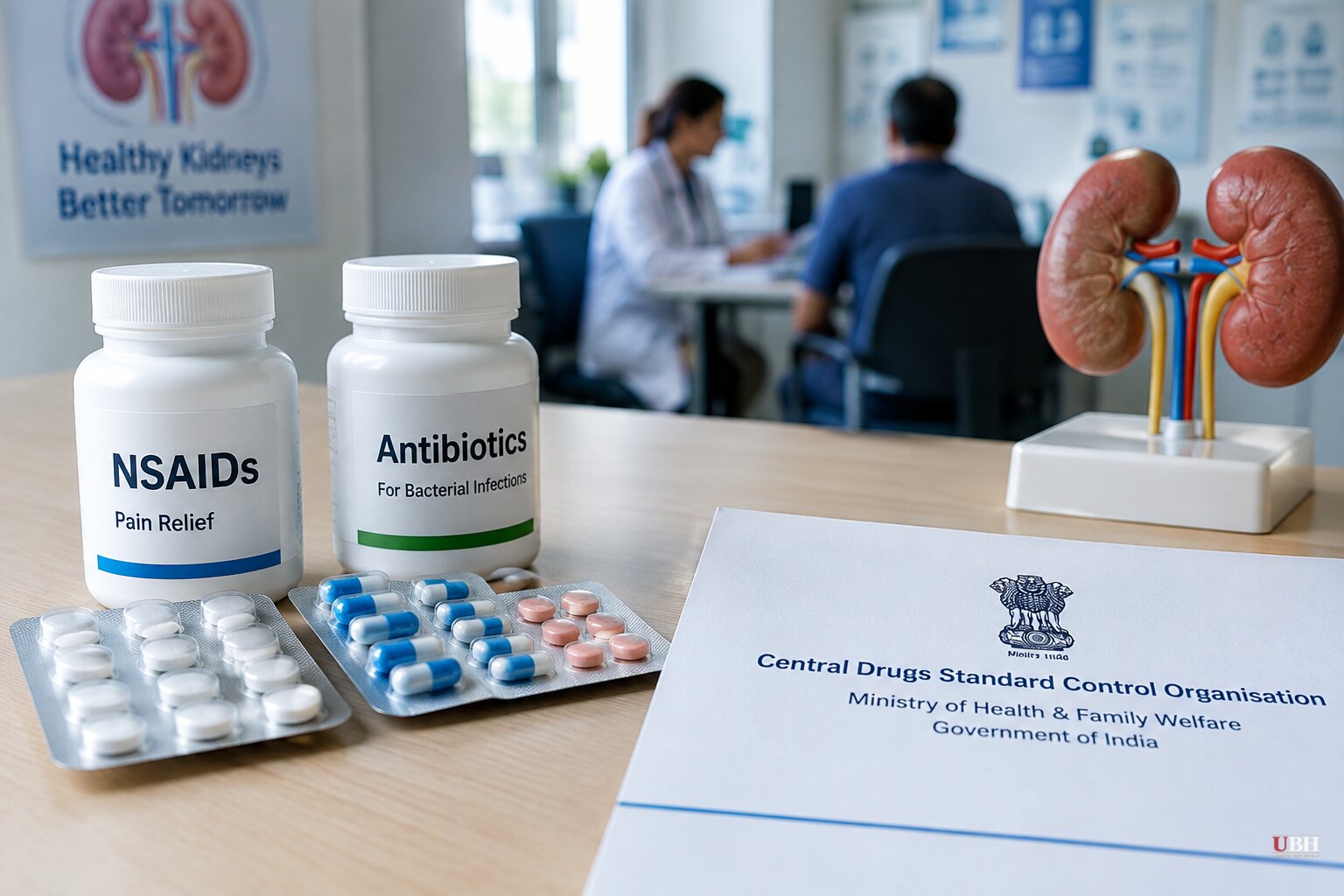
India's drug regulator wants people to stop popping painkillers and antibiotics like candy. The problem is the regulator's own inspectors just found hundreds of substandard drugs sitting on pharmacy shelves.
The Circular
The Central Drugs Standard Control Organisation (CDSCO) issued a circular dated September 21, 2026, warning against the indiscriminate, repeated, or prolonged use of non-steroidal anti-inflammatory drugs (NSAIDs) and antibiotics, according to The Hindu. The regulator, under Drugs Controller General of India Dr Rajeev Singh Raghuvanshi, said both drug classes are already legally restricted, according to LiveMint.
Most NSAIDs fall under Schedule H of the Drugs Rules, 1945, and most antibiotics fall under Schedule H1. Both require a prescription from a registered medical practitioner before retail sale, per Rule 97, LiveMint reported. That's not new law. It's existing law the circular is telling everyone to actually follow.
The advisory tells patients not to self-medicate with antibiotics for conditions where they don't work, including most uncomplicated viral infections, according to The Hindu. It tells people to finish prescribed courses, never share antibiotics, and never dig into leftover pills. People with existing kidney disease are told to flag that to their doctor before taking any NSAID.
Doctors got their own marching orders too: consider age, comorbidities, and other medications before prescribing, use the lowest effective NSAID dose for the shortest necessary time, and follow antimicrobial stewardship principles to avoid unnecessary combination therapy or prolonged treatment, per the CDSCO circular cited by both The Hindu and LiveMint.
The Medical Case
Prof Sandeep Mahajan, a nephrologist at AIIMS, told the Times of India that unregulated, prolonged painkiller use can accelerate kidney function decline, especially in people who already have chronic kidney disease. He said even medicines from alternative systems need caution because some contain substances toxic to the kidneys.
Dr Dinesh Khullar, Group Chairman of Nephrology and Renal Transplant Medicine at Max Super Speciality Hospital in Saket, went further, telling the Times of India that misuse of NSAIDs can cause serious kidney injury even with short-term use in vulnerable people.
The backdrop is real. A 2025 systematic review of community-based studies put pooled chronic kidney disease prevalence in India at 13.24%, though the Times of India noted estimates varied widely across regions and studies. That's a legitimate public health figure.
The Enforcement Gap Nobody's Talking About
Prescription-only rules for NSAIDs and antibiotics have existed under the Drugs and Cosmetics Act since 1940. If Schedule H and H1 drugs already can't legally be sold without a prescription, and pharmacists are already supposed to refuse to sell them otherwise, then a circular reminding everyone of that rule is an admission the rule isn't being followed at the point of sale. The CDSCO circular itself directs pharmacists and retailers to "strictly comply with statutory requirements," according to The Hindu, which only makes sense if compliance has been loose.
Telling people not to misuse drugs is easy, but it does nothing if a shopkeeper in Delhi or Mumbai will still sell antibiotics over the counter without asking for a prescription. None of the sources here document how the CDSCO plans to audit or penalize pharmacies for non-compliance. The circular is guidance to "stakeholders," not a new enforcement mechanism.
Same Regulator, Same Month, Worse Problem
While CDSCO was warning the public about overusing antibiotics, its own August 2026 surveillance exercise found one spurious drug and 220 not-of-standard-quality (NSQ) samples nationwide, according to Hindustan Times. Twenty-nine failures came from central drug laboratories and 191 from state labs.
Some of the failures are directly relevant to the antibiotic warning. Medical Dialogues reported that azithromycin 500 mg tablets from Alembic Pharmaceuticals failed identification and assay testing in Assam, and cefixime tablets from Alkem Health Science failed dissolution and assay tests in the same state. In Punjab, an azithromycin oral suspension from Unicure India tested at just 80.34 mg per 5 ml against a 100 mg label claim.
Two metronidazole batches from Inducare Pharmaceutical and Research Foundation, tested in Mumbai, contained only 32.44% and 52.75% of their stated active ingredient, respectively, both flagged as misbranded, according to Medical Dialogues. That's a drug that barely works, sold as if it does.
Raghuvanshi has said publicly that only around 1.5% of sampled drugs come back less efficacious in recent surveys, per Hindustan Times, and CDSCO stressed that a failed batch doesn't mean every batch of that drug is bad. Fair point. But telling patients to trust prescribed antibiotics while the regulator's own labs find some batches at a third of their labeled strength creates a credibility problem CDSCO made for itself.
What's Next
Separately, CDSCO has also been tasked with closing regulatory gaps that allow diversion of narcotic pharmaceutical drugs, following a June meeting of the National Committee for Coordination on Drug Trafficking chaired by Union Home Minister Amit Shah, according to a report carried by the Economic Times. The regulator has a deadline of March 2027 to act, with a Drugs Consultative Committee reviewing the framework first. Whether that review produces enforceable rules, or another circular restating rules nobody enforces, remains to be seen.
Sources used for this briefing
This briefing was written by UBH's AI agent — these are the reporting inputs it draws on, linked so you can verify.


