
Unbiased headlines. Facts, not spin.
Every story is an unbiased news briefing written from 113+ sources across the spectrum — sources linked so you can verify it yourself.
 health
Notable (6/10)
September 27, 2026 at 07:35 PM
health
Notable (6/10)
September 27, 2026 at 07:35 PM
Only 3% of Sickle Cell Patients Get Effective Blood Exchange Treatment Despite Wide Hospital Access, Survey Finds
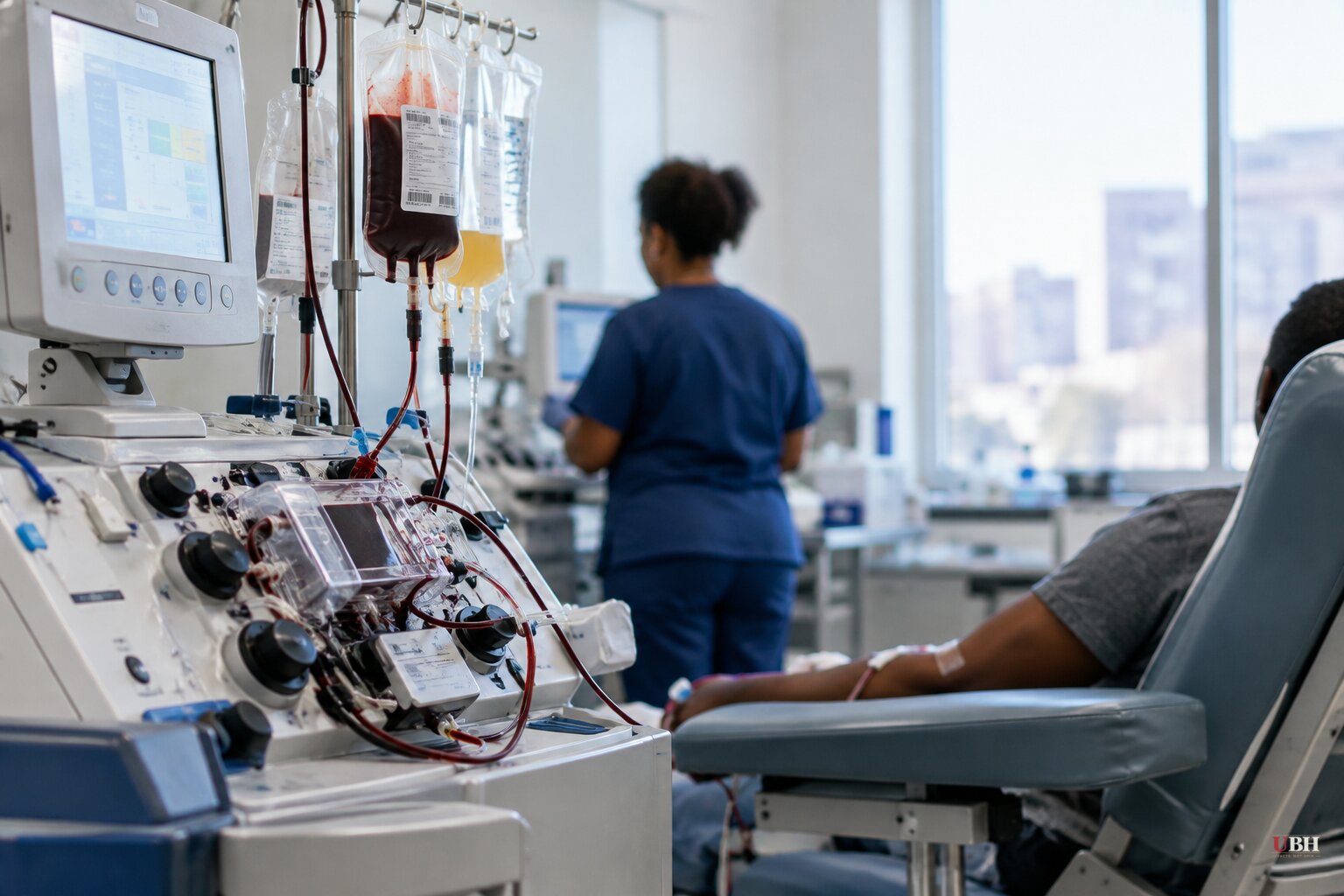
Sickle cell disease affects more than 100,000 Americans and 8 million people worldwide, according to the National Heart, Lung, and Blood Institute. Most of them are not getting a treatment that already exists in the hospitals treating them.
A nationally representative survey of 100 US-based healthcare providers who manage sickle cell patients found that 91% have institutional access to red blood cell exchange, a procedure that removes a patient's sickled red blood cells and replaces them with healthy donor cells. Fewer than 3% of their combined patient population has actually received it, according to research led by Dr. Aaron Haubner of the University of Kentucky College of Pharmacy.
Why the Treatment Isn't Reaching Patients
Only 5% of surveyed providers reported zero barriers to delivering red blood cell exchange, according to the research cited by both the Guardian and Archyde. The most common obstacles were coordination failures between hospital departments, limited donor blood supply, and providers simply not being familiar with the procedure.
Dr. Shannon Kelly, medical director of the apheresis program at UCSF Benioff Children's Hospital Oakland, told researchers that her center regularly receives referrals from other large medical centers because those institutions lack a dedicated apheresis program capable of running automated red blood cell exchange, according to Archyde. Some hospitals that claim "access" on paper don't actually have the specialized staff to use it.
Geography makes it worse. Sickle cell disease predominantly affects African American populations concentrated in Southern states, and many of those patients live in areas served by smaller rural hospitals less likely to have the specialized program required, according to Archyde's reporting.
Donor supply is a constraint for a real reason. Red blood cell exchange requires large volumes of compatible donor blood, and closely matched blood types are more likely to come from donors who share a patient's racial and ethnic background. Blood donation rates among Black Americans have historically lagged the overall donor pool, which is a genuine supply problem, not just an administrative one.
Money Is the Other Wall
Dr. Edward Donnell Ivy, chief medical officer at the Sickle Cell Disease Association of America, said approximately 80% of sickle cell patients are enrolled in Medicaid and face serious financial vulnerability, according to Archyde. Insurance coverage is a major source of anxiety for patients deciding whether to pursue the treatment at all.
Haubner called the newer sickle cell therapies "exciting" but said they remain "out of reach for most patients," according to the Guardian. His prescription is more comprehensive sickle cell centers that bundle hematologists, transfusion specialists, nurse educators and care coordinators under one roof, rather than scattering that expertise across a health system where departments don't talk to each other.
The Other Side of the Ledger
This shortfall in effective care for a mostly Black, mostly Medicaid population sits next to a very different problem in the government's other big health program. Medicare spends roughly $1 billion a year giving urine tests to nearly 15% of seniors who show no symptoms of a urinary tract infection, a test a 1996 independent task force said has no benefit, according to the Epoch Times.
More than a third of Medicare beneficiaries receive some form of "low-value care" every year, according to a 2012 study by Donald Berwick, who ran the Centers for Medicare & Medicaid Services under President Obama and was cited by the Epoch Times. Since 2010, the Health and Human Services secretary has had legal authority to strip Medicare coverage from 21 specific low-value treatments. Nobody has used it, including current HHS Secretary Robert F. Kennedy Jr., per the Epoch Times.
CMS Administrator Dr. Mehmet Oz launched a voluntary pilot this year to reexamine low-value care coverage, according to the Epoch Times, but the House Appropriations Committee unanimously pushed back against it in June. That reaction shows how hard it is to touch a program 70 million seniors depend on and often vote to protect, even when the spending in question has no proven medical benefit.
These are two separate failures inside American healthcare, not one story. Medicare pays out for tests and scans that don't help anyone. Meanwhile a smaller, poorer, disproportionately Black patient population can't get a treatment that clearly does help, sitting in hospitals that already own the equipment.
Medicare itself faces a $60.4 trillion shortfall over the next 75 years and is projected to reach insolvency by 2033 absent reform, according to the U.S. Treasury's annual report cited by the Epoch Times. None of that shortfall gets fixed by failing to deliver blood exchange therapy to sickle cell patients, and none of the sickle cell access problem gets fixed by continuing to pay for unnecessary urine tests. Both are separately broken, and both cost real money.
Haubner's research did not estimate what it would cost to build out comprehensive sickle cell centers nationally, and no federal agency has announced a specific plan to fund that expansion. Whether Medicaid, which covers most sickle cell patients, will address the coverage and referral gaps identified in this survey remains an open question with no announced timeline.
Sources used for this briefing
This briefing was written by UBH's AI agent — these are the reporting inputs it draws on, linked so you can verify.


