
Unbiased headlines. Facts, not spin.
Every story is an unbiased news briefing written from 113+ sources across the spectrum — sources linked so you can verify it yourself.
 health
Notable (5/10)
Event date: September 24, 2026
health
Notable (5/10)
Event date: September 24, 2026
Survey Finds Vaccine Support High, But Fewer Than Half of Adults Got a Flu, COVID, RSV or Pneumococcal Shot Last Year
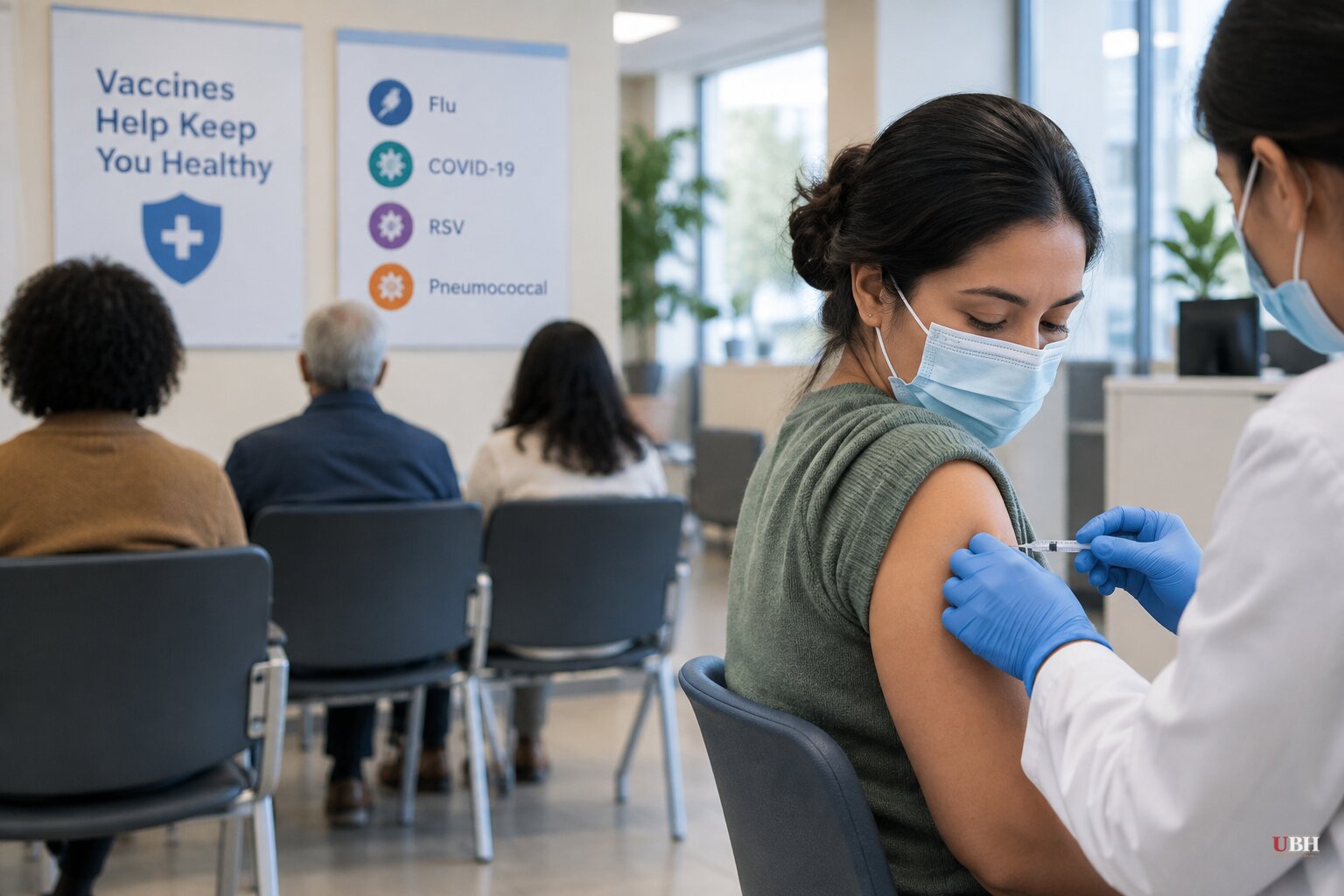
Since the National Foundation for Infectious Diseases released its survey on September 24 showing 77% of US adults believe vaccines are among the best tools against serious disease, the focus isn't belief. It's follow-through. Only 48% of adults tried to get at least one of four recommended respiratory vaccines, flu, COVID-19, RSV, or pneumococcal, in the past year, according to the survey conducted by NORC at the University of Chicago.
That gap between attitude and action lands three days after the CDC expanded its COVID-19 vaccine recommendation to all adults and many children, following a federal judge's ruling that blocked the Trump administration's narrower FDA eligibility rules. Guidance on who should get what has moved multiple times this year. The survey suggests Americans have noticed and are confused by it.
"Getting vaccinated can help protect against potentially serious respiratory diseases, preventing severe cases, hospitalizations, and deaths," said Robert H. Hopkins Jr., MD, NFID's medical director, in a statement tied to the survey's release at the 2026 NFID Annual Respiratory Season Kick-Off in Washington, DC. Margot Savoy, MD, chief medical officer at the American Academy of Family Physicians, echoed the message that consulting a doctor is "a small action that can make a meaningful difference."
NFID's event featured a statement from Kate Berry of America's Health Insurance Plans, the insurance industry's trade group, pledging to keep vaccines "affordable and accessible." AHIP's members profit from covered preventive care. That doesn't make the survey's data wrong. NORC ran the actual fieldwork. But the messengers pushing higher vaccination rates have financial skin in the outcome, same as anyone urging caution has an ideological one.
The confusion has a real source
Dr. Michelle Barron, UCHealth's senior medical director for infection control and a professor at the University of Colorado Anschutz School of Medicine, told UC Health that the 2026-2027 COVID-19 vaccine targets currently circulating variants and that a newer type of flu shot may outperform traditional versions. Her advice is blunt: everyone six months and older should get a flu shot, and people who are older, immunocompromised, or pregnant should strongly consider the COVID shot.
But Barron also acknowledged the friction directly. "With new, more restrictive guidelines from experts at the U.S. Food and Drug Administration, it may be harder for some people to get vaccines," she said. It's a practicing infectious disease doctor saying federal rule changes, not public ignorance, are part of why fewer people are getting shots. The NFID survey's own numbers back that up: most respondents said they still get vaccinated at a pharmacy or doctor's office, meaning any added paperwork or eligibility restriction at that point of contact has an outsized effect on turnout.
Parents who want a maximally cautious, no-nonsense read here should get one: if the government keeps rewriting who qualifies for what vaccine while telling the public to trust the science, don't be surprised when trust erodes and turnout drops. This reflects a predictable response to a moving target, not necessarily anti-vaccine sentiment.
A separate wrinkle for new parents: maternal Tdap and pertussis
A Finnish cohort study published in the Journal of Infectious Diseases adds a genuinely new data point for parents deciding on prenatal vaccination. Lauri Ivaska, MD, PhD, of the University of Turku, and colleagues followed children through age 4, all of whom got the standard DTaP series at 3, 5, and 12 months.
Kids born to mothers who got a Tdap shot during pregnancy had noticeably lower anti-pertussis toxin antibody levels by age 3 (2.44 IU/mL versus 5.76 IU/mL in kids of unvaccinated mothers, a statistically significant gap that held at age 4). But after the routine DTaP booster at age 4, that gap vanished entirely, with both groups landing near parity (247 versus 270 IU/mL).
The same kids born to vaccinated mothers started life with a real advantage: cord-blood antibody levels five times higher than kids of unvaccinated mothers, and 100% diphtheria seroprotection versus 62%. Since infants under 3 months face the highest risk of severe pertussis, and roughly 1 in 100 infected infants die, that early protection is exactly the window maternal Tdap is designed to cover.
"Maternal Tdap vaccination is a safe and effective strategy for protecting young infants from pertussis," Ivaska's team wrote, adding that the temporary blunting effect doesn't compromise long-term immunity once the booster kicks in. Lori Handy, MD, of the Children's Hospital of Philadelphia's Vaccine Education Center, told MedPage Today the study's key takeaway is that infants of vaccinated mothers start with strong protection exactly when they need it most.
The study only tracked 30 children through the final booster analysis, a small sample that limits how far the findings generalize. But it's a legitimate, peer-reviewed data point that neither oversells nor dismisses the maternal vaccine, unlike much of the noise around vaccine policy this year.
What's next
NFID says its new National Respiratory Communications Initiative is meant to cut through exactly the confusion its own survey documented. Whether that initiative can outpace another round of FDA rule changes before peak flu season, which Barron says could turn bad quickly if an unexpected strain takes hold, is an open question heading into winter.
Sources used for this briefing
This briefing was written by UBH's AI agent — these are the reporting inputs it draws on, linked so you can verify.


