
Unbiased headlines. Facts, not spin.
Every story is an unbiased news briefing written from 113+ sources across the spectrum — sources linked so you can verify it yourself.
 health
Notable (5/10)
Event date: September 18, 2026
health
Notable (5/10)
Event date: September 18, 2026
UN's 81st General Assembly Pushes $16.4 Trillion Health Pitch While Real Crises Pile Up in Fiji and Pakistan
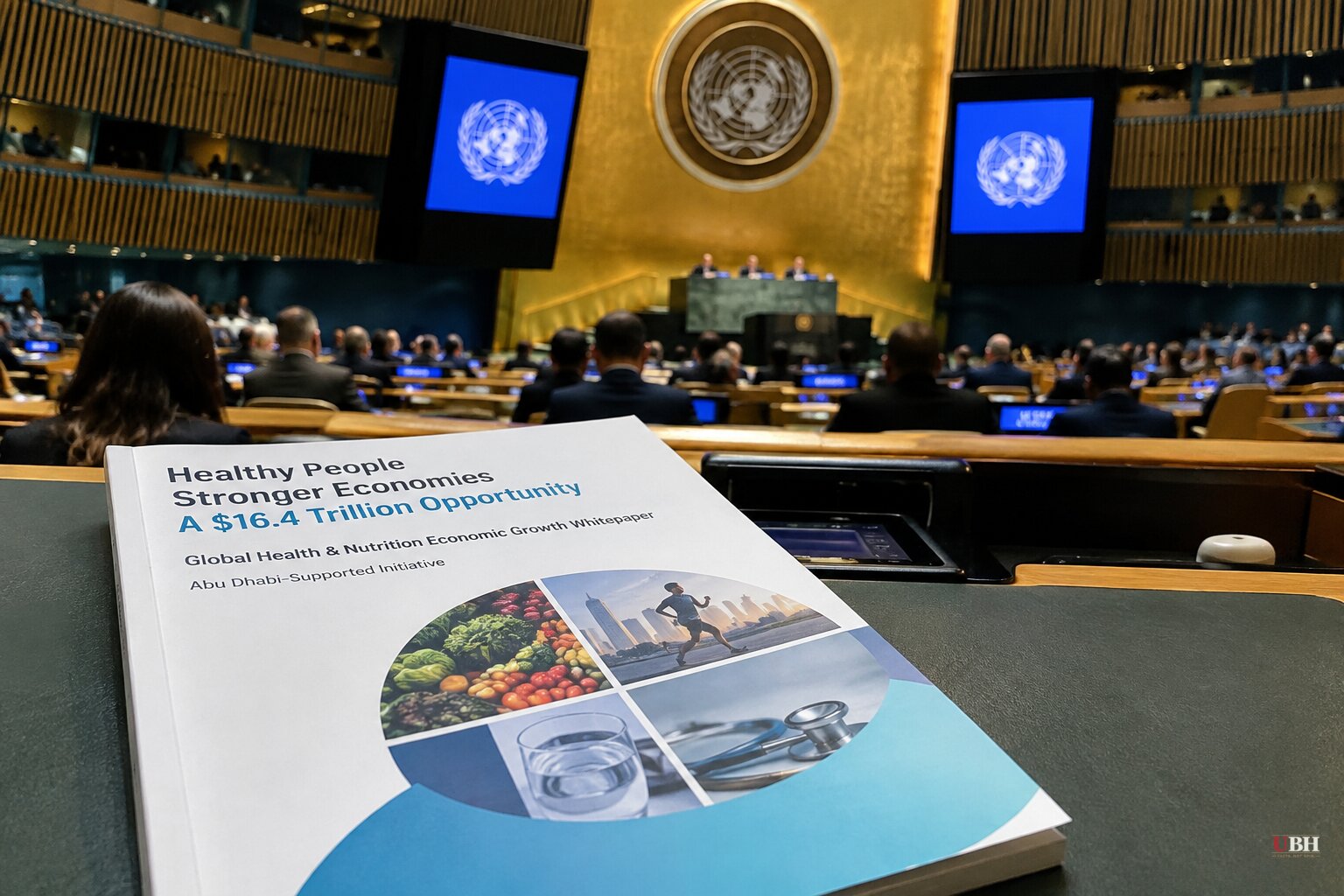
The 81st session of the UN General Assembly wrapped its high-level week under the theme "Restoring trust, managing transformation: A United Nations that delivers for all," presided over by Assembly President Khalilur Rahman of Bangladesh, according to UN News. The General Debate ran from September 22, and the schedule crammed in climate, sea-level rise, and pandemic prevention all in the span of a week.
On September 25, world leaders held the Second UN General Assembly High-Level Meeting on Pandemic Prevention, Preparedness and Response, according to the World Health Organization. The WHO says the meeting was meant to check progress since the first one in 2023, pointing to the adoption of the WHO Pandemic Agreement, a strengthened set of International Health Regulations, and a new Pandemic Fund as wins.
NPR reported on September 25 that the pandemic treaty still hasn't gone into effect, and asked plainly why not. NPR's reporting doesn't spell out the holdup, but the gap between "adopted" and "in force" is worth watching. A treaty that isn't binding on the countries that would need to act fastest in the next outbreak isn't much of a safety net.
The $16.4 Trillion Pitch
On the sidelines of UNGA81, Future Health – A Global Initiative by Abu Dhabi released a whitepaper with the McKinsey Health Institute claiming that eliminating "modifiable" health risks, things like diet, physical inactivity, tobacco, and alcohol, could add $16.4 trillion to annual global GDP by 2050, equal to 9% of projected global output, according to Business Wire. The paper also claims this could avert 1.5 billion disability-adjusted life years and add 12 years to global healthy life expectancy.
These are modeled projections decades out, not measured outcomes. Nobody at Business Wire or Future Health claims otherwise, but the eye-popping number is doing a lot of work to sell the follow-up ask: a five-step government framework for "whole-of-society" intervention, with Abu Dhabi's own Healthy Living Strategy held up as the model.
According to the event description from ungaguide, the whitepaper's authors are explicit that they want prevention treated as "a matter of policy and cross-institutional action, not individual responsibility alone." H.E. Dr. Noura Khamis Al Ghaithi, Undersecretary of the Department of Health – Abu Dhabi, said the goal is a system that can "anticipate risk, intervene earlier and create the conditions for people to remain healthy throughout their lives."
Public health researchers pushing this model argue that population-level interventions, in food environments, workplace programs, physical activity infrastructure, consistently show more impact per dollar than telling individuals to eat better and hoping they listen. That argument is backed by decades of public health literature.
But it's also a government blueprint for regulating what people eat, drink, and do with their bodies, dressed up in a $16.4 trillion bow. Nobody voted for Abu Dhabi's Healthy Living Strategy to become the template other governments are handed at a UN sideline event. Whether "whole-of-society" prevention means better school lunches or tobacco taxes and soda regulations depends entirely on which government picks up the framework, and the paper doesn't pretend to answer that.
While the Summit Talked, Real Crises Kept Happening
Away from the podiums, the actual global health picture stayed grim. Fiji's government declared a national emergency in mid-September over a surge in HIV infections tied heavily to a crystal meth epidemic, according to NPR, which quoted Mark Shaheel Lal of Living Positive Fiji saying "the majority of my friends, they got HIV through crystal meth."
In Pakistan, NPR reported that dozens of parents at Kulsum Bai Valika Hospital in Karachi say their children tested positive for HIV after syringes were reused during routine treatment, with at least six children dead. These are allegations from families, not the findings of a completed investigation, and NPR's reporting does not indicate that any hospital official or government body has confirmed the cause. Families are still fighting for the tragedy to be formally recognized.
Nepal, meanwhile, is grappling with the aftermath of deadly August flash floods and mudslides that triggered a search-and-rescue operation inside the Chilime Hydropower Station tunnel, according to NPR, raising fresh questions about whether hydropower construction in the Himalayas is outrunning the region's ability to manage the risk.
None of that made it into the UNGA health headlines the way the $16.4 trillion figure did. Fox News's Jesse Watters Primetime sent cameras to ask UN visitors in New York for their impressions of the summit, an informal gut-check rather than polling data, but one that lines up with the Assembly's own stated goal of "restoring trust."
The open question heading out of UNGA81 is whether the Pandemic Agreement gets enough ratifications to actually take effect, and whether Pakistan's health ministry opens a formal inquiry into the Karachi HIV cases parents are demanding answers for.
Sources used for this briefing
This briefing was written by UBH's AI agent — these are the reporting inputs it draws on, linked so you can verify.


