
Unbiased headlines. Facts, not spin.
Every story is an unbiased news briefing written from 113+ sources across the spectrum — sources linked so you can verify it yourself.
 health
Low Interest (3/10)
September 27, 2026 at 02:49 AM
health
Low Interest (3/10)
September 27, 2026 at 02:49 AM
Army Corps of Engineers Thins Trees Around Missouri Lake to Protect 200,000 Endangered Bats
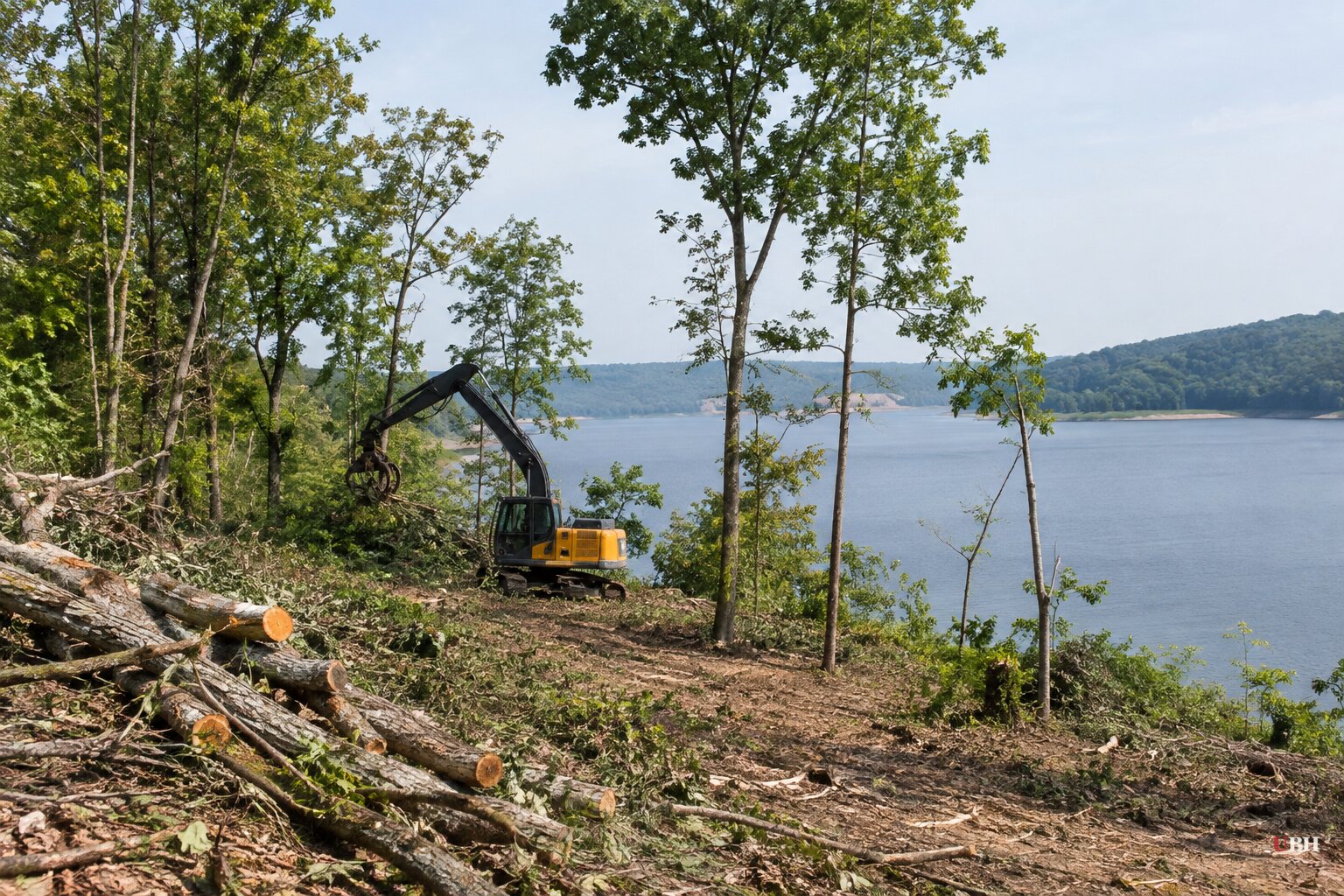
Federal crews are taking hatchets and herbicide to select trees around Mark Twain Lake in northeast Missouri this fall, part of an effort to protect one of the largest remaining concentrations of the endangered Indiana bat in North America.
According to WGEM, roughly 200,000 Indiana bats, about one-third of the species' entire North American population, spend their summers in the timberlands surrounding the lake before migrating east each winter to hibernate at the Sodalis Nature Preserve near Hannibal.
"Currently about one-third of all North America's population resides here around the lake and then goes to the Sodalis cave outside Hannibal, and that counts for roughly 200,000 bats," said Aaron Eckelkamp, a Natural Resource Specialist at Mark Twain Lake, according to WGEM. "So the purpose behind what we have going on here is we're looking at improving the flight zones for the bat and, of course, other species of bats as well."
Four decades without a chainsaw
The U.S. Army Corps of Engineers, working with the nonprofit Conservation Fund, has started forest stand improvement work across public wildlife management areas around the lake. WGEM reports the target is more than 40 years of unmanaged growth that let shade-tolerant species like sugar maple and ironwood take over the forest's mid-story canopy.
That dense growth blocks sunlight and physically crowds the space bats need to fly between roost trees and foraging grounds. The fix isn't bulldozers or clear-cutting. Crews are using a targeted method called hack and squirt: hand hatchets cut into the trunk of an unwanted tree at least once every three inches, and herbicide gets injected straight into each cut, Eckelkamp told WGEM.
The timing isn't random either. The Times of India reported that treatments happen in late summer and early autumn specifically because trees are moving nutrients and stored energy down toward their roots ahead of winter. This process helps pull the herbicide deeper into the tree and ensures a more effective kill.
Dead trees, still doing a job
The targeted trees are left standing after they die. Eckelkamp explained to WGEM that killing the mid-story trees isn't just about clearing flight lanes, it's about creating "snag" habitat directly.
"This method will leave the tree terminated standing, and so it'll serve another purpose for snag creation for the bat specifically," Eckelkamp said. Depending on species and size, those standing dead trees develop peeling bark and hollow crevices that Indiana bats use for roosting, and WGEM reports those snags can remain usable for four to ten years before they finally decay and fall.
Meanwhile, the oaks in the overstory, which the bats prefer for roosting, get to keep growing without mid-story competition for light.
The opened canopy has a second-order effect too. WGEM notes that with more sunlight reaching the forest floor, native grasses, forbs and oak-hickory saplings start coming back, which in turn benefits deer, wild turkey and other game species that use the same wildlife management areas.
What's actually been done so far
Crews treated 30 acres during an initial phase last year and, according to WGEM, plan to complete more than 250 acres around Mark Twain Lake by November 1. The wildlife management areas remain open to hikers, hunters and other visitors during the work, and officials are asking visitors to give forestry crews room to operate.
Mark Twain Lake's importance to the species stems from its dual role as both summer habitat and a migration corridor to the Sodalis Nature Preserve, one of the sites where Indiana bats hibernate. Neither WGEM's reporting nor the Times of India's coverage, which largely summarized WGEM's original reporting, specifies a total budget for the multi-agency partnership.
Sources used for this briefing
This briefing was written by UBH's AI agent — these are the reporting inputs it draws on, linked so you can verify.


