
Unbiased headlines. Facts, not spin.
Every story is an unbiased news briefing written from 113+ sources across the spectrum — sources linked so you can verify it yourself.
 health
Notable (6/10)
September 26, 2026 at 10:46 PM
health
Notable (6/10)
September 26, 2026 at 10:46 PM
Fiji Declares National HIV Emergency After Cases Jump 12-Fold in 15 Years, Ties Outbreak to Meth Epidemic
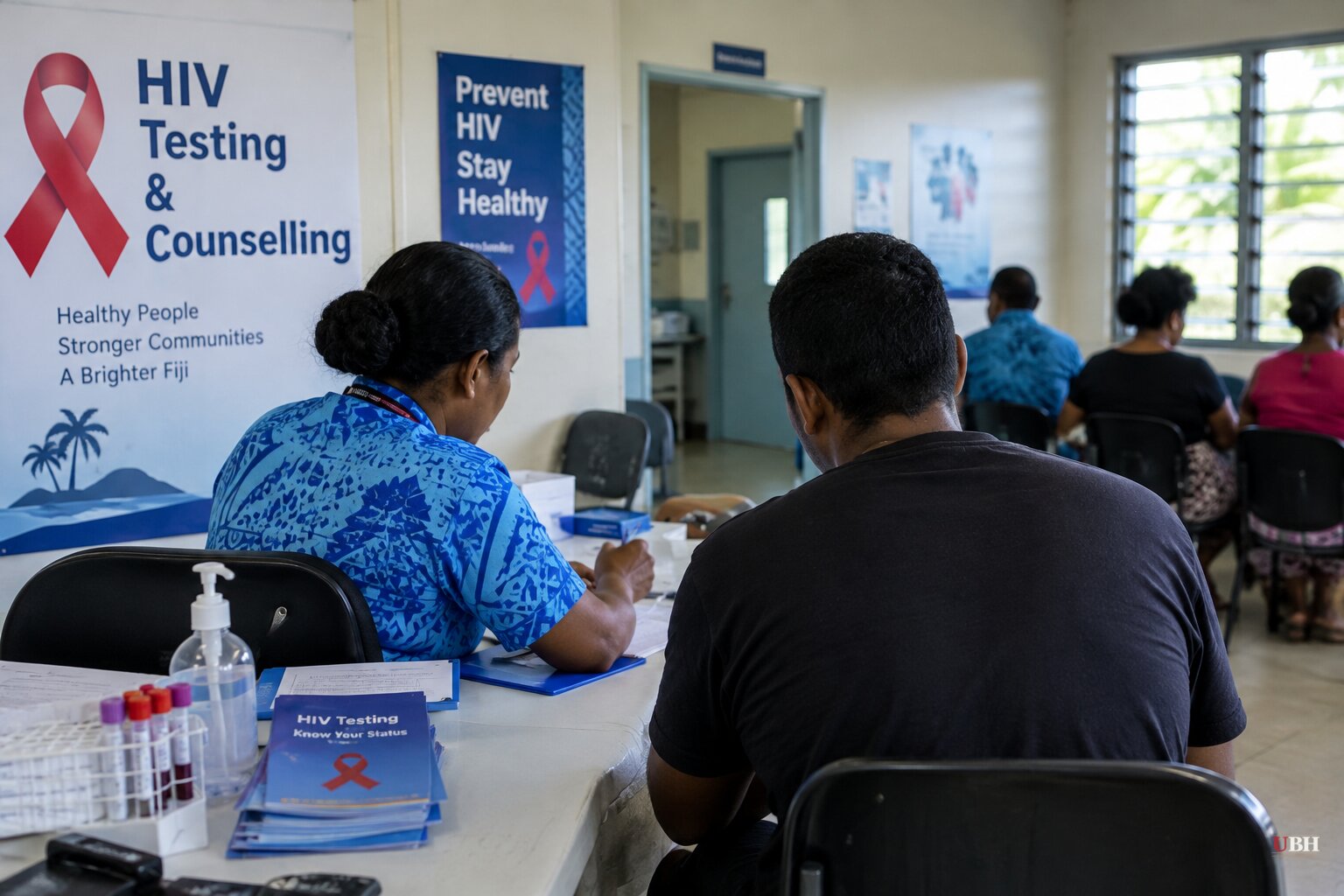
Fiji's government declared a national HIV emergency in mid-September, and the numbers explain why. New infections rose 12-fold between 2010 and 2025, according to UNAIDS. The health and medical services minister, Dr. Ratu Atonio Lalabalavu, said in a social media statement that an outbreak-level response was no longer enough.
"Today I am formally declaring a national health emergency in Fiji," Lalabalavu said, calling the situation an epidemic. He said the government now estimates 1 in every 60 adults in Fiji is living with HIV, up from 1 in 167 just five years ago. In 2025 alone, Fiji recorded 2,060 new diagnoses, and 1 in 50 pregnant women in the country now has HIV, according to the minister's statement reported by The Guardian.
A Drug Problem Became a Virus Problem
At the AIDS 2026 conference in Rio de Janeiro this past July, Jason Mitchell, the public health specialist leading Fiji's HIV response, called it the fastest-growing HIV epidemic in the world. Two-thirds of cases are in people ages 20 to 34, according to Mitchell.
"Our young, active, productive population is currently being infected with HIV, and unless we find solutions quickly, this will continue to get worse," Mitchell said, according to NPR.
The driver isn't a mystery. Fiji has long been a transit point for crystal meth moving from South America toward Australia and New Zealand, according to NPR. But Sailosi Soqo, a doctor on the national HIV response team, said COVID changed the equation. Job losses and lockdowns pushed more young Fijians toward meth, while pandemic-era border security ironically trapped drug shipments inside the country instead of letting them pass through.
"Drugs that would otherwise have moved on stayed in Fiji, seeding this domestic market which didn't really exist before," Soqo said. He added that outreach workers now report children as young as 9 using injectable drugs.
Mark Lal, a 25-year-old HIV activist and founder of Living Positive Fiji, put it bluntly: "The majority of my friends, they got HIV through crystal meth." Lal, who also serves as a reconciliation officer for Fiji's Truth and Reconciliation Commission, said he has lost two close friends to the epidemic.
According to UNAIDS figures cited by The Guardian, more than 42% of Fiji's HIV cases with a known transmission route trace back to injecting drug use, with just over half linked to sexual transmission. Dr. Dashika Balak, who leads Fiji's national HIV treatment and care efforts, said a shift from smoking meth to injecting it, including a needle-sharing practice called "bluetoothing" or "hotspotting," has accelerated spread.
The Response Is Stuck on Logistics
The gap between diagnosis and treatment is stark. Of an estimated 9,100 to 12,000 people living with HIV in Fiji, only 5,676 have been officially diagnosed, and just 39% of infected people know their status, according to UNAIDS. Only 22% are accessing antiretroviral treatment.
Australia has stepped in with aid, including PrEP pills meant to block infection before it happens. But Mitchell said uptake has been sluggish since the drug's introduction roughly two months before the emergency declaration. "The uptake has been very slow, while at the same time, antiretroviral treatment is also freely available, but it's currently sitting on shelves."
Lal blames a basic awareness gap and geography. HIV medications are only available at three clinical centers, in Suva, Lautoka, and Labasa, across a nation spread over more than 100 islands. "If they know the medications are far away, they won't even want to access them," Lal said. He also pointed to religious belief as a barrier: some Fijians "would rather than go, pray and believe that God will heal them."
Balak's team is building HIV response units in 21 locations so patients can get antiretrovirals dispensed locally, and is recruiting peer support workers, including HIV-positive former meth users, to reach people health authorities can't otherwise contact.
The Needle Exchange Fight
Soqo has proposed distributing sterile needles and syringes to reduce transmission from shared equipment, an approach UNAIDS says it welcomes, with legislative changes expected to go before Fiji's parliament. But Oregon Public Broadcasting reported the plan has already clashed with law enforcement, a genuine tension between public health harm-reduction strategy and drug enforcement priorities that Fiji's parliament will now have to resolve through legislation rather than executive order.
UNAIDS executive director Winnie Byanyima called Fiji's declaration "a stark reminder to the world that AIDS is not over," adding that the country "is stepping up its response." Whether that response can outpace a meth epidemic that started as a pandemic-era supply glitch and turned into a generational health crisis is the question Fiji's parliament and its 21 new HIV response teams are now racing to answer.
Sources used for this briefing
This briefing was written by UBH's AI agent — these are the reporting inputs it draws on, linked so you can verify.


