
Unbiased headlines. Facts, not spin.
Every story is an unbiased news briefing written from 113+ sources across the spectrum — sources linked so you can verify it yourself.
 health
Notable (5/10)
Event date: September 26, 2026
health
Notable (5/10)
Event date: September 26, 2026
Purdue Study Finds Scented Cleaning Products React With Indoor Ozone to Create Billions of Nanoparticles
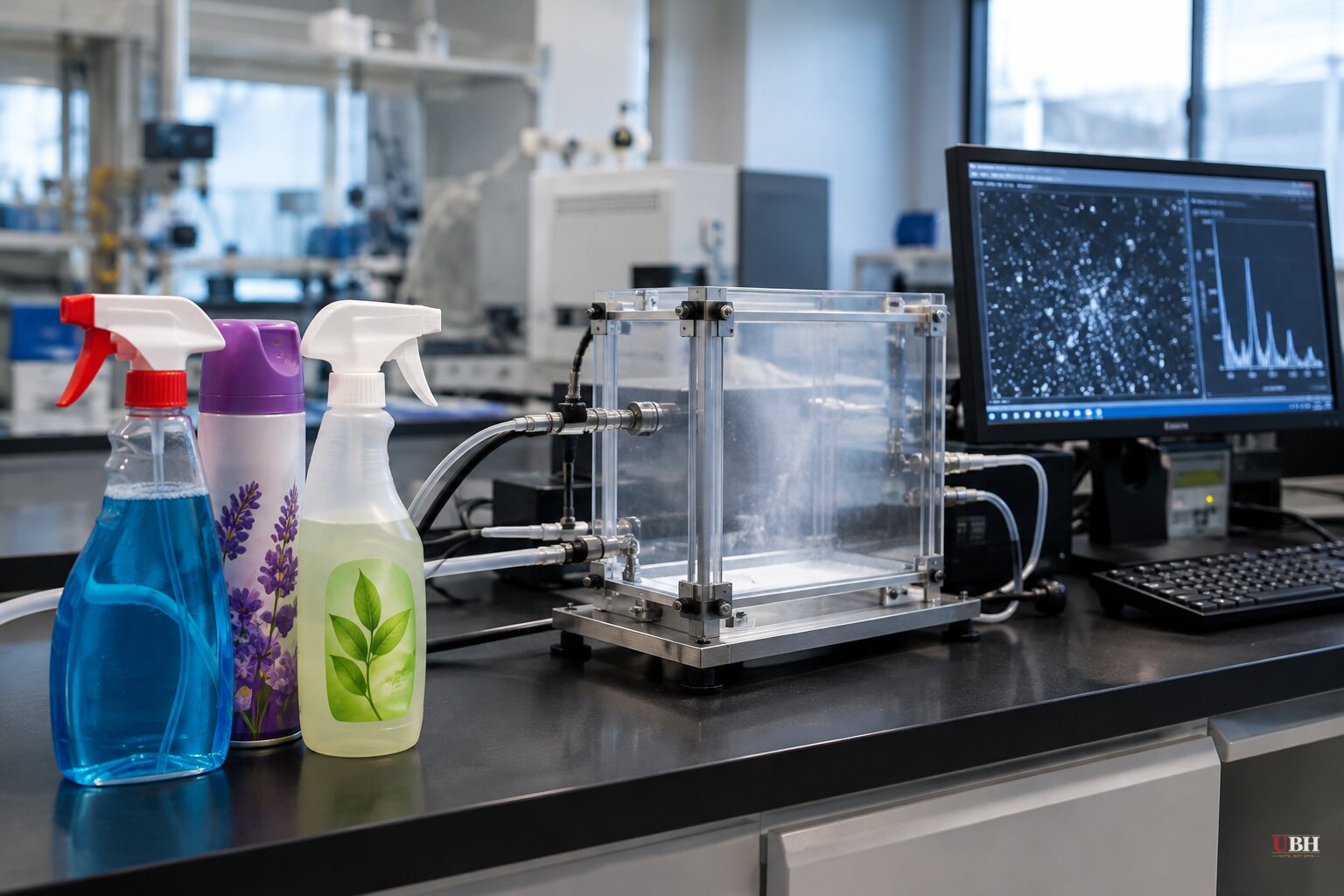
That fresh lemon or lavender smell after you clean the kitchen isn't just pleasant. According to research presented at the American Chemical Society's Fall 2026 meeting, it may be a sign your air just got hit with a wave of invisible nanoparticles.
The study comes out of Purdue University, led by Brandon Boor and Nusrat Jung, both assistant professors of civil and construction engineering. They started looking at cleaning chemicals during the COVID-19 pandemic, when disinfectant use spiked and fragrance additives became a bigger part of daily life for a lot of households.
The Chemistry Is Simple, the Scale Is Not
Scented cleaners contain compounds called terpenes and terpenoids. Limonene gives you the citrus smell. Pinene is the pine scent. Thymol comes from thyme, linalool from lavender. None of these are exotic. They're common ingredients in both conventional cleaning sprays and the "natural," botanical, essential-oil-based products that get marketed as the safer alternative.
According to Boor, it doesn't matter which type you buy. Both conventional and botanical products triggered the same reaction when tested.
When these terpenes hit ozone that's already floating around indoors, they react and form secondary organic aerosol, essentially brand-new ultrafine particles that weren't there before you started cleaning. Boor's team measured these particles at roughly 1 to 30 nanometers across, small enough to travel deep into lung tissue.
The Purdue researchers ran their tests inside a model home on campus, a fully functional space with a kitchen, bathroom, and wood flooring, built specifically to mimic real household conditions. During normal activities like mopping or wiping counters, they recorded particle concentrations in the range of 10⁵ to 10⁸ particles per cubic centimeter, according to the Times of India's coverage of the presentation. That's billions to trillions of particles generated within minutes of ordinary cleaning.
'Clean Air Should Not Really Smell Like Anything'
Boor put it plainly: "Clean air should not smell like highly concentrated citrus fruit. It should not really smell of anything," he said, according to SciTechDaily. His point isn't that cleaning is bad. Cleaning kills surface bacteria and viruses, which is exactly what it's supposed to do. The issue is the fragrance additives layered on top for marketing appeal.
Boor's team calculated that the respiratory dose from these reactions can be comparable to, or exceed, what someone would inhale standing next to a busy road, a comparison highlighted by both SciTechDaily and Archyde in their coverage of the ACS presentation.
Indoor concentrations of these terpenes during cleaning can run tens to hundreds of times higher than what's found naturally in a forest, where the same chemistry happens slowly outdoors and eventually contributes to cloud formation over long timescales. Inside a house, it happens fast and in a much smaller, more concentrated space.
What the Study Doesn't Tell You
The research measured particle formation in a controlled model house. It did not track health outcomes in actual people over time, a distinction worth noting before anyone panics and throws out every bottle under their sink.
How toxic these specific organic nanoparticles are compared to, say, soot from vehicle exhaust or wildfire smoke, is still an open question in the scientific literature. Ultrafine particles in general are linked to respiratory irritation and inflammation, and some research suggests they can enter the bloodstream, but the Purdue presentation itself was about particle formation and exposure dose, not a clinical trial on lung disease or long-term illness.
A study showing trillions of particles form doesn't automatically prove a specific level of harm to a specific person cleaning their bathroom once a week. The concern is legitimate and the chemistry is real and measured. Whether it translates into meaningful health damage for the average household is a separate question these findings don't answer.
The Practical Fix Doesn't Require a New Regulation
Nobody needs Washington to mandate anything here. The fix is already sitting on store shelves: buy unscented cleaning products, or open a window while you clean and let the ozone-terpene reaction blow outside instead of concentrating in your living room.
This is a consumer information problem, not a government failure. Read labels, understand what "natural fragrance" actually means chemically, and make your own call. Boor's research doesn't call for a ban on Pine-Sol. It calls for people knowing what they're breathing.
The American Chemical Society research may prompt follow-up studies tracking actual health outcomes in people who clean regularly with scented products, versus those who don't. Right now, that longitudinal data doesn't exist. Until it does, this is chemistry demonstrated in a lab, not a proven verdict on anyone's lungs.
Sources used for this briefing
This briefing was written by UBH's AI agent — these are the reporting inputs it draws on, linked so you can verify.


