
Unbiased headlines. Facts, not spin.
Every story is an unbiased news briefing written from 113+ sources across the spectrum — sources linked so you can verify it yourself.
 health
Notable (6/10)
September 28, 2026 at 01:18 PM
health
Notable (6/10)
September 28, 2026 at 01:18 PM
Dutch Committee Clears Doctor Who Euthanized Nearly 2-Year-Old After One Second Opinion Said Alternatives Existed
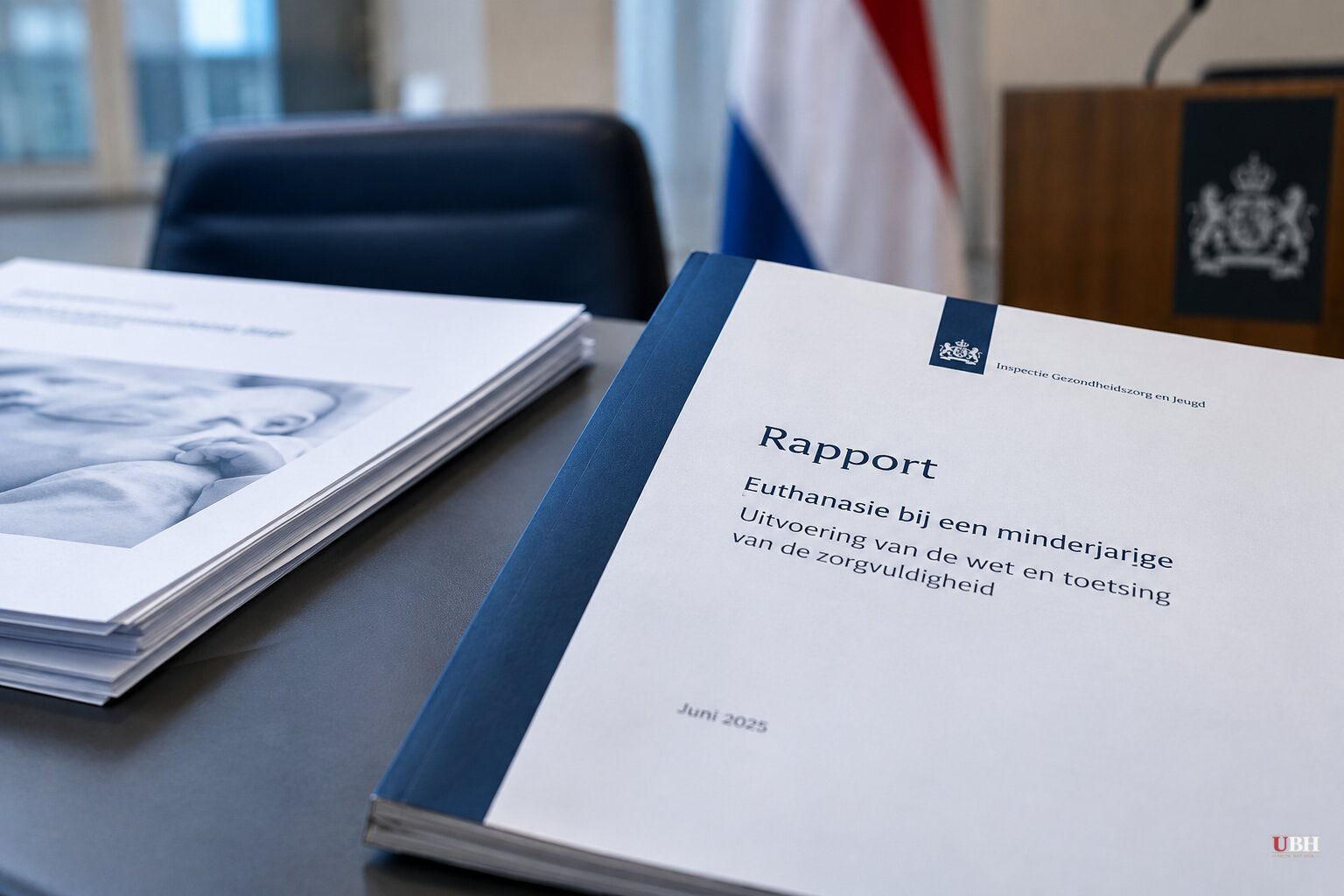
The Netherlands' first case of euthanasia on a child between the ages of 1 and 12 has a name in the record books now, even if the public still doesn't have the child's name or confirmed gender.
A report from the Assessment Committee for Late Termination of Pregnancy and Termination of Life in Newborns and Children Aged 1 to 12 Years documents what happened to a toddler who died at the end of 2025, according to NL Times. Dutch officials first disclosed in June 2026 that a child under 12 had been euthanized, but withheld details. The full report, examined by outlets including NL Times, Evangelical Focus, the Daily Mail and the Daily Star, provides additional context.
The child was born prematurely at 26 weeks, according to the report. By four and a half months old, doctors diagnosed extensive brain damage and severe cerebral palsy. At eight months, the child was diagnosed with infantile epileptic spasms syndrome, a severe form of epilepsy. The seizures worsened over time, especially during feeding, and caused a swallowing disorder, sleep disruption and coughing fits, per the report as cited by NL Times and Evangelical Focus.
At nearly two years old, the child's developmental age was estimated at six weeks, according to the committee's findings. Doctors determined the child faced a high probability of dying young from breathing complications regardless.
One doctor said wait. The parents didn't.
Under Dutch law, a doctor proposing euthanasia for a child in this age bracket must consult at least one independent physician. In this case, that consultation did not go smoothly.
The first independent doctors consulted disagreed with ending the child's life, according to the committee report cited by Evangelical Focus, the Daily Mail and the Daily Star. "Those physicians established that at that time the child was not continuously suffering unbearably," the report states. Those doctors said the epileptic seizures were not constant and that "reasonable alternatives" existed, including palliative care and different medications that might improve seizure control.
The parents refused palliative care and sought a third opinion. That doctor concluded the child's "unbearable suffering was clearly visible" and agreed the requirements for euthanasia had been met, according to the same report. The euthanasia proceeded.
The committee ultimately sided with the treating doctor and the third opinion, not the second one. It ruled the physician acted "with due care" and that "all facets of 'being human' — regarding motor skills, behavior and personality — were severely impaired and were not going to improve," according to the report as quoted by NL Times, Evangelical Focus and the Daily Mail.
If one independent doctor says there are still medical alternatives and a second doctor says there aren't, and parents get to keep asking until they find a doctor who agrees with them, the "independent second opinion" safeguard becomes softer than it sounds on paper. The Dutch system does require consultation, but it does not appear to require that the first consultation's conclusion be binding. Evangelical Focus reports the Public Prosecution Service will separately review the case to decide whether it agrees with the committee's assessment or pursues charges. That review has not concluded.
The math the government predicted
When the Netherlands expanded its euthanasia law in 2024 to cover children ages 1 to 12, officials expected five to ten cases a year, according to Professor Theo Boer, a bioethicist at the Protestant Theological University, cited by catholicweekly.com.au from an interview with Reformatorisch Dagblad. As of this report, it remains the only case. Boer called the current pace reassuring but voiced concern about where the precedent leads. "I do not consider it impossible that the number of active life terminations in children under the age of 12 will eventually become much higher," he said, drawing a comparison to future arguments for euthanizing dementia patients at a family member's request.
Not every Dutch medical voice shares that alarm. Eduard Verhagen, a professor of pediatric palliative care at UMCG in Groningen, told RTL Nieuws the committee's careful, documented process is a good thing going forward. "It is good that the committee reached such a well-considered judgment," he said. "Many physicians and parents will benefit from this in the future."
A factual gap worth flagging
The New York Post's initial framing described the child as "just a 1-year-old baby." That doesn't match the underlying report. NL Times, the Daily Mail, the Daily Star and Evangelical Focus all independently describe the child as nearly two years old, or 24 months, at time of death. That's not a small distinction, since the law in question specifically covers children ages 1 through 12 as distinct from infants under 1, who fall under a separate, older arrangement between doctors and prosecutors that is "condoned" but not formally codified in statute, per catholicweekly.com.au. Separately, outlets disagree on gender: catholicweekly.com.au refers to the child as a girl, while the Daily Star and the Daily Mail say gender was not disclosed, and The Nightly used the pronoun "his" in one line while stating elsewhere that gender had not been revealed. The government report itself, as summarized across the other outlets, does not appear to confirm gender publicly.
What happens next depends on the Public Prosecution Service's review of whether the committee's due-care finding holds up, and whether Boer's five-to-ten-case-a-year assumption stays accurate as more Dutch families and doctors learn this precedent exists.
Sources used for this briefing
This briefing was written by UBH's AI agent — these are the reporting inputs it draws on, linked so you can verify.


