
Unbiased headlines. Facts, not spin.
Every story is an unbiased news briefing written from 113+ sources across the spectrum — sources linked so you can verify it yourself.
 health
Notable (6/10)
Event date: September 25, 2026
health
Notable (6/10)
Event date: September 25, 2026
FDA Approves Gazyva for Childhood Kidney Disease, First New Option in 70 Years
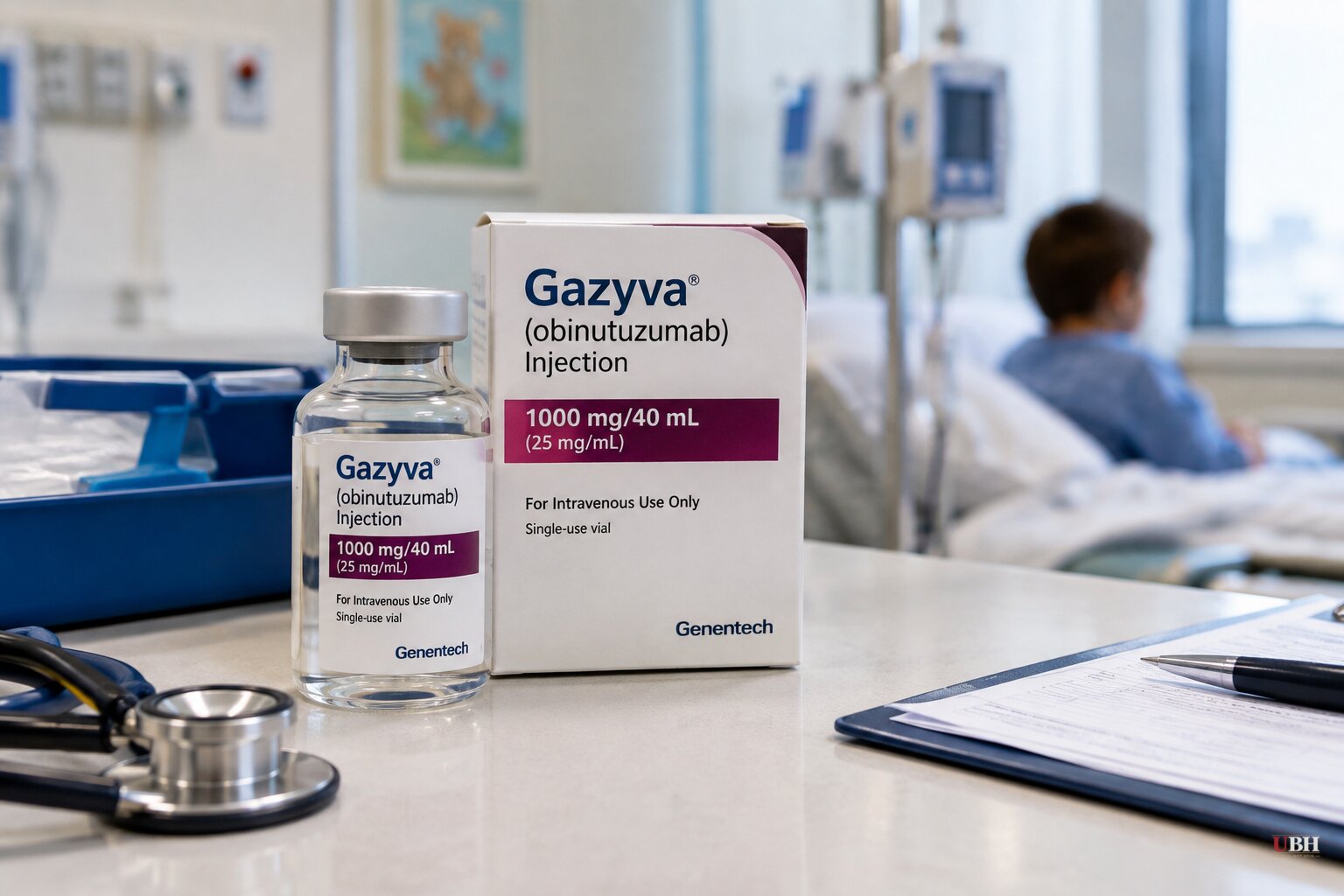
The FDA approved obinutuzumab (Gazyva), an infused antibody drug made by Genentech, on Friday, September 25, 2026, to reduce relapse risk in patients age 2 and older with frequently relapsing or steroid-dependent, childhood-onset idiopathic nephrotic syndrome, according to the FDA's own announcement. It's the first new treatment option for the disease in about 70 years, according to Genentech.
Idiopathic nephrotic syndrome is a kidney disorder of unknown cause. Large amounts of protein leak into urine, blood albumin drops, and patients develop swelling, high cholesterol, dangerous infections, and blood clots, according to the FDA. It's the most common cause of nephrotic syndrome in kids, typically starting between ages 2 and 7, with an annual incidence of 1 to 4 per 100,000 children, per the agency.
For 70 years the only real tools doctors had were steroids and immunosuppressants like mycophenolate mofetil (MMF). Steroids work, but repeated relapses mean repeated steroid courses, and long-term steroid use in kids brings its own damage: growth suppression, bone problems, weight gain, mood issues.
What the Trial Found
Approval rested on the phase 3 INShore trial (NCT05627557), an 85-patient, open-label study of patients ages 2 to 25 who were already in complete remission, according to the FDA and Contemporary Pediatrics. Patients were randomized to intravenous obinutuzumab or twice-daily oral MMF, the current standard of care.
At week 52, a greater share of patients on obinutuzumab reached sustained complete remission compared with those on MMF. HCPLive reported the numbers as 95.5% versus 73.2%, with a statistically significant adjusted difference. Renal and Urology News and empr both reported the comparison as 95% versus 73%, with an adjusted difference of 22 percentage points and a P-value of .004. Contemporary Pediatrics cited a similar effect size, along with a 75% reduction in the combined risk of relapse or death (hazard ratio 0.25, P=.007) and far fewer relapses overall, four with obinutuzumab versus 23 with MMF.
Obinutuzumab patients also needed less cumulative steroid exposure over the year, according to Contemporary Pediatrics. For families, that means fewer relapses, less time on steroids, and less collateral damage from the drugs meant to treat the disease.
Not Without Risk
Obinutuzumab isn't a free pass. Its label carries a boxed warning for hepatitis B virus reactivation and progressive multifocal leukoencephalopathy, a rare but serious brain infection tied to weakened immune systems, according to the FDA. Prescribing information also flags infusion reactions, hypersensitivity, tumor lysis syndrome, serious or fatal infections, neutropenia, thrombocytopenia, disseminated intravascular coagulation, and embryo-fetal toxicity, per MedPage Today. Live vaccines have to be avoided until B-cells recover.
Contemporary Pediatrics noted that grade 3 or higher adverse events and infusion reactions were more common on obinutuzumab than on MMF in the trial. That's a real tradeoff parents and doctors will have to weigh: a drug with a genuinely serious side-effect profile against a disease that itself carries risk of infection and clotting.
Trading one set of risks (steroid toxicity, MMF side effects) for another (immune suppression, infection risk, a PML warning) isn't a slam dunk for every patient. That's why the approval is limited to patients already in complete remission who are frequently relapsing or steroid-dependent, not a blanket first-line therapy for every kid with the disease.
Why This Approval Happened Fast
Gazyva received Breakthrough Therapy, Orphan Drug, and Priority Review designations for this indication, according to the FDA. Those are the expedited pathways Congress built specifically for rare, serious diseases with unmet need, and this case demonstrates what they're designed to accomplish: a genuine 70-year gap in treatment options got closed without years of extra delay.
This is also the second autoimmune indication for the drug. Obinutuzumab was already approved last year for adult lupus nephritis, after earlier approvals for chronic lymphocytic leukemia and follicular lymphoma, according to HCPLive. The company has FDA decisions pending for primary membranous nephropathy, expected in November 2026, and systemic lupus erythematosus, expected in December 2026, per HCPLive, plus an ongoing investigation in pediatric lupus nephritis.
Andi Callaway, founder and president of the Nephrotic Syndrome Foundation, said in a statement carried by MedPage Today that patients have had to "endure unpredictable relapses, prolonged steroid use, and the constant threat of disease progression," and called the approval a shift that lets families "look ahead with optimism."
None of the seven sources reviewed here disclosed a list price for the new indication, and Genentech has not published pricing specific to the nephrotic syndrome use. For families weighing a drug with a boxed warning against decades of steroid dependency, cost and insurance coverage will be the next fight, separate from the clinical one the FDA just settled.
Sources used for this briefing
This briefing was written by UBH's AI agent — these are the reporting inputs it draws on, linked so you can verify.


