
Unbiased headlines. Facts, not spin.
Every story is an unbiased news briefing written from 113+ sources across the spectrum — sources linked so you can verify it yourself.
 health
Notable (6/10)
September 29, 2026 at 04:02 AM
health
Notable (6/10)
September 29, 2026 at 04:02 AM
FDA Approves AbbVie's Juvmo, First New Type of Parkinson's Drug in Decades, at $58,800 a Year
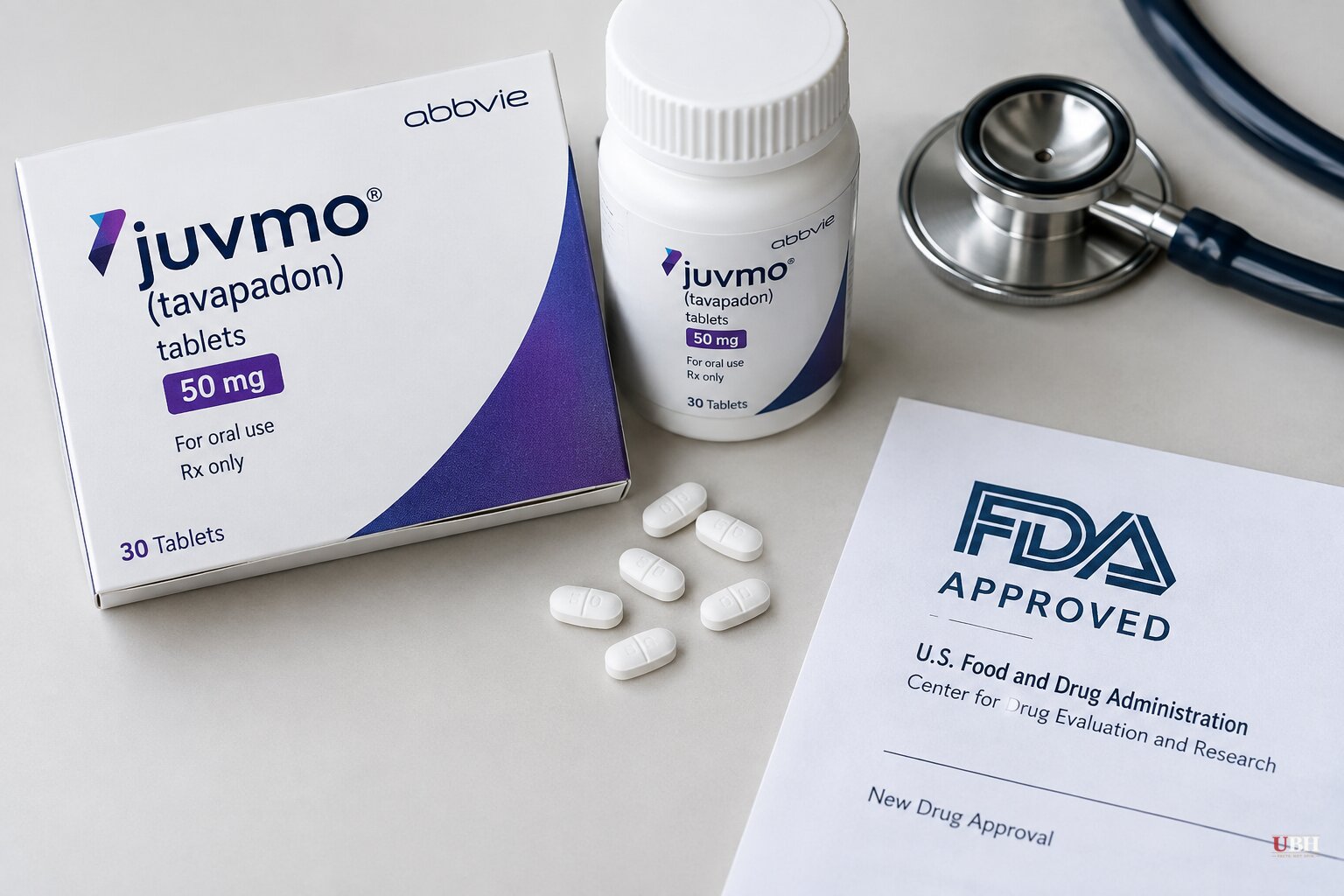
The FDA approved AbbVie's tavapadon on Friday, September 25, according to pharmaceutical-technology, which cited an update to the agency's website. AbbVie made the approval public Monday, September 28, branding the drug Juvmo and calling it the first dopaminergic breakthrough for Parkinson's disease in decades, according to a company statement carried by PR Newswire.
Juvmo is the first selective D1/D5 receptor agonist ever approved for Parkinson's, according to MedPage Today. Every other dopamine agonist on the market targets D2/D3 receptors instead. AbbVie expects it to reach US pharmacies in October 2026.
What The Drug Actually Does
Parkinson's patients lose dopamine-producing brain cells over time, and the gold-standard treatment, levodopa, has been around for more than 50 years, according to pharmaceutical-technology. Levodopa works, but about 70% of patients need higher or more frequent doses within their first year of treatment, according to AbbVie's own release, and those escalations can trigger uncontrolled movements called dyskinesia.
Juvmo is designed to hit motor-control receptors more precisely, sparing patients some of the side effects tied to D2/D3 stimulation, according to Hubert Fernandez, the Cleveland Clinic neurologist who led the drug's trials. "We can stimulate motor pathways effectively, but the hope is to avoid the baggage that comes with D2 stimulation, particularly the nonmotor side effects," Fernandez told NeurologyLive.
The approval rests on the Phase 3 TEMPO program. In TEMPO-1, a 529-patient placebo-controlled trial, both the 5-mg and 15-mg doses beat placebo on a combined scale measuring daily living and motor function after 26 weeks, according to EMJ Reviews. TEMPO-2 used flexible dosing and hit the same endpoint, with placebo-adjusted improvements of roughly 9 to 12 points on that scale, according to NeurologyLive. In TEMPO-3, 507 patients already on levodopa and struggling with motor fluctuations got Juvmo added on top, and it increased their good-symptom "on" time by 1.1 hours versus placebo while cutting "off" time, NeurologyLive reported.
An open-label extension called TEMPO-4 followed patients to 85 weeks. AbbVie says 93% of participants on Juvmo had not needed to increase their levodopa dose by that point, and 94% of early-stage patients hadn't started levodopa at all, according to the company's release.
The Catch: No Control Group, No Head-to-Head Data
That extension data sounds impressive, but NeurologyLive flagged a real limitation. The 85-week follow-up had no control group, meaning it can't rule out survivor bias, and it excluded patients over 80. EMJ Reviews made the same point directly: the trials proved Juvmo beats a placebo, not that it beats levodopa or the D2/D3 agonists already on pharmacy shelves. Longer-term, comparative data will matter before doctors know where Juvmo actually fits in the treatment order.
Safety-wise, the drug carries the same warnings common to its class. Prescribing information flags orthostatic hypotension, new or worsening dyskinesia, hallucinations, and impulse-control problems like compulsive gambling or shopping, according to MedPage Today. Discontinuation rates were higher on Juvmo than placebo, mostly during the initial dose-titration period, NeurologyLive reported. Nausea, dizziness, and headache were the most common complaints across trials.
The Price and the Business Behind It
AbbVie will list Juvmo at $4,900 for a 30-day supply, or $58,800 a year, according to William Blair analysts cited by BioSpace. Chief Commercial Officer Jeffrey Stewart told investors on AbbVie's Q2 earnings call in July that the drug could unlock a $5 billion market opportunity, adding, "There's nothing else like it in the marketplace."
Juvmo is a direct product of AbbVie's $8.7 billion acquisition of Cerevel Therapeutics, a deal that closed in August 2024. That acquisition looked shaky at first. Cerevel's headline asset, an antipsychotic called emraclidine, failed a mid-stage schizophrenia trial in November 2024 and knocked AbbVie's stock down 12% at the time, according to BioSpace. Juvmo's approval gives AbbVie its first real return on that bet.
BMO Capital Markets noted in a research note cited by BioSpace that Juvmo's label is broad enough to cover patients across early and late-stage disease, whether or not they're already on levodopa. That flexibility is unusual for a Parkinson's drug and could widen its use beyond a narrow patient slice.
The Bigger Picture
Writing for Fox News, physician Marc Siegel noted that Parkinson's incidence is projected to roughly double by 2050, reaching 25.2 million people worldwide, and stressed that no cure exists regardless of new drugs like Juvmo. Sneha Mantri, chief medical officer at the Parkinson's Foundation, told NeurologyLive the approval matters because "the Parkinson's community has waited more than 50 years for new, improved medication options."
What's still unanswered: whether insurers will cover a nearly $60,000-a-year drug broadly, and whether Juvmo actually changes outcomes better than cheaper existing agonists once head-to-head studies, if any, get run. Neither AbbVie nor the FDA has published the full basis for the approval decision, according to pharmaceutical-technology, leaving doctors to work from the TEMPO trial data alone until further real-world evidence accumulates.
Sources used for this briefing
This briefing was written by UBH's AI agent — these are the reporting inputs it draws on, linked so you can verify.


