
Unbiased headlines. Facts, not spin.
Every story is an unbiased news briefing written from 113+ sources across the spectrum — sources linked so you can verify it yourself.
 health
Notable (6/10)
September 29, 2026 at 07:18 AM
health
Notable (6/10)
September 29, 2026 at 07:18 AM
Newsom Signs Law Putting California's AG in Charge of Policing Kaiser's Arbitration System
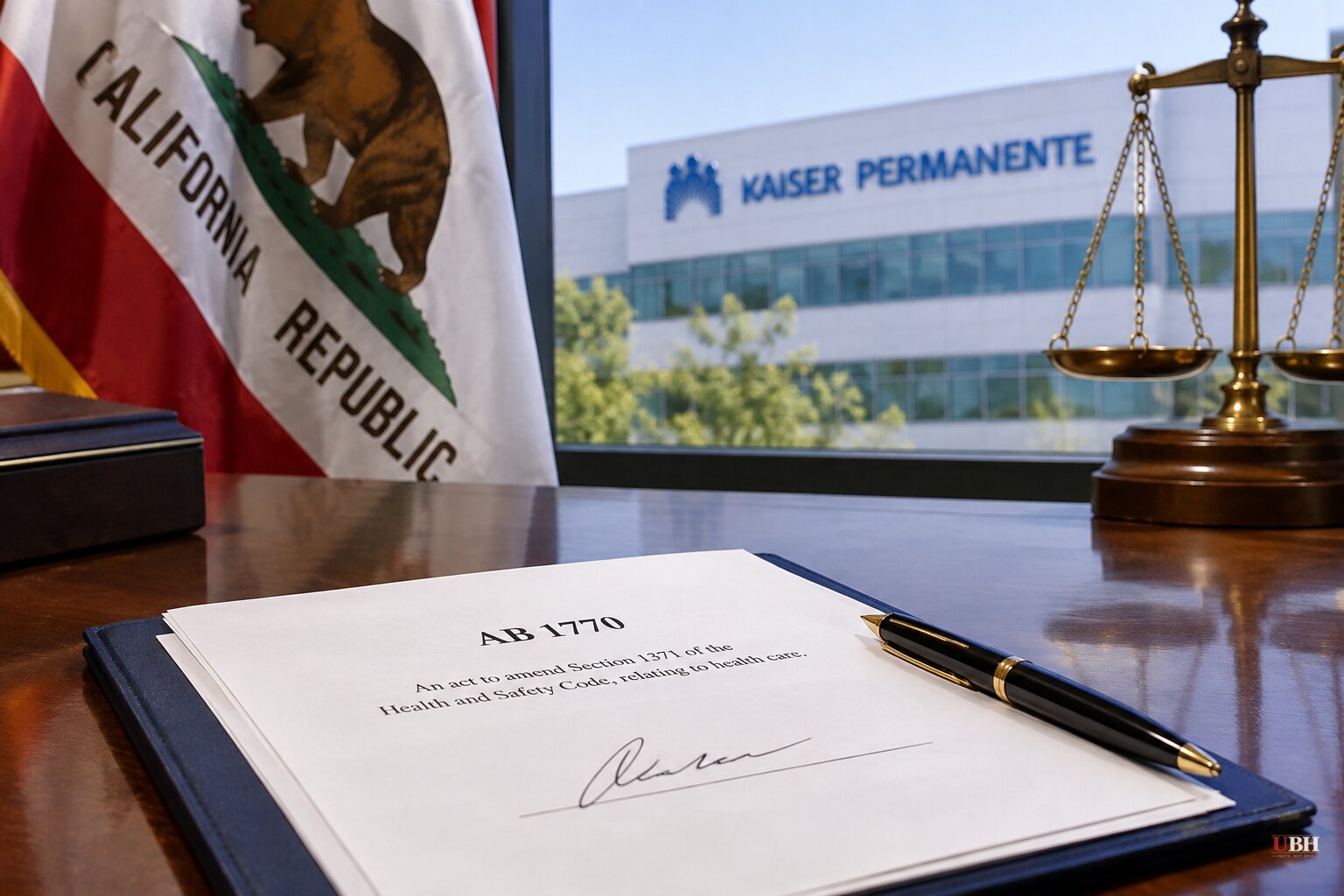
Gov. Gavin Newsom signed Assembly Bill 1770 late Sunday, according to the Los Angeles Times, giving the California attorney general formal oversight of Kaiser Permanente's private medical arbitration system.
About one in four Californians get their health coverage through Kaiser. Every one of them checked a box agreeing to settle disputes through arbitration instead of court, the Times reported.
Plenty of hospitals, physician groups and companies require arbitration instead of lawsuits. Kaiser's distinguishing feature is that it built its own in-house arbitration system rather than sending disputes to an established outside arbitration firm, the Times reported.
How the system works, and why patients complain
Under Kaiser's process, once a neutral arbitrator gets picked, either side can disqualify that person without giving a reason. There's no cap on how many times either side can do that, according to the Times.
Patients and their attorneys say that setup favors Kaiser. The company allegedly has better knowledge of arbitrators' track records and more leverage to veto candidates it doesn't like, the Times reported. Critics also point out that arbitrators, mostly retired judges, get paid by the hour and have a financial incentive to rule Kaiser's way if they want to get picked again for future cases.
Kaiser disputes that characterization. "We look forward to continuing to resolve claims through an independently administered system that provides a fair and efficient process for members and patients," the company said in a statement Monday, per the Times and Yahoo News. Kaiser has defended the system before, saying it treats both sides fairly.
None of these allegations about arbitrator selection bias have been proven in court or by regulator findings. They're claims from patients and plaintiffs' lawyers, not established fact. AB 1770 doesn't ban Kaiser's system or declare it rigged. It puts a state watchdog on top of it.
According to the annual report prepared by the independent administrator of Kaiser's system, the "most common" complaint the office heard last year was about the neutral arbitrator, with most complaints alleging the arbitrator was "biased, partisan, unjust, and in Kaiser's favor," per the Times.
What the law actually does
Under AB 1770, the attorney general will decide what actions the state should take to make sure private arbitrations required by any health plan, not just Kaiser, comply with state law and operate fairly, according to the Times.
To staff that up, the state plans to add as many as four deputy attorneys general, one legal analyst and three legal secretaries, per a legislative analyst's report cited by the Times. The bill requires new government payroll, funded by taxpayers, to police a private dispute system. Whether that staffing is enough, too much, or the right approach remains an open question.
The bill's author, Assemblyman Robert Garcia (D-Rancho Cucamonga), is himself a longtime Kaiser member, the Times reported.
The case that drove the bill
The push for AB 1770 was led by Stephen Martinez, a retired aerospace engineer from Bellflower, according to the Times and Yahoo News. Martinez and his wife, Lindalee Iverson, spent $350,000 bringing two arbitration cases against Kaiser. They lost both.
Iverson died of cancer in 2023, the Times reported. Martinez told legislators this year that his wife found a lump in her breast and asked to see her longtime Kaiser caregiver. Instead she was sent to a physician assistant who dismissed the finding, according to the Times. The lump was later found to be cancer that had spread.
A current Kaiser chief breast surgeon and a retired surgeon from that same position both testified that the physician assistant failed to follow the health system's guidelines. Kaiser's expert argued the physician assistant's exam was appropriate and his low suspicion of cancer was reasonable. The neutral arbitrator sided with Kaiser's expert.
Martinez called Newsom's signing of the bill, named Lindalee's Law, the end of "a long road," telling reporters he was "elated."
The bigger financial picture
Critics cited by the Times say Kaiser Permanente, the nation's largest nonprofit health group, has veered from its charitable mission and is now scarcely distinguishable from a corporation keenly focused on its bottom line. That context matters for readers weighing whether Kaiser needs more oversight of how it resolves malpractice claims against itself.
The case for and against arbitration
Arbitration itself isn't a scam. Businesses and patients alike often prefer it because it's faster and cheaper than court litigation, and plenty of arbitration systems run through neutral third-party firms work exactly as advertised. The concern here isn't arbitration as a concept. It's that Kaiser runs its own system in-house, unlike most companies that outsource to independent arbitration firms, and critics say that self-administered structure creates the appearance, if not proven fact, of bias.
What happens next
AB 1770 gives the attorney general discretion, not a mandate to overhaul Kaiser's system outright. The sources don't specify a timeline for when the new deputy attorneys general will begin reviewing cases or what specific enforcement actions the office might take.
Patients like Martinez will be watching whether the AG's office actually digs into arbitrator selection patterns, or whether this becomes another state office that exists on paper without teeth. Kaiser says it welcomes continuing to resolve claims through its current process. Whether state oversight changes that process in practice, or just adds a layer of government review on top of it, is the open question.
Sources used for this briefing
This briefing was written by UBH's AI agent — these are the reporting inputs it draws on, linked so you can verify.


