
Unbiased headlines. Facts, not spin.
Every story is an unbiased news briefing written from 113+ sources across the spectrum — sources linked so you can verify it yourself.
 health
Notable (6/10)
September 29, 2026 at 08:10 AM
health
Notable (6/10)
September 29, 2026 at 08:10 AM
NHS Trusts Report Shortages of Aspirin, Co-Codamol and Ramipril Across England
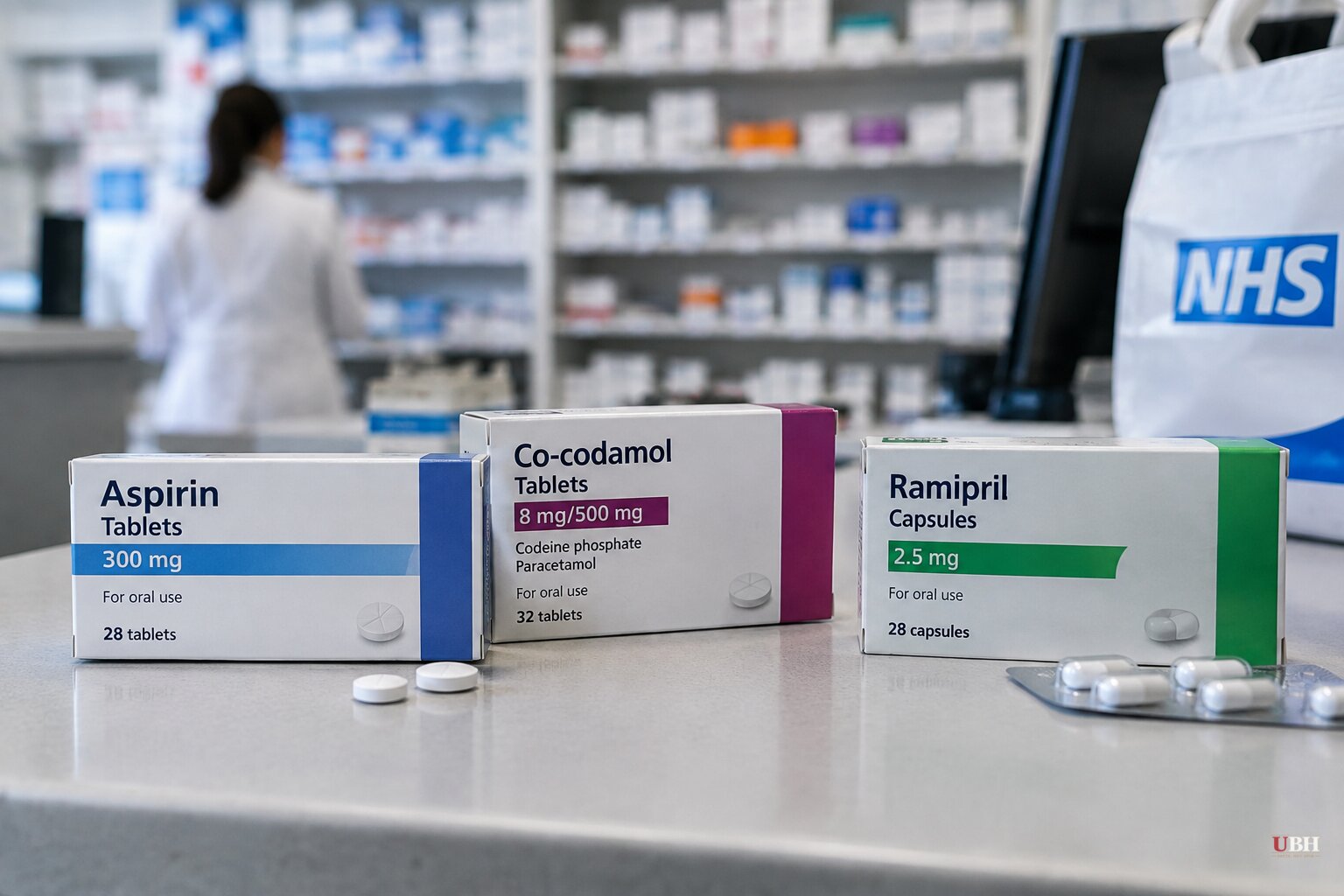
Aspirin, co-codamol and ramipril aren't exotic drugs. They're cheap, generic, and sit in nearly every hospital pharmacy in England. So why are NHS trusts running out of them?
Dr Rodolfo Catena, an associate professor in UCL's Global Business School for Health, sent freedom of information requests to 184 NHS trusts asking about supplies of the three medications. Sixty responded, according to The Guardian.
The results aren't pretty. Twenty-six of 42 trusts that answered on aspirin, 62%, reported supply disruptions between December 2024 and March 2026. Thirteen of 42 trusts, 31%, ran short of co-codamol, the paracetamol-and-codeine combo used for muscle pain, period pain and toothache. York and Scarborough NHS Trust says its co-codamol supply has been disrupted since May 2025. Royal Wolverhampton NHS Trust had trouble sourcing enough for eleven straight months, October 2025 through August 2026.
Ramipril, a blood pressure drug taken by millions, was short at seven of 43 responding trusts, 16%. That matters because more than a third of adults in England have dangerously high blood pressure, and 59% of them don't even know it, according to research cited by The Guardian. Frimley Health NHS Trust, covering Surrey, Berkshire and Buckinghamshire, paid higher prices just to keep ramipril flowing rather than risk running dry.
One trust, Kent Community Health NHS Trust, was short of all three drugs. Nine other trusts were short of at least two.
A risk NHS England calls "medium"
NHS England scores drug shortages 16 out of 25 on its internal risk register, a medium rating, according to The Guardian. Catena says that's the wrong call. His data shows a widespread, recurring problem, not an occasional hiccup.
The National Pharmacy Association's own analysis backs him up. It found that shortages used to hit mostly specialist drugs, things like ADHD and epilepsy medication. Now they're hitting cheap generics too, the drugs that are supposed to be the easy, reliable part of the supply chain.
Generic drugs are cheap precisely because manufacturers operate on razor-thin margins, often overseas. When trade disputes, global conflict or a single factory problem hits, there's no slack in the system to absorb it. A government that wants a resilient health service can't keep treating that as a footnote.
Government response
The Department of Health and Social Care told the Birmingham Mail it's aware ramipril is in limited supply and has issued serious shortage protocols so patients can still get the medication they need. It says it's working with suppliers to resolve the ramipril, co-codamol and aspirin issues, and is investing in UK medicine manufacturing to manage disruptions going forward.
The DHSC also said "the vast majority" of licensed medicines remain in good supply and it has "robust measures" in place. This is a shortage of three specific drugs among tens of thousands the NHS stocks, not a system-wide collapse.
But the people on the front line aren't reassured. A spokesperson for the Society for Acute Medicine, which represents hospital doctors, said medicine shortages "disrupt treatment and create additional pressure for clinical and pharmacy teams," and called for more resilient supply chains and faster communication.
Tase Oputu, president of the Royal College of Physicians, went further, saying shortages have become "a persistent challenge" and that pharmacists are burning hours tracking down medicine that should be sitting on the shelf. Oputu wants pharmacists given more flexibility to adjust prescriptions during shortages without waiting on a doctor to rewrite them.
What the coverage leaves out
Some outlets, including the Birmingham Mail, framed this as the NHS "confirming" a shortage as fresh news this week. It isn't. Catena's FOI data covers disruptions stretching back to December 2024, with some trusts, like Royal Wolverhampton, still affected as recently as August 2026. This is a long-running supply chain problem being documented, not a new outbreak.
The open question is whether NHS England will actually reclassify the risk level, and whether the government's manufacturing investment produces results before the next drug runs short. Catena's FOI requests only got responses from 60 of 184 trusts. What the other 124 are experiencing remains unknown.
Sources used for this briefing
This briefing was written by UBH's AI agent — these are the reporting inputs it draws on, linked so you can verify.


