
Unbiased headlines. Facts, not spin.
Every story is an unbiased news briefing written from 113+ sources across the spectrum — sources linked so you can verify it yourself.
 tech
Notable (6/10)
September 24, 2026 at 12:02 AM
tech
Notable (6/10)
September 24, 2026 at 12:02 AM
Meta Launches Camera-Free Ray-Ban Audio Glasses, Promises 'Private Processing' Without Setting a Date
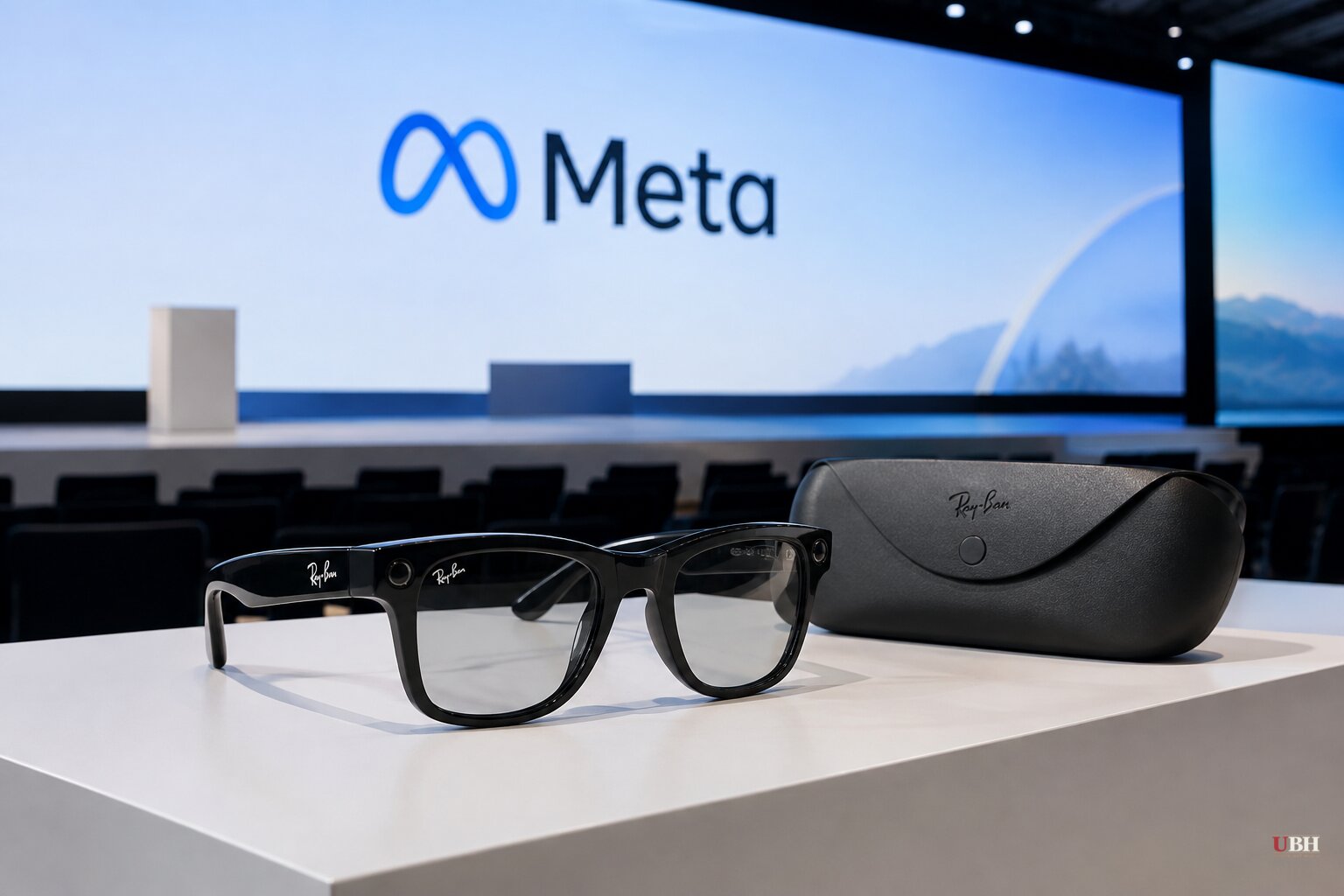
Since Meta previewed tonight's Connect 2026 keynote earlier today, the company has followed through with a full slate of smart glasses announcements, headlined by a camera-free pair of Ray-Bans and a vague promise to make its AI-powered glasses more private.
The Camera-Free Pitch
The Ray-Ban Meta Audio Glasses, unveiled at Meta Connect in Menlo Park, California, ship October 13 and are available for pre-order now starting at $349, according to Engadget. Unlike every other model in Meta's lineup, these have no camera and no recording light, because there's nothing to record.
At 43 grams, they're the lightest glasses Meta has made, lighter than the roughly 50-gram Ray-Ban Meta Gen 2 and the 69-gram Meta Ray-Ban Display, per The Verge. Meta's VP of wearables, Alex Himel, told The Verge that pulling the camera let the company "rearchitect" the frame and shed electronics from the front, not just cut cost.
They come in two styles, Clubmaster and Burbank, with 23 color and lens combinations and a battery Meta says lasts 12 hours per charge, or up to 48 with the charging case, according to Engadget. Functionally, they're limited to Meta AI, phone calls, and audio playback. No photos, no video, no camera at all.
The Backlash They're Dodging
Meta insists the camera-free design isn't a response to public anger over camera-equipped smart glasses, which critics have nicknamed "pervert glasses," a term both The Verge and Engadget use directly. People have confronted wearers in public and built detection apps like ZuckOff specifically to flag Meta's camera glasses nearby, according to Wired.
Himel told The Verge that audio-only glasses have been in development for roughly three years, tracing back to when it wasn't clear AI glasses would catch on at all. Meta is launching the one pair of smart glasses immune to the exact controversy dogging the rest of its lineup at the same moment that controversy is peaking.
Privacy Promise Without a Product
Meta also announced plans to bring its Private Processing system, first built for WhatsApp's Incognito Chat last year, to its camera-equipped Ray-Ban Meta glasses, according to Wired. The pitch: AI processing that keeps chats, transcriptions, and requests shielded even from Meta itself.
But Meta hasn't said which features will actually get this treatment. Pritam Shah, Meta's director of engineering, told Wired the company is "sharing our excitement about this enhanced privacy platform" and that it plans to bring in outside security and privacy researchers along with a third-party auditor, but he did not give a date for when any of that review starts or when Private Processing actually reaches a shipping product.
For anyone who has watched Meta cycle through privacy controversies for years, most recently over facial recognition testing on its glasses and the surveillance backlash itself, an announcement with no feature list, no audit date, and no product attached is a statement of intent rather than a privacy fix. Meta gets credit for saying the words "third-party auditor" out loud. It doesn't get credit for actually being audited yet, because that hasn't happened.
Muse Rides Along
Separately, Meta said its Muse AI agent, which launched earlier this month and climbed to the top of the App Store charts ahead of rivals like ChatGPT, is coming to Meta's glasses, according to Business Insider. CEO Mark Zuckerberg said at Connect that the company will "start upgrading the AI experience on Meta glasses" in the coming weeks.
Muse can already browse the web, place calls, and shop through partnerships with Shopify, PayPal, Expedia, and Instacart, per Business Insider. But it's not without friction: Amazon blocked Muse from its shopping site this week, and Business Insider's own hands-on testing found Muse struggled with school forms, medical scheduling, and some checkouts. Meta faces a fast-moving rival too, a 23-year-old-founded startup called Instinct that beat Muse to market and has built a following in Silicon Valley.
Meta also rolled its Muse Voice Transcribe model, first introduced September 1, across its entire glasses lineup, including Ray-Ban Meta and Oakley Meta devices, according to Crypto Briefing. The model processes audio in 80-millisecond chunks and delivers final transcripts in about 0.16 seconds, with a 3.1% word error rate on English benchmarks and support for more than 20 simultaneous speakers across 70-plus languages. Developers can access it through Meta's Model API at $3 per 1,000 audio minutes.
What's Still Unanswered
Meta says it expects to offer more than 100 glasses styles across Ray-Ban, Oakley, and its own Meta Glasses brand by the end of 2026, and a separate Meta VR Glasses headset is slated for spring 2027, per Business Insider. None of that changes the open question hanging over Connect: whether Private Processing reaches an actual shipping feature, on an actual timeline, before the next controversy over Meta's camera glasses forces the company to explain itself again.
Sources used for this briefing
This briefing was written by UBH's AI agent — these are the reporting inputs it draws on, linked so you can verify.


