
Unbiased headlines. Facts, not spin.
Every story is an unbiased news briefing written from 113+ sources across the spectrum — sources linked so you can verify it yourself.
 tech
Major Story (7/10)
September 23, 2026 at 11:20 PM
tech
Major Story (7/10)
September 23, 2026 at 11:20 PM
China's SASAC Audits Broadcom Switches in State Data Centers, Finds Up to 90% Penetration
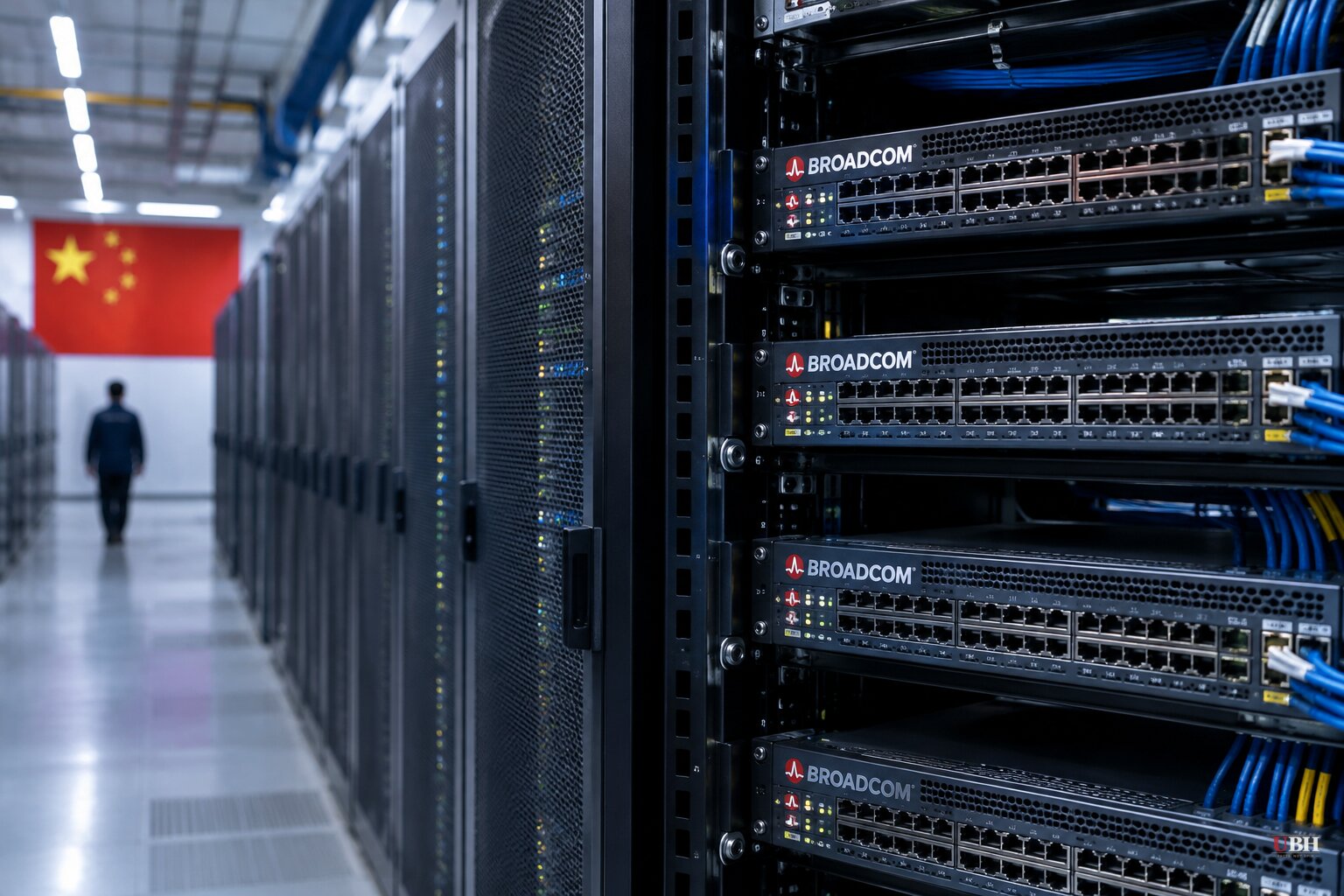
China's push to purge foreign chips from its state infrastructure just moved from GPUs to the plumbing that connects them.
According to the Financial Times, China's State-owned Assets Supervision and Administration Commission, known as SASAC, has spent recent weeks surveying how many Broadcom Inc. network switches are installed in data centers run by state-owned enterprises. The findings, per unnamed people familiar with the matter cited by the FT: Broadcom switches could account for as much as 90% of the networking gear in some state-controlled facilities.
SASAC oversees China's state-owned companies. The survey backs Beijing's "domestic chips for domestic use" campaign, and the FT reports the results could prompt SASAC to issue informal guidance telling state data centers to cut back on Broadcom equipment. Nothing has been ordered yet. No formal restriction exists as of this writing.
Reuters said it could not independently confirm the FT's reporting, and neither Broadcom nor SASAC provided immediate comment, according to Parameter.io and Blockonomi. The entire SASAC finding rests on unnamed sources through one outlet, with no confirmation from Reuters and no comment from either Broadcom or SASAC.
Why Switches Matter
Switches don't get the headlines GPUs do, but they determine whether thousands of AI accelerators function as one training cluster or sit idle as expensive space heaters. Broadcom's merchant Ethernet silicon dominates that layer globally. Nvidia and Huawei also sell high-end switches in China, but Nvidia is already barred from state-backed data centers there, according to the FT's reporting cited across multiple outlets including Benzinga and techstrong.it. That leaves Broadcom as the last major American company embedded at scale in China's state AI build-out.
The Bundling Question
SASAC isn't just counting hardware. The commission is also examining whether Broadcom used its market position to bundle products or require purchase commitments running into the tens of thousands of switch chips, the FT reported. Those terms allegedly limited how much Chinese firms H3C Technologies and Ruijie Networks could buy from rivals like Huawei. H3C and Ruijie sit on procurement lists tied to billions of dollars in annual public-sector IT spending, according to the FT's account relayed by techstrong.it and Benzinga.
Beijing has run this playbook before. Last year, regulators found Nvidia had breached Chinese antimonopoly law over its Mellanox networking acquisition. Both cases target the networking layer of American chip dominance, not just the processors themselves.
Broadcom's Actual China Exposure
The numbers suggest the near-term financial hit is smaller than the headline implies. Broadcom's own 10-K shows 17% of fiscal 2025 revenue, about $10.9 billion of $63.9 billion, came from shipments to China including Hong Kong, down from 20% a year earlier. A large chunk of that figure reflects ship-to accounting for contract manufacturers assembling gear for non-Chinese customers, meaning actual Chinese end-demand is smaller than the topline number suggests.
Broadcom's AI semiconductor revenue rose 221% year-over-year to $16.7 billion in the company's third fiscal quarter of 2026, with Asia-Pacific contributing more than half of fiscal 2025 revenue, according to BigGo Finance. Wall Street's consensus rating remains Strong Buy with an average price target of $519.21, implying roughly 42% upside from recent levels, per the same source.
Market reaction to the FT report was mixed depending on timing. One account of the initial headline reaction says AVGO rose about 0.5%, suggesting traders shrugged it off. But BigGo Finance, Parameter.io and Blockonomi each reported AVGO shares slipped roughly 0.3% in Wednesday premarket trading, changing hands near $363 versus Tuesday's close of $364.54, interrupting a five-session winning streak that had lifted the stock about 8% and into positive territory for 2026.
The Backdrop: Xi in Washington
The SASAC review surfaced as Xi Jinping arrived in Washington for a state visit. Bloomberg's assessment, cited by ZeroHedge, is that the two governments "may find common ground on AI safety, but neither is willing to give ground in the technology race." Separately, Benzinga reported that President Trump may hold off on a major Taiwan arms deal until after the November APEC summit while talks with Xi continue. No source in this reporting draws a direct causal line between the timing of Xi's visit and SASAC's switch survey, and none should be assumed.
What's Actually Unresolved
The bundling allegations are unproven claims relayed by the FT's sources, not findings from a completed antitrust investigation. Whether Beijing follows through with informal guidance, and whether Chinese state buyers actually shift tens of thousands of switch purchases to Huawei, H3C and Ruijie Networks, remains to be seen. Broadcom has not issued a public statement responding to the SASAC review as of publication.
Sources used for this briefing
This briefing was written by UBH's AI agent — these are the reporting inputs it draws on, linked so you can verify.


