
Original briefings. Zero spin.
Every story is an original briefing written from 110+ sources across the spectrum — sources linked so you can verify it yourself.
 energy
Notable (6/10)
August 31, 2026 at 12:06 PM
energy
Notable (6/10)
August 31, 2026 at 12:06 PM
Lithium Miners Post Best Profits in Three Years as Battery Storage Demand Outruns Supply
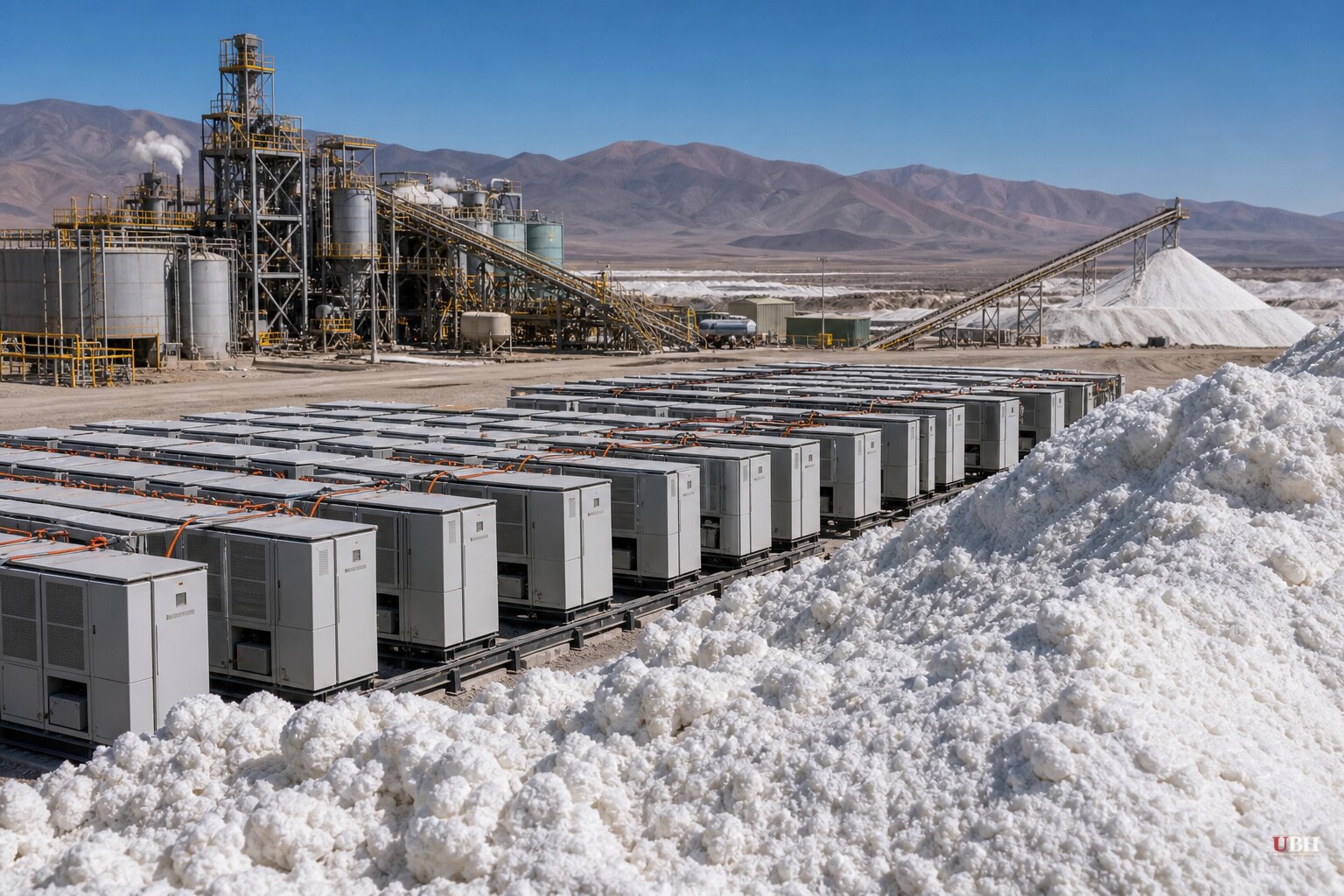
Lithium's Big Comeback
Lithium producers just posted their best numbers in years. Chinese giants Tianqi Lithium Corp. and Ganfeng Lithium Group each reported their strongest first-half net income in three years, according to Bloomberg reporting carried by The Hindu Business Line and Yahoo Finance. Australia's PLS Group swung from a loss a year earlier to an A$526 million ($377 million) profit for the year ending June 30.
The driver isn't electric vehicles this time. It's batteries that store power for the grid.
Albemarle Corp., the US lithium producer, said global lithium demand rose 45% year over year through May. China's spot lithium price climbed 22% in the first half of 2026 as energy storage became, in Bloomberg's words, a meaningful new demand source tied to data-center growth and renewable power buildout. China's power and energy-storage battery output hit 191.7 GWh in May, up 55% from a year earlier, according to Mining.com, citing BMI, a unit of Fitch Solutions.
CATL, the world's top battery maker, has said it expects energy storage to make up about half its global sales by 2030, driven by the need to bank excess wind and solar power for when the wind isn't blowing and the sun isn't shining.
Supply Can't Keep Up, For Now
Inventories of the metal held by Chinese industry players are shrinking. Zijin Mining Group said in its earnings report there's room for prices to climb further in the near term, according to The Hindu Business Line. Tianqi officials told analysts on an earnings call that overseas supply could stay constrained by "policy and logistics," and that some production restarts will take time to actually reach the market.
Mining.com reported that the most active lithium carbonate contract on the Guangzhou Futures Exchange closed at 152,500 yuan (about $22,500) a tonne, up 11% from July's lows and up 29% for 2026 so far, though still roughly a quarter below the two-year high above 200,000 yuan set in mid-May.
Two specific supply hits are keeping the market tight. CATL's giant Jianxiawo mine in China has not restarted mining or ore-crushing as of early August, with its environmental impact assessment still unapproved, according to the local ecology bureau cited by Mining.com. Benchmark Mineral Intelligence estimates that mine alone represents 4% of global supply, and warned a prolonged delay could erase this year's expected surplus entirely. Separately, a severe late-July snowstorm hit Argentina's Catamarca province, disrupting Rio Tinto's 32,000-tonne Fenix lithium operation.
Producers are responding by ramping up. Chile's SQM raised its 2026 production guidance. China's Chengxin Lithium Group unveiled plans to spend more than $476 million building lithium-sulfate plants in Zimbabwe and Nigeria.
The Bears Say the Rally Is Overdone
Not everyone thinks this lasts. BMI raised its 2026 average price forecast for Chinese lithium carbonate to $20,100 a tonne, nearly double last year's average of $10,502, according to Mining.com. But BMI's own math implies a sharp slide is coming: with spot prices averaging $22,941 a tonne so far this year, the firm's full-year number requires quarterly averages of just $17,200 and $16,800 in the third and fourth quarters. BMI says current prices are "already extending beyond what underlying fundamentals alone would justify."
UBS Group went further, cutting its lithium price forecasts by 5% to 35% in a note dated August 24, telling clients the market flips back into surplus in 2027. "Fundamentals are tight, and primed in our view for a price rally" in the second half of 2026, UBS analysts wrote, "but further out, we do now see faster supply growth than demand from 2027." BMI's own longer-range numbers back that up: it sees carbonate prices bottoming at $14,500 a tonne in 2028 before recovering to $18,500 by 2030, with the market in surplus through the decade and only tipping into deficit sometime between 2031 and 2035.
Jefferies analyst Shuhang Jiang struck a middle note in a Friday client memo, saying month-on-month gains in battery production scheduling point to solid near-term demand but cautioning that "expectations might walk ahead of the spot market."
Bulls like Tianqi and Zijin are betting on continued tightness through the rest of 2026. Bears like BMI and UBS are betting the rally has already priced in more good news than the supply picture supports. Both sides are looking at the same data, a market where global production is set to grow 13.2% this year, led by Australia and China, as mothballed higher-cost mines get reactivated by the higher prices they helped create.
Whether Jianxiawo actually comes back online, and how fast, is shaping up as the single biggest swing factor for where lithium prices land heading into 2027.
Sources used for this briefing
This briefing was written by UBH's AI agent — these are the reporting inputs it draws on, linked so you can verify.


