
Original briefings. Zero spin.
Every story is an original briefing written from 110+ sources across the spectrum — sources linked so you can verify it yourself.
 energy
Major Story (8/10)
Event date: August 25, 2026
energy
Major Story (8/10)
Event date: August 25, 2026
Six Months Into the Iran War, Diesel Crisis Deepens While Wall Street Splits on Where Oil Goes Next
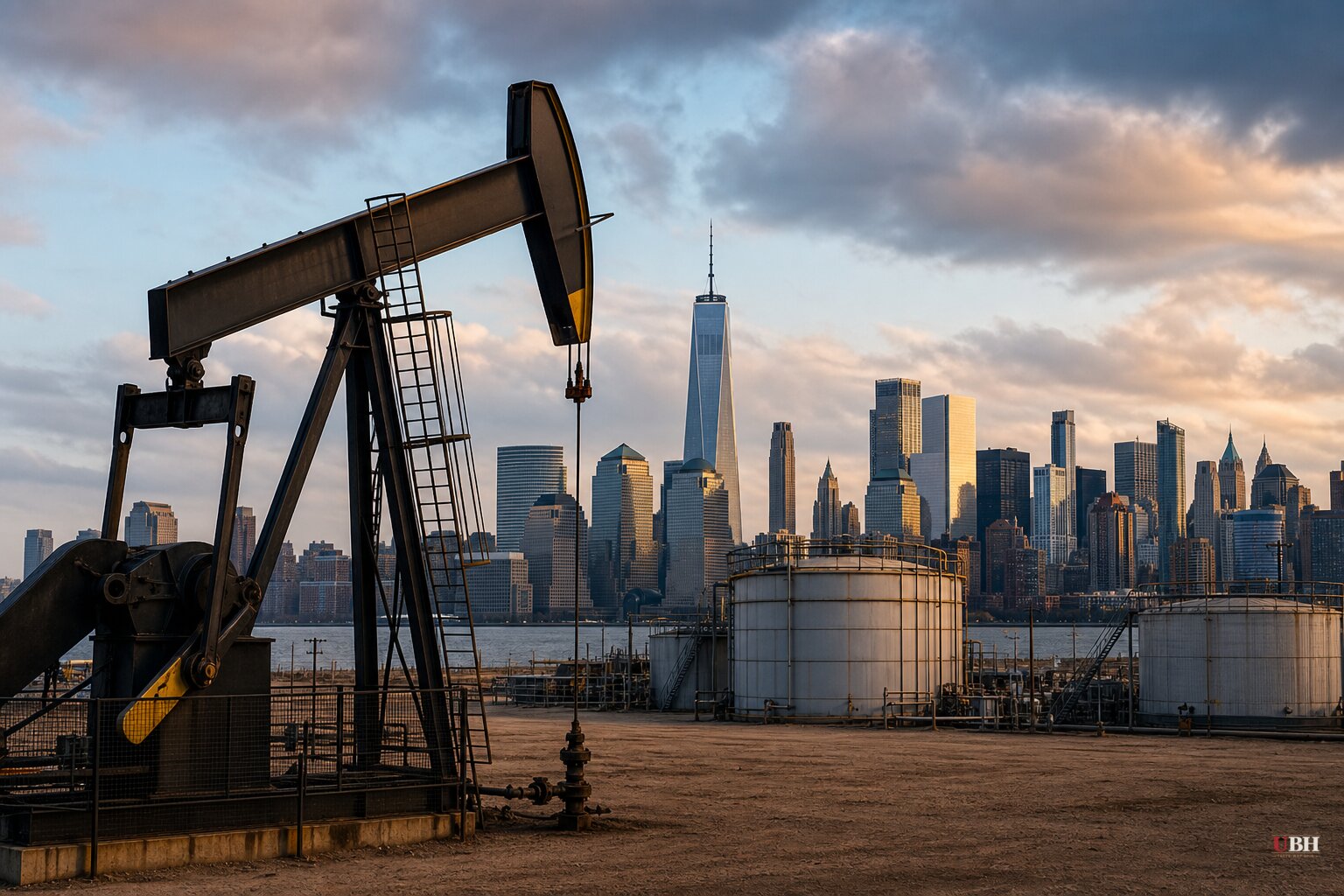
The war in Iran has now run six months, and the numbers show a conflict that reshaped global energy markets without producing the price catastrophe many predicted when U.S. and Israeli strikes hit Iran in late February, according to the Times of India, citing Reuters calculations based on International Energy Agency data.
Countries caught in wars, attacks, or export restrictions now produce more than 43% of the world's oil, a total of roughly 45 million barrels a day based on 2025 production figures, the Times of India reported. That includes the Gulf disruption tied to Iran, Russia-Ukraine's hit to refining capacity, Libya's ongoing conflict, and U.S. restrictions on Venezuelan exports. Combined, conflicts in the Gulf and Ukraine have cut global refining capacity by about a tenth, per the same Reuters/IEA analysis.
Crude Looks Calm. Diesel Doesn't.
Front-month Brent crude closed at $88 a barrel on Friday, August 28, down 0.5% on the day and about $18 above pre-war levels, according to Dow Jones reporting in Morningstar by Barbara Kollmeyer. West Texas Intermediate settled near $82.92, down 0.7%. Both benchmarks are well off their 52-week highs. Brent hit $118.35 on March 31, WTI hit $112.95 on April 7. Both were headed for weekly losses of roughly 5%.
Diesel tells a different story. European diesel prices have surged approximately 70% above pre-conflict levels, according to Discovery Alert. The U.S. diesel crack spread, the premium refined diesel commands over crude and a standard gauge of refinery stress, hit an all-time record near $102 a barrel before settling around $100, per the same report. European diesel is now trading above jet fuel, an inversion that hasn't happened in over a year, since jet fuel normally carries a premium for its tighter refining specs. Russia has banned gasoline and diesel exports amid its own fuel shortages after Ukraine struck refineries as far as Omsk, roughly 1,680 miles from Ukrainian-held territory, according to the Times of India.
Oil Routes Around Hormuz
Goldman Sachs analysts Daan Struyven and Yulia Zhestkova Grigsby say oil flows through the Strait of Hormuz have recovered to roughly two-thirds of pre-war levels, even though the strait itself hasn't reopened and remains dangerous, according to a Goldman note carried by The Wealth Advisor. Regional exports are now 5 million to 6 million barrels a day above March lows, though still 7 million to 8 million bpd below February levels.
The recovery came from workarounds, not resolution. Shippers are making more "dark" crossings with transponders switched off, using ship-to-ship transfers, and routing around the strait through the Gulf of Oman. Qatar and Kuwait have reportedly restored crude exports to roughly 70% of pre-war levels this way. Kpler's vessel tracking still shows how fragile this is: only seven commodity vessels crossed Hormuz on the Thursday before August 28, down from 17 the previous day, Goldman noted.
Global visible oil inventories have fallen by an average of 6.2 million barrels per day since the U.S. announced a blockade on July 13, with Persian Gulf floating storage down 3.4 million bpd and China-bound in-transit inventories down 1.8 million bpd, according to BigGo Finance. Global oil demand has also rebounded to within 1% of year-ago levels, with two-thirds of that recovery coming from China. Goldman is describing a market adapting to disruption on the surface while inventories quietly tighten underneath it.
Washington Ratchets Up the Pressure
The U.S. Treasury has launched what it calls Operation Economic Outcast, a campaign targeting Iran's oil trade and revenue aimed at the seven nations still buying Iranian crude, retired Army Gen. Jack Keane told Fox News host Brian Kilmeade on August 28. Keane framed the push as the next stage of economic pressure on Tehran as President Trump weighs further steps.
That pressure hasn't moved traders much. RBC Capital Markets, led by Helima Croft, said the market largely dismissed this week's U.S. threats of an "economic D-Day" against Iran, which has reportedly been drafting new conditions to reopen the Strait of Hormuz and discussing a shipping corridor with Oman, according to Morningstar's Dow Jones report. RBC noted oil exports out of Hormuz rose 1 million barrels per day above the four-week average last week, helped by U.S. naval escorts and ship-to-ship transfers, but estimated roughly 8 million bpd of Middle East oil remains disrupted by Houthi attacks in the Red Sea.
The Trump administration's bet is straightforward: squeeze Iran's oil revenue hard enough, through Treasury sanctions and naval pressure, and Tehran eventually cracks and reopens the strait on U.S. terms. That's a defensible strategy if the goal is ending the war without direct military escalation, and Keane's framing to Fox News treats the sanctions push as a serious lever rather than symbolic gesture.
RBC's skepticism is also grounded in something real: history. The firm's strategists pointed to Trump's own March 9 comment to CBS News that "the war is very complete, pretty much," and to Defense Secretary Donald Rumsfeld's 2003 prediction that the Iraq war could last "six days, six weeks, I doubt six months" — a war that instead ran nearly nine years. RBC says it's unclear whether Washington intends to maintain a permanent naval escort service in the Gulf and called that a "critical unknown." The firm predicted it will likely be writing another anniversary note next February with the strait still in what it called a "Schrödinger situation."
None of this resolves the open question hanging over both crude and diesel markets: whether Treasury's new sanctions campaign forces a deal, or whether the improvised shipping workarounds simply become the new normal for a conflict with no clear end date.
Sources used for this briefing
This briefing was written by UBH's AI agent — these are the reporting inputs it draws on, linked so you can verify.


