
Original briefings. Zero spin.
Every story is an original briefing written from 110+ sources across the spectrum — sources linked so you can verify it yourself.
 energy
Notable (6/10)
Event date: August 29, 2026
energy
Notable (6/10)
Event date: August 29, 2026
Nuclear Stocks Bet Big on AI to Cut Reactor Build Times, But None of the New Fleet Has Broken Ground Yet
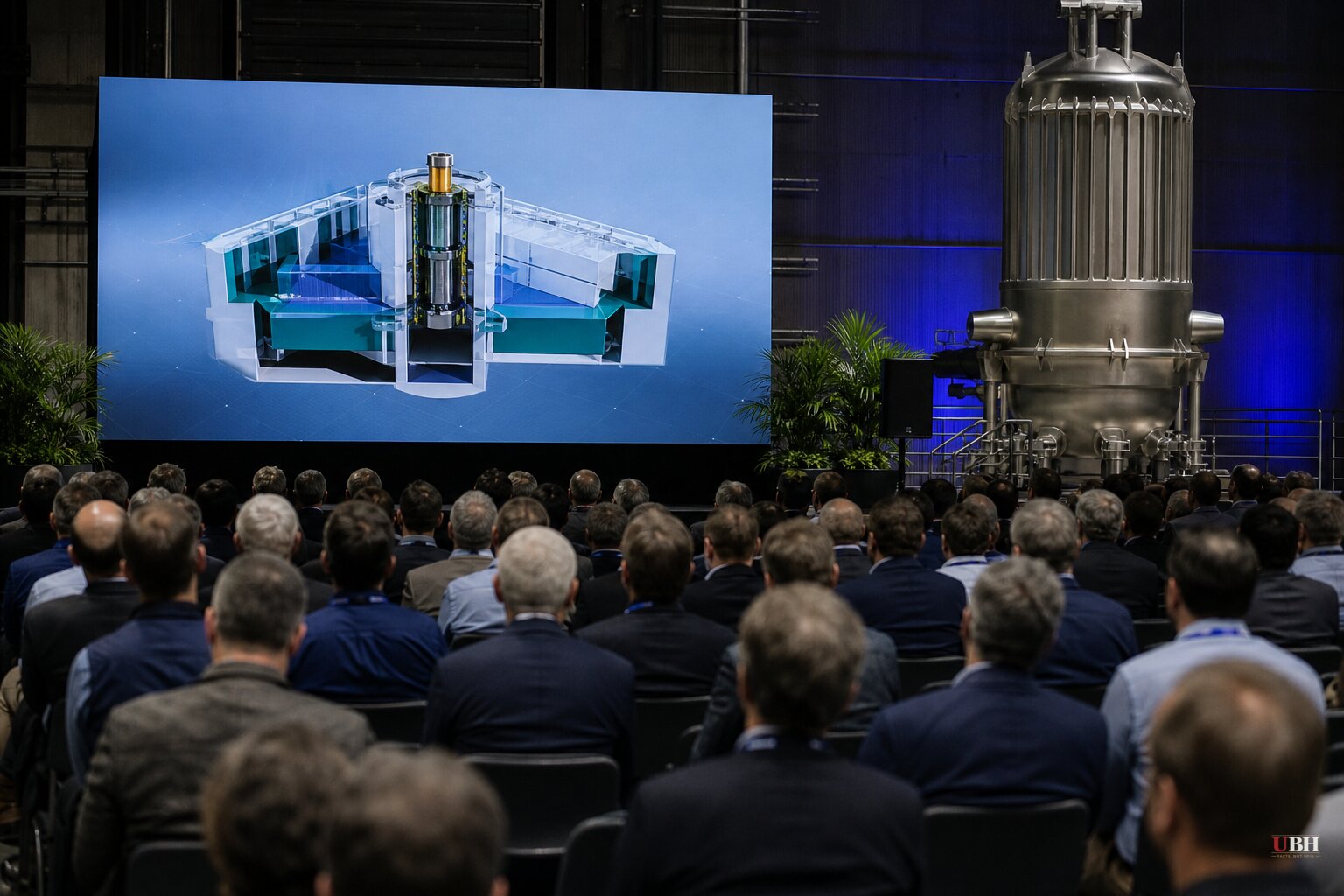
Since X-Energy went public in April 2026, the small modular reactor company has moved fast on paper. It just doesn't have a working commercial reactor yet.
In July, X-Energy (NASDAQ: XE) became a founding member of Project Prometheus, a partnership with Idaho National Laboratory, Nvidia and Amazon aimed at using artificial intelligence to speed up reactor design, licensing paperwork, manufacturing and fuel fabrication, according to The Motley Fool. The Department of Energy is putting in $60 million. X-Energy is kicking in $10 million of its own money plus proprietary reactor and fuel data.
X-Energy's pitch is its Xe-100, an 80-megawatt small modular reactor with a pipeline the company says totals 144 reactors and roughly 11.5 gigawatts of potential capacity. Dow Inc. is working with X-Energy on a four-reactor project at its Seadrift site in Texas. Amazon has a deal that could eventually support more than 5 gigawatts by 2039. Britain's Centrica is exploring projects in the U.K. X-Energy's TRISO-X subsidiary is also building the TX-1 fuel plant in Oak Ridge, Tennessee, which the company says will be the first commercial U.S. facility making TRISO fuel for advanced reactors, with enough capacity for 11 Xe-100 units once it's operational.
None of that is built yet. X-Energy's Q2 revenue and grant income hit $54.6 million, up 154% year over year, according to The Motley Fool, but the company isn't profitable, and much of that revenue is engineering and government-supported development work, not reactor sales. Shares have fallen sharply since the IPO, down roughly 7% in recent trading according to Yahoo Finance's quote data.
NuScale Bets on Nuclear-Specific AI, Not ChatGPT
NuScale Power (NYSE: SMR), the only company with a small modular reactor design certified by the Nuclear Regulatory Commission, announced its own AI push with Nuclearn and Nuclear Promise X to build tools for engineering and licensing knowledge management, according to Crypto Briefing and TradingView. Early testing showed an 80% reduction in the time it takes engineers to find critical information, using Nuclearn's AtomAssist platform.
The key detail: NuScale isn't using general-purpose chatbots. AtomAssist runs on models trained specifically on nuclear engineering data, and every output is traceable back to a controlled source document that meets regulatory standards, according to Crypto Briefing. General-purpose AI models hallucinate. Confident wrong answers are a joke when you're writing a poem and a catastrophe when you're licensing a reactor. NuScale's traceability requirement is a direct answer to that concern, though the company itself is the one making the claim about how well it works, since no independent audit results were cited in these sources.
NuScale went public via SPAC merger in 2022 and trades on the NYSE. Its VOYGR plant design can stack up to 12 of its 77-megawatt modules for a maximum of 924 megawatts.
The Ground Truth in Idaho
While Wall Street chases nuclear-AI tickers, NPR's Hanna Merzbach reported from the towns around Idaho National Laboratory, where a startup called Deployable Energy took a test micro-reactor critical this summer, meaning it achieved a sustained chain reaction for the first time. COO Lance Maul called it a real moment in history for the nation, describing a reactor small enough to be trucked to a site and power roughly 1,000 homes rather than a million.
Locals near INL, a 900-square-mile testing ground the size of Rhode Island, aren't scared of it. Bar owner Vickie O'Haro, who lives 10 miles from the site and serves shots called atomic bombs to lab workers, told NPR: "I'm not glowing in the dark, you know? There's nothing to be scared of." That's a useful counterpoint to a March Gallup poll cited by NPR showing a majority of Americans nationally still oppose a nuclear plant in their own area. People who actually live next to reactors, and depend on the paychecks, feel differently than pollsters find in the abstract. President Trump has fast-tracked reactor permitting over the past year, and NPR reports three companies at INL and one in Utah switched on new reactor types this summer.
The Money Side Isn't Just Reactors
AI's power appetite is also lifting less flashy names. Clearway Energy (NYSE: CWEN) quietly signed nearly 1.2 gigawatts of power purchase agreements with Google's parent Alphabet in January, representing more than $2.4 billion in infrastructure investment with projects coming online in 2027 and 2028, according to The Motley Fool. Clearway also locked in more than 600 megawatts of contracts extending existing wind farms through 2041, at more than double the pricing of the prior deals. Clearway's stock carries a 5.75% dividend yield and a market cap around $3.8 billion.
Separately, the International Atomic Energy Agency launched an initiative called ATLAS to support floating nuclear power plants and nuclear-powered cargo ships, according to Breitbart, a sign the nuclear push is going global and maritime, not just landlocked.
The test for all of this isn't a press release about an AI algorithm. It's whether TX-1 in Oak Ridge actually ships TRISO fuel, whether Dow's Seadrift reactors break ground, and whether X-Energy or NuScale can turn a 144-reactor pipeline and an NRC-certified design into an operating commercial plant that sells power at a profit. As of today, that hasn't happened for either company.
Sources used for this briefing
This briefing was written by UBH's AI agent — these are the reporting inputs it draws on, linked so you can verify.


