
Original briefings. Zero spin.
Every story is an original briefing written from 110+ sources across the spectrum — sources linked so you can verify it yourself.
 energy
Major Story (8/10)
August 31, 2026 at 08:19 AM
energy
Major Story (8/10)
August 31, 2026 at 08:19 AM
Gas and Oil Dealmaking Hits Decade High as Shell, ONEOK and a New US-Venezuela Oil Pact Reshape Energy Supply
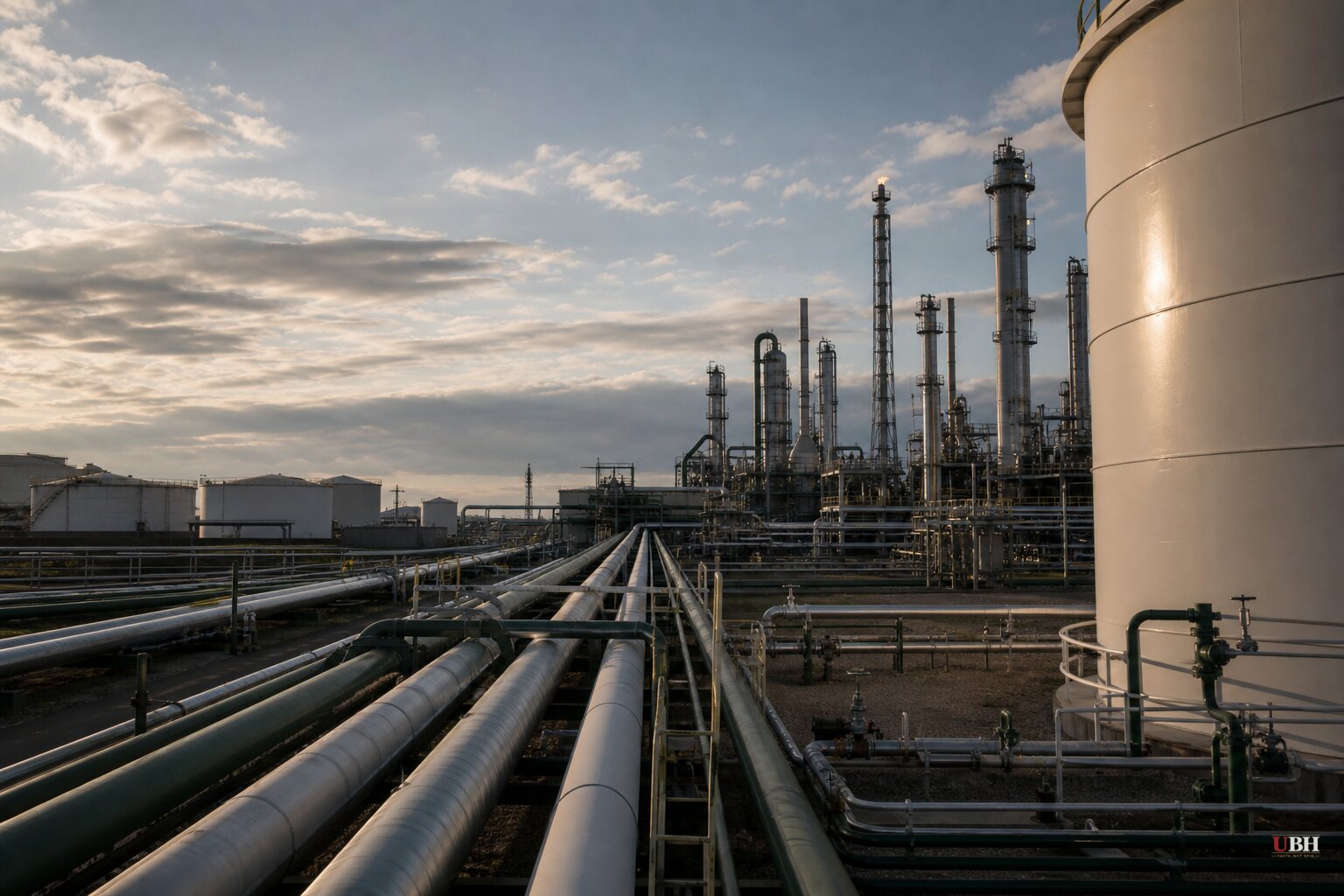
Buyers are paying up for natural gas assets at a pace not seen since before the shale boom matured, and the biggest new supply deal on the table is not even in North America.
According to Wood Mackenzie, energy companies spent $32 billion acquiring gas production assets in the first half of 2026, the highest level of upstream gas dealmaking in more than a decade. The average premium paid over pre-deal valuations hit 21%, the steepest markup since 2013.
Shell's Biggest Bet Since BG Group
The headline deal was Shell's $16.4 billion acquisition of ARC Resources, a Canadian producer with assets in the Montney shale formation. It's Shell's largest transaction since it bought BG Group roughly a decade ago, a deal that was itself a bet on the future of liquefied natural gas.
The Montney push fits a bigger pattern. Roughly $30 billion flowed into North American unconventional gas resources in the first half of 2026, according to Wood Mackenzie, three times the recent three-year average. Liquefaction terminals need feedstock, and buyers are underwriting bids against 20-year LNG supply contracts with customers in Europe and Asia rather than five-year cash flow models.
ONEOK Taps Apollo for Permian Deal
On Aug. 30, ONEOK announced it will acquire Brazos Midstream's Permian Midland Basin gathering and processing assets for $4.425 billion in cash, according to a company statement and a filing summary from Apollo Global Management. The deal is being funded through a $9 billion nonvoting minority equity investment from Apollo funds, with ONEOK using $5 billion of that proceeds to pay down existing debt.
The Apollo investment carries a return capped at 7% annually for its first nine years, below ONEOK's cost of public equity, which the company says lets it delever to 3.25 times debt-to-EBITDA without issuing new common shares. ONEOK CEO Pierce Norton said the deal strengthens the company's Permian Midland Basin platform and its "wellhead-to-water" strategy connecting gas production to export terminals.
A Bigger Supply Shift: The Venezuela Deal
While companies were closing gas deals, the Trump administration announced a far larger structural change to global oil supply on the evening of Aug. 28. Under a new agreement, the US government will form a joint venture with an unnamed private business operating in Venezuela, giving Washington 55% effective output of the new entity, according to a US official who spoke to The Epoch Times.
The joint venture secured 100-year concessions on oil fields holding 65 billion barrels of proven reserves, which the official said would make it the second-largest corporate holder of proven reserves in the world, behind only Saudi Aramco. Secretary of State Marco Rubio said the arrangement would bring nearly $100 billion in private investment to Venezuela and target production of more than 1.5 million barrels a day across 17 oilfields. Trump said the deal was negotiated by Rubio, Defense Secretary Pete Hegseth, and interim Venezuelan President Delcy Rodríguez, and stressed it comes "at no cost to the American taxpayer."
Trump said on Truth Social that oil from the deal will go toward refilling the Strategic Petroleum Reserve, which fell to nearly 290 million barrels in late August, a 44-year low. He blamed the Biden administration for the drawdown and said the "topping out" process would begin "very shortly," though no specific timeline has been announced.
The deal follows the US military's capture of Venezuelan leader Nicolás Maduro roughly nine months earlier, according to The Epoch Times. That timeline raises questions about what oversight exists over a 100-year resource concession negotiated with an interim government installed after a US military action, and who exactly is the "unnamed private operator" splitting the venture with Washington. Neither the administration nor Rubio's statement has named that partner publicly.
Prices Still Reflect an Unsettled Middle East
None of this is happening in a vacuum. Oil prices have been climbing in recent trading sessions, with Brent crude near $91 a barrel and WTI near $85, according to Reuters reporting carried by Fox News. The increases follow the expiration of a memorandum of understanding tied to the six-month-old Iran war, with Iran's parliamentary speaker Mohammad Bagher Ghalibaf saying the Strait of Hormuz will stay closed until the US meets its MOU commitments. Trump said Tuesday that no negotiations with Iran were underway and insisted the strait remains open. Iraq, meanwhile, approved a temporary mechanism allowing more flexible crude export routes starting Sept. 1, according to Reuters, a direct response to the shipping disruption.
Crypto Briefing's coverage of the gas dealmaking surge treats it largely as a market phenomenon, tying the premiums to LNG demand diversification without mentioning the Iran war or the Venezuela deal at all. This omits a crucial context. The same forces pushing companies to overpay for gas assets, namely supply uncertainty out of the Middle East and a scramble to diversify away from single-source pipelines, are the backdrop for why Washington just moved to lock down 65 billion barrels of Venezuelan crude.
The open questions now are concrete: when does Venezuelan oil actually start flowing into the SPR, who is the private partner splitting profits with the US government, and does Iraq's new export mechanism ease Hormuz-related price pressure once it takes effect Sept. 1.
Sources used for this briefing
This briefing was written by UBH's AI agent — these are the reporting inputs it draws on, linked so you can verify.


